
Skip to content
SUBSCRIBE
  • Technology
    download - 2025-07-10T180426
    Technology
    Proteger la cuarta revolucin industrial
    July 10, 2025
    Saurav Dhawale
    No posts found
    download - 2025-07-11T150532
    Technology
    Review Hybrid Cloud Management Tools From Google, Azure, AWS, and more
    download (18)
    Technology
    The latest trends in telehealth
    download 15 (1)
    Technology
    Customer Experience (CX) Trends: First edition - Customer service insights in the GenAI era
    No posts found
    View All
  • HRTech
    Data-driven health care How interoperability improves outcomes and efficiency
    Hrtech
    Data-driven health care: How interoperability improves outcomes and efficiency
    January 30, 2026
    Saurav Dhawale
    No posts found
    Uncover Hidden Savings and Boost the Bottom line in F&B Manufacturing
    Hrtech
    Uncover Hidden Savings and Boost the Bottom line in F&B Manufacturing
    Next Generation Firewall Buyer’s Guide
    Hrtech
    Next Generation Firewall Buyer’s Guide
    Best practices for fostering payment accessibility
    Hrtech
    Best practices for fostering payment accessibility
    No posts found
    View All
  • Finance
    State of Observability for Financial Services and Insurance
    Finance
    State of Observability in Financial Services
    January 22, 2026
    Saurav Dhawale
    No posts found
    download 34
    Finance
    Discusses ways in which Lean Manufacturing aligns with Industry 4.0
    IT-Modernisierung leicht gemacht: Cloud-Integration fr alle Workloads
    Finance
    IT-Modernisierung leicht gemacht: Cloud-Integration fr alle Workloads
    download 56
    Finance
    Protecting Your C-Store Against the Hidden Costs of Compliance Violations
    No posts found
    View All
  • Marketing
    Hotel Marketers: Stand Out From the Pack & Keep Customers Engaged
    Marketing
    Hotel Marketers: Stand Out From the Pack & Keep Customers Engaged
    January 15, 2026
    Saurav Dhawale
    No posts found
    Strategize and Oversee Your Projects Seamlessly
    Marketing
    Strategize and Oversee Your Projects Seamlessly
    Hybrid Cloud Is A Journey: 7 Guidelines To Help You Plan Your Path Forward
    Marketing
    Hybrid Cloud Is A Journey: 7 Guidelines To Help You Plan Your Path Forward
    download 46
    Marketing
    NetApp All-SAN Array - Data Availability and Integrity with the NetApp ASA
    No posts found
    View All
  • Resources
    • Web Development
    • Technology 2025
    • Supply Chain
    • Storage
    • Security
    • Networking And Communication
    • MSP
    • Library
    • IT Security
    • IT Management
    • IT Infrastructure
    • IOT
    • Global Trade
    • Stock Market
    • Insurances
    • Banking
    • Finance 2025
    • ERP
    • Ecommerce
    • Ebook
    • Digital Advertising
    • Data Security
    • Data Management
    • Content Marketing
    • Cloud Migration
    • Cloud Computing
    • Big Data
    • B2B Marketing
    • Audit And Compliance
    • Artificial Intelligence
    • Application Development
    • API
    • Analytics
    • Abm Marketing
  • Contact
  • About
    • Privacy Policy
    • Terms of Use
    • Cookies Notice
  • work-with-us
    • Advertise With-Us
  • Technology
    download - 2025-07-11T162019
    Technology
    SANS Webinar: Securely Moving to the (Government) Cloud
    July 11, 2025
    Saurav Dhawale
    No posts found
    download 72
    Technology
    Where European business unlocks the power of AI
    5 ways IT leaders leverage cloud native application development
    Technology
    Path to Cloud Native App Dev
    download (18)
    Technology
    The latest trends in telehealth
    No posts found
    View All
  • HRTech
    O Total Econômico ImpactoDa VMware ™ Carbon Black Cloud Economia de custos e benefícios comerciais possibilitados pela Carbon Black Cloud
    Hrtech
    O Impacto Econômico Total™ da VMware Carbon Black Cloud Economia de custos e benefícios comerciais possibilitados pela Carbon Black Cloud
    January 30, 2026
    Saurav Dhawale
    No posts found
    Leverage the Power of AWS With Lambert Labs
    Hrtech
    Leverage the Power of AWS With Lambert Labs
    Next Generation Firewall Buyer’s Guide
    Hrtech
    Next Generation Firewall Buyer’s Guide
    Best practices for fostering payment accessibility
    Hrtech
    Best practices for fostering payment accessibility
    No posts found
    View All
  • Finance
    The Power of Next-Generation SD-WAN with App-Defined Fabric
    Finance
    The Power of Next-Generation SD-WAN with App-Defined Fabric
    January 29, 2026
    Saurav Dhawale
    No posts found
    Screenshot-2026-01-30-220357
    Finance
    The IT decision-makers guide to optimizing cloud workload placement
    How to help students avoid the career readiness gap
    Finance
    How to help students avoid the career readiness gap
    download 83
    Finance
    Why Zero Trust Cant be Bought and Must be Earned.
    No posts found
    View All
  • Marketing
    6 Tips For Better Digital Learning In The Workplace
    Marketing
    6 Tips For Better Digital Learning In The Workplace
    January 23, 2026
    Saurav Dhawale
    No posts found
    Unify Your Communications: Small business simplicity; big business features
    Marketing
    Unify Your Communications: Small Business Simplicity; Big Business Features
    “Retailers Are Missing Key Profitability Opportunities – Are You?”
    Marketing
    “Retailers Are Missing Key Profitability Opportunities – Are You?”
    Tools designed for security could be your biggest cybersecurity threat
    Marketing
    Tools Designed for Security Could Be Your Biggest Security Threat
    No posts found
    View All
  • Resources
    • Web Development
    • Technology 2025
    • Supply Chain
    • Storage
    • Security
    • Networking And Communication
    • MSP
    • Library
    • IT Security
    • IT Management
    • IT Infrastructure
    • IOT
    • Global Trade
    • Stock Market
    • Insurances
    • Banking
    • Finance 2025
    • ERP
    • Ecommerce
    • Ebook
    • Digital Advertising
    • Data Security
    • Data Management
    • Content Marketing
    • Cloud Migration
    • Cloud Computing
    • Big Data
    • B2B Marketing
    • Audit And Compliance
    • Artificial Intelligence
    • Application Development
    • API
    • Analytics
    • Abm Marketing
  • Contact
  • About
    • Privacy Policy
    • Terms of Use
    • Cookies Notice
  • work-with-us
    • Advertise With-Us
Home » Abm Marketing
Category:

Abm Marketing

Why ABM Strategies Fail and How to Fix Them
Abm Marketing

Why ABM Strategies Fail and How to Fix Them

by ailcia sierra August 21, 2026
written by ailcia sierra

Account-Based Marketing (ABM) has transformed the way B2B companies approach lead generation and customer acquisition. Instead of casting a wide net and hoping to attract potential buyers, ABM Strategies focuses on identifying high-value accounts and delivering personalized marketing and sales experiences that directly address their business challenges. This targeted approach helps organizations improve conversion rates, shorten sales cycles, and generate higher-quality opportunities.

In the few years ABM has become one of the main ways B2B companies do their marketing. Companies in areas such as SaaS, cybersecurity, cloud computing, manufacturing, healthcare and software have put a lot of effort into ABM strategies and tools data about what companies want, automation and ways to make messages personal. According to reports companies that have strong Account-Based Marketing programs usually get more business and have better teamwork between sales and marketing than those who only use old ways to get leads.

Even though ABM is popular many companies have trouble getting results from it. Some companies buy ABM software make long lists of target companies and run special campaigns but still see little interest poor results and not enough money back. The issue is not usually the idea of Account-Based Marketing but how the plan is made, carried out and managed.

One big mistake is thinking that ABM is another marketing campaign. Actually Account-Based Marketing is a long-term business plan that needs help from marketing, sales, customer support and company leaders. Without goals, good data, messages that fit each company and regular changes even the best ABM programs can fail.

A common problem is wanting results. Unlike ways of getting leads that focus on getting many people interested ABM cares more about quality than numbers. Building relationships, with companies takes time many chances to talk and regular contact. Companies that want fast results often stop using ABM before it has time to show business benefits.

What Is an ABM Strategy?

An ABM strategy is a focused B2B marketing approach where organizations identify a carefully selected group of high-value accounts and create personalized marketing and sales initiatives specifically designed for those companies.

Instead of targeting hundreds of nameless prospects, companies are focusing their efforts on loan money that matches their ideal customer profile (ICP) deep before marketing and mass revenue group profiles to understand each account’s commercial campaign dreams, pain points, as well as potential revenue streams material-

Unlike traditional advertising, which regularly measures fulfillment using website traffic or the volume of leads generated, account-based marketing is about building relationships with the right audiences and increasing sales opportunities .

An effective ABM strategy combines a couple of channels, such as electronic mail ads, LinkedIn campaigns, webinars, personalized landing pages, government outreach, content syndication, sales engagement, and every communication designed to move loan target money toward long-term customers.

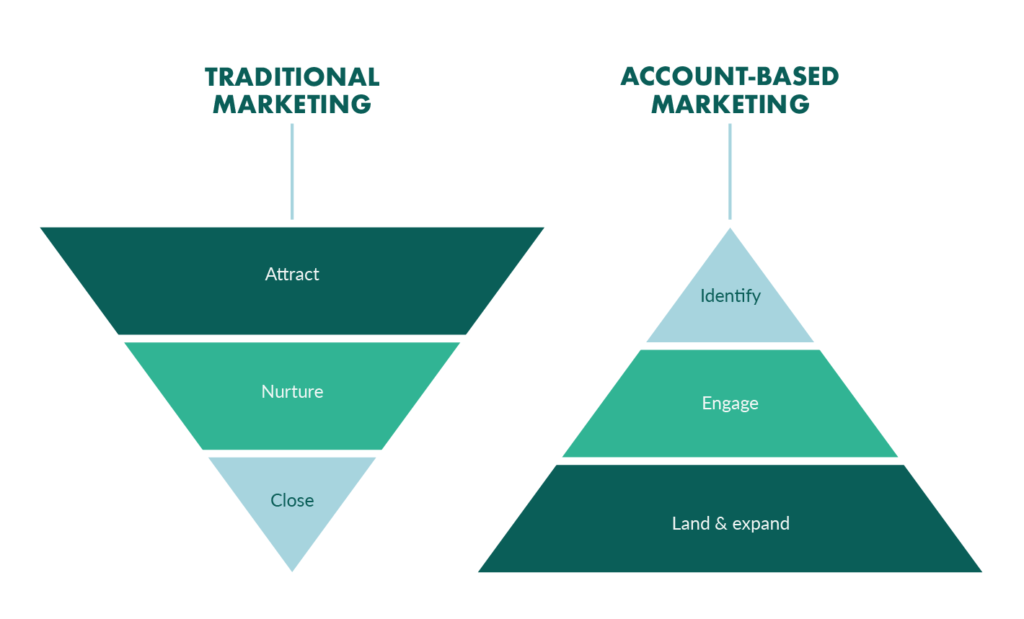
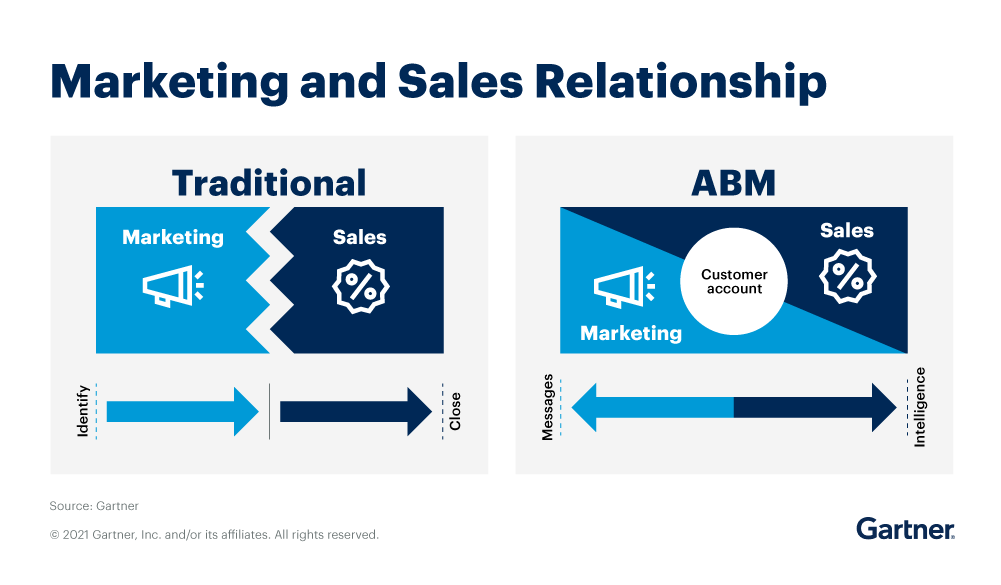
Traditional Marketing vs. Account-Based Marketing

Traditional MarketingAccount-Based Marketing (ABM)
Targets a broad audienceFocuses on selected high-value accounts
Generates large numbers of leadsPrioritizes quality over quantity
Marketing-led approachSales and marketing work together
Standardized messagingPersonalized communication
Short-term campaign focusLong-term relationship building
Success measured by lead volumeSuccess measured by pipeline and revenue

Understanding these differences is essential because many organizations fail by treating ABM like traditional lead generation instead of a strategic revenue program.
What Is an ABM Strategy?

Why More B2B Companies Are Investing in ABM

The way B2B companies buy things has changed a lot. Now it takes a lot of people to make a decision it takes a time and they want to feel like they are special.

Decision makers do not personally respond to persistent email campaigns or extensive advertising. They expect sellers to know their company, the demanding conditions and the goals of the business company before negotiations begin.

These changes have made account-based marketing one of the best strategies for B2B organizations nowadays.

Companies adopt ABM because it helps them:

  • Build stronger relationships with enterprise accounts.
  • Improve collaboration between sales and marketing.
  • Increase customer acquisition efficiency.
  • Focus resources on high-value opportunities.
  • Deliver personalized buying experiences.
  • Improve marketing return on investment.
  • Generate predictable pipeline growth.

Organizations using mature ABM packages regularly find that fewer, better-proven prospects generate more revenue than large amounts of less-than-happy leads .

Why do so many ABM strategies fail?

If account-based marketing produces such strong results, why do so many companies struggle with implementation?

The answer is simple: Many companies spend money on ABM equipment before building an ABM foundation.

Organizations typically purchase intense pricing structures, launch personalized email campaigns, or build account lists without first establishing pure corporate goals, internal alignment, or disclosure epic standards .

As an end result, campaigns can also generate interest by creating meaningful business outcomes.

A failed ABM application often seems busy on the floor. Marketing creates personalized assets, sales sends outreach emails, and dashboards display marketing campaign metrics. However, behind one number, the target bills will be unattractive, the lead growth will be flat and the conversion values ​​will be low.

The problem is usually not the loss of effort. Instead, it is often structural problems that limit the effectiveness of the overall process.

Common Signs Your ABM Strategy Is Not Working

Many organizations continue investing in ABM campaigns without recognizing the warning signs that indicate deeper strategic problems.

Early identification allows businesses to make adjustments before significant marketing budgets are wasted.

Warning Signs of an Underperforming ABM Strategy

Warning SignWhat It Indicates
Low engagement from target accountsMessaging lacks relevance
High email open rates but few meetingsWeak value proposition
Strong marketing activity but limited pipelinePoor sales alignment
Large target account listLack of prioritization
Low personalizationGeneric campaigns
Poor CRM data qualityInaccurate account targeting
Long sales cycles without progressWeak buyer engagement
Difficulty measuring ROIUndefined success metrics

Recognizing these challenges early helps organizations shift their focus from campaign execution to strategic improvement.

The Biggest Myth About Account-Based Marketing

A common misconception is that buying an advanced ABM software program robotically creates successful account-based marketing programs. Technology certainly increases efficiency, but a software program cannot replace strategy.

Businesses often expect that implementing automation, motivational reporting systems, or personalization tools will boost sales immediately. But without appropriate facts, content, messaging, and engagement, these technologies inevitably automate ineffective methods. Technology should support a properly designed ABM strategy – don’t update it now.

Successful companies start with business goals, define their ideal buyer profile, prioritize sales and advertising and marketing, and then identify a time that supports a goal .

Structural Cause #1: Poor Sales Marketing Alignment

One of the most not uncommon reasons why ABM strategies fail is the disconnect between the sales and marketing teams.

Although each department percentages the same objective producing revenue they usually work independently with specific priorities and fulfillment criteria.

Marketing teams can additionally learn about overall marketing campaign performance, engagement values, and content creation, while sales teams prioritize conferences, prospects, and closed deals .

Without alignment, loans and market funds may receive inconsistent messages, duplicate shipments, or poorly coordinated oral exchanges.

For example the marketing team might be helping an account learn about something through content while the sales team is sending them messages that are too pushy about buying a product. This can be confusing, for the people who might buy something. They will trust the company less.

The companies that do Account Based Marketing well think of the sales and marketing teams as one team that works together to make money than two separate groups.

How Sales and Marketing Alignment Improves ABM Success

Marketing ResponsibilitySales ResponsibilityShared Outcome
Content creationRelationship buildingBetter buyer experience
Campaign executionPersonalized outreachHigher engagement
Intent data analysisOpportunity qualificationBetter pipeline quality
Lead nurturingAccount conversationsFaster conversions
Performance reportingRevenue trackingShared business goals

Organizations that align marketing and sales typically experience stronger pipeline growth because both teams work toward common objectives instead of isolated departmental targets.

Why Data Quality Determines ABM Success

Another factor that affects ABM strategy performance is data quality.

Even the creative campaigns cannot succeed if businesses target the wrong companies or old contacts.

Many organizations use CRM records, out-of-date account information or wrong firmographic data. This causes marketing efforts to reach people who no longer work at the company do not have buying power or are not part of the decision-making process.

Good data helps organizations find the accounts send messages that are personal and focus on outreach that brings the most business value.

Companies that check and improve their CRM data regularly make Account-Based Marketing campaigns because every choice is made with correct information instead of guesses.

Structural Reason #2: Targeting the Wrong Accounts

One of the most important motivations for failing ABM strategies is incredibly simple: businesses are targeting the wrong loans.

Many companies believe that developing a long list of audiences on a regular basis increases the chances of generating more prospects. In fact, it usually reduces campaign effectiveness because advertising and marketing revenue teams spread their time, price range, and assets too thin.

Account-based marketing is built on precision, now not detail. A successful account-based marketing program has companies that are a good fit for the company’s customer profile (ICP). These accounts have a detailed budget, business needs, purchasing power, and high income potential over the long term.

When companies ignore this principle, they invest money in individual campaigns for companies that are in no way likely to emerge as customers.

What Is an Ideal Customer Profile (ICP)?

An Ideal Customer Profile is a detailed description of the type of company that is most likely to become a successful long-term customer.

Unlike a buyer persona, which focuses on individuals, an ICP focuses on organizations.

An effective ICP considers multiple business characteristics such as industry, company size, annual revenue, geographic location, technology stack, business challenges, growth stage, and purchasing behavior.

Without a clearly defined ICP, marketing campaigns become inconsistent, and sales teams waste valuable time pursuing accounts that are unlikely to convert.

Characteristics of a Strong Ideal Customer Profile

ICP CriteriaExample
IndustrySaaS, Manufacturing, Healthcare, Cybersecurity
Company Size200–5,000 employees
Annual Revenue$20M–$500M
GeographyNorth America, Europe, APAC
Technology StackCloud-first organizations
Business ChallengesDigital transformation, security, automation
Decision MakersCIO, CMO, CTO, VP Sales

Businesses with a well-defined ICP create more focused B2B account-based marketing campaigns because every marketing effort is directed toward companies with higher conversion potential.

Why Large Target Account Lists Reduce ABM Performance

Many businesses believe that targeting more accounts will generate more pipeline.

Unfortunately, the opposite often happens.

A large target account list creates several challenges:

  • Lower personalization quality.
  • Limited marketing resources.
  • Reduced sales focus.
  • Inconsistent follow-up.
  • Higher campaign costs.
  • Lower engagement rates.

Instead of targeting 2,000 average-fit accounts, many successful ABM programs concentrate on 100–300 high-value organizations.

Quality consistently outperforms quantity in Account-Based Marketing.

Small Target List vs Large Target List

Small, Focused ListLarge Generic List
Highly personalized outreachGeneric messaging
Better engagementLower response rates
Strong sales collaborationDifficult coordination
Higher conversion ratesLower ROI
Better pipeline qualityMore unqualified opportunities

The goal of ABM is not to market to everyone. It is to become highly relevant to the right organizations.

Structural Reason #3: Poor Personalization

Personalization is often described as the heart of account-based marketing, yet many organizations misunderstand what personalization necessarily means.

Adding a person’s first name to an email is not personalization. Mentioning a call to action on a landing page is sometimes not personalization. True personalization shows a deep understanding of the patron’s profession.

It answers questions such as:

  • What challenges does this company face?
  • Which business goals are they trying to achieve?
  • What industry regulations affect them?
  • What technologies are they currently using?
  • What business outcomes matter most to their leadership team?

Organizations that answer these questions create content that feels relevant instead of promotional.

What Effective Personalization Looks Like

Imagine two cybersecurity vendors contacting the same company.

Vendor A sends a generic email promoting its security platform.

Vendor B references a recent industry regulation affecting the prospect, shares a relevant case study from the same industry, and explains how similar organizations reduced compliance risks.

Which vendor is more likely to earn a meeting?

The second approach demonstrates business understanding rather than simply selling a product.

That is the level of personalization modern B2B buyers expect.

Generic Marketing vs Personalized ABM

Generic CampaignPersonalized ABM Campaign
Same email for everyoneIndustry-specific messaging
General case studiesRelevant customer examples
Product-focusedBusiness outcome-focused
Standard landing pagesAccount-specific pages
Broad advertisingTargeted account engagement

Personalization is one of the biggest competitive advantages in B2B marketing strategy because enterprise buyers increasingly ignore generic promotional content.

Why Content Is Often the Weakest Part of ABM

Many organizations invest heavily in ABM technology but continue using the same content created for traditional lead generation.

This creates a disconnect.

Traditional marketing content usually targets broad audiences. ABM content should address the needs of specific industries, accounts, or buying committees.

For example, a manufacturing company evaluating automation software has different priorities than a healthcare organization considering the same solution.

Effective ABM campaigns require content that reflects these differences.

Businesses should create:

  • Industry-specific guides.
  • Personalized landing pages.
  • Executive reports.
  • Customer success stories.
  • ROI calculators.
  • Product comparison resources.
  • Decision-maker briefings.

Content should educate rather than simply promote products.

Align Content With the Buyer’s Journey

Every target account is at a different stage of the buying process.

Some organizations are only beginning to research a problem. Others are actively comparing vendors.

Sending the same message to every account often reduces engagement.

Recommended Content by Buying Stage

Buying StageRecommended Content
AwarenessIndustry reports, educational blogs, market research
ConsiderationWhitepapers, webinars, comparison guides
EvaluationCase studies, ROI calculators, product demonstrations
DecisionCustomer references, implementation guides, executive consultations

Matching content to buyer intent improves engagement throughout the Account-Based Marketing strategy.

Why Intent Data Makes ABM More Effective

Not every target account is ready to buy. Some organizations are actively researching solutions.

Others have no immediate purchasing plans. Intent data helps businesses identify companies showing signs of buying interest.

Intent signals may include:

  • Reading industry articles.
  • Downloading research reports.
  • Searching for relevant solutions.
  • Visiting competitor websites.
  • Engaging with webinars.
  • Comparing vendors.

Businesses using intent data can prioritize accounts that are already researching similar solutions.

This allows sales teams to engage prospects at the right time instead of relying on cold outreach.

Benefits of Intent Data

BenefitBusiness Value
Better account prioritizationFocus on active buyers
Improved personalizationRelevant messaging
Higher conversion ratesBetter timing
Shorter sales cyclesEarlier engagement
Better marketing efficiencySmarter budget allocation

Intent data transforms ABM strategies from reactive marketing into proactive engagement.

Why Measuring the Wrong Metrics Causes ABM Failure

One of the most common mistakes businesses make is measuring ABM using traditional marketing metrics.

For example:

  • Website traffic.
  • Email open rates.
  • Social media impressions.
  • Number of leads.

While these metrics provide useful information, they do not accurately measure ABM success.

Account-Based Marketing focuses on revenue impact rather than activity.

Metrics That Actually Matter

Traditional MetricsABM Metrics
Website trafficTarget account engagement
Marketing-qualified leadsSales-qualified accounts
Email opensMeetings booked
Click-through ratesPipeline influenced
Content downloadsRevenue generated
Campaign impressionsAccount progression

Businesses that measure revenue-focused metrics make better decisions because they understand how marketing contributes to business growth.

Why Sales Follow-Up Determines Campaign Success

Even the most successful ABM strategy can fail if sales teams do not engage prospects effectively.

Many organizations generate strong marketing engagement but lose opportunities because follow-up is:

  • Too slow.
  • Too generic.
  • Inconsistent.
  • Focused on products instead of business outcomes.

Modern B2B buyers expect consultative conversations.

Sales teams should understand:

  • The account’s business challenges.
  • Recent marketing engagement.
  • Industry trends.
  • Decision-making structure.
  • Current technology environment.

This creates meaningful conversations instead of generic sales pitches.

Building a Unified Revenue Team

The highest-performing B2B organizations no longer separate marketing and sales into isolated departments.

Instead, they create revenue teams.

Revenue teams share:

  • Target account lists.
  • Campaign planning.
  • Performance metrics.
  • Customer insights.
  • Pipeline goals.
  • Revenue objectives.

This alignment improves communication and ensures every interaction moves the account closer to a buying decision.

Technology Should Support Strategy Not Replace It

Many businesses assume purchasing advanced ABM software automatically improves results.

Technology certainly helps.

However, software cannot compensate for:

  • Weak targeting.
  • Poor personalization.
  • Inaccurate data.
  • Misaligned teams.
  • Ineffective messaging.

The strongest ABM programs start with strategy first and technology second.

Organizations should build a repeatable process before investing in additional marketing tools.

How to Create a Successful ABM Strategy

After learning why many ABM strategies fail, the next step is to gain knowledge on how successful groups build account-based marketing packages that always generate a proven lead and long-term revenue .

There is no single model that works for every business. A cybersecurity organization targeting system banks will require a unique approach than a SaaS company by selling to mid-sized manufacturing companies. But the most successful account-based marketing programs follow grounded frameworks that combine strategy, statistics, time, personalized content content, and tight synergy between advertising and marketing revenue .

However, the goal is not really to launch campaigns, but to create a repeatable system that attracts high-value loans, reaches buying committees, and supports all stages of the consumer adventure.

Step 1: Define Clear Business Goals

Many ABM programs fail due to groups starting with a method as opposed to an end.

Some companies immediately buy an ABM software program, create a list of target articles, or launch an advertising and marketing campaign without defining what undoubtedly looks like an achievement.

Before creating an account-based marketing strategy, groups need to address important business questions:

  • Are we looking to increase employer clientele?
  • Should we expand into a new industry?
  • Do we concentrate on large sizes?
  • Do we want to shorten the revenue cycle?
  • Are we focused on patron expansion or new customer acquisitions?

Clear business and business objectives help marketing and sales teams make smarter decisions during a marketing campaign.

Examples of ABM Goals

Business GoalSuccess Metric
Increase enterprise opportunitiesNumber of qualified target accounts
Improve pipeline growthPipeline value generated
Expand existing accountsRevenue from current customers
Improve conversion ratesOpportunity-to-customer ratio
Reduce acquisition costsCost per acquired account

Organizations with measurable objectives are more likely to build scalable B2B account-based marketing programs.

Step 2: Build an Accurate Ideal Customer Profile (ICP)

An Ideal Customer Profile serves as the foundation of every successful ABM strategy.

Without a clear ICP, businesses waste marketing budgets targeting companies that are unlikely to become profitable customers.

An effective ICP goes beyond company size or industry.

It includes business characteristics such as:

  • Revenue range
  • Employee size
  • Technology adoption
  • Digital maturity
  • Geographic presence
  • Buying behavior
  • Industry challenges
  • Growth stage

The more accurately businesses define their ideal customer, the more relevant their campaigns become.

Essential Elements of an Ideal Customer Profile

CategoryExample
IndustryTechnology, Manufacturing, Healthcare
Company Size250–5,000 employees
Revenue$50M–$1B
RegionNorth America, Europe
Decision MakersCIO, CMO, VP Marketing, CTO
Technology UsageCloud platforms, CRM, ERP
Business PrioritiesGrowth, automation, cybersecurity

Reviewing and updating the ICP regularly ensures marketing remains aligned with changing market conditions.

Why Measuring the Wrong Metrics Causes ABM Failure

Step 3: Prioritize Accounts Instead of Treating Them Equally

Not every target account deserves the same amount of marketing investment.

Successful ABM programs categorize accounts based on business value and strategic importance.

This approach helps marketing teams allocate resources more efficiently.

Example of Account Prioritization

TierDescriptionPersonalization Level
Tier 1High-value strategic accountsOne-to-one personalization
Tier 2Growth accountsIndustry-specific campaigns
Tier 3Scalable accountsAutomated personalization

Tier-based segmentation allows businesses to balance personalization with operational efficiency.

Step 4: Align Sales and Marketing Around Shared Objectives

Sales and marketing alignment remains one of the strongest predictors of ABM strategy success. Organizations often experience poor campaign performance because departments operate independently.

Marketing may celebrate campaign engagement while sales struggles to schedule meetings. Instead, both teams should work toward shared revenue objectives.

Joint planning sessions help both departments agree on:

  • Target accounts
  • Buyer personas
  • Messaging
  • Campaign timelines
  • Success metrics
  • Follow-up processes

This collaboration creates a consistent buying experience across every customer interaction.

Shared Responsibilities in ABM

MarketingSales
Content creationRelationship building
Campaign managementPersonalized outreach
Intent monitoringOpportunity qualification
AdvertisingExecutive engagement
Performance analysisRevenue generation

When marketing and sales operate as one revenue team, Account-Based Marketing becomes significantly more effective.

Step 5: Personalize Every Customer Interaction

Modern B2B buyers expect vendors to understand their business before making recommendations.

Personalization should extend across the entire customer journey.

This includes:

  • Website experiences
  • Email campaigns
  • LinkedIn outreach
  • Webinar invitations
  • Case studies
  • Product demonstrations
  • Sales presentations

Rather than promoting features, businesses should explain how their solution addresses the prospect’s specific business challenges.

Personalization Opportunities Across the Buyer’s Journey

Customer TouchpointPersonalization Example
EmailIndustry-specific messaging
Landing PageCompany-specific content
WebinarRole-based invitations
Case StudySimilar customer success story
Sales PresentationCustomized business outcomes

Relevant personalization improves trust and increases engagement.

Step 6: Use Intent Data to Identify Active Buyers

One of the biggest advantages of modern ABM campaigns is the ability to identify organizations already researching solutions.

Intent data allows businesses to recognize buying signals before prospects complete contact forms or request demonstrations.

Intent indicators include:

  • Reading multiple articles on the same topic.
  • Downloading research reports.
  • Searching for competitor solutions.
  • Visiting pricing pages.
  • Attending webinars.
  • Consuming technical documentation.

These signals help sales teams prioritize accounts showing genuine buying interest.

Benefits of Intent Data

Intent SignalBusiness Advantage
Research activityEarlier engagement
Content consumptionBetter personalization
Competitor interestCompetitive positioning
Topic engagementRelevant conversations
Repeat website visitsHigher purchase intent

Combining intent data with Account-Based Marketing improves campaign timing and increases conversion potential.

Step 7: Build an Omnichannel ABM Campaign

Many organizations rely on a single communication channel. However, enterprise buyers interact across multiple digital platforms before making purchasing decisions.

Successful ABM programs combine several channels to create consistent engagement.

Examples include:

  • LinkedIn advertising
  • Personalized email campaigns
  • Executive webinars
  • Content syndication
  • Industry events
  • Direct mail
  • Sales outreach
  • Website personalization

Multiple touchpoints reinforce messaging and improve brand recognition.

Omnichannel ABM Framework

Marketing ChannelObjective
LinkedInBuild awareness
EmailNurture relationships
Content SyndicationGenerate engagement
Paid SearchCapture buying intent
Sales OutreachBuild conversations
WebinarsEducate decision makers
Personalized Landing PagesIncrease conversions

An omnichannel strategy creates a more consistent buyer experience.

Step 8: Use Marketing Automation Wisely

Marketing automation improves performance, but automation never needs to update personalization.

Automation performs satisfactorily for repetitive responsibilities, which include:

  • Lead diet
  • Email Scheduling
  • Report from the expedition
  • CRM Updates
  • accounts

Human interaction remains essential throughout the stages of marriage.

Businesses should have a true dialogue with marketplace loans and automate the workflow.

AI Is Changing Modern Account-Based Marketing

Artificial intelligence is becoming increasingly necessary in a B2B marketing process.

AI makes it easier for companies to:

  • Identify market accounts.
  • Analyze purchasing for behavior.
  • Recommend content material.
  • Anticipating consumer motivation.
  • Strengthen personality.
  • Optimize campaigns.

Instead of marketers, AI facilitates groups to make faster and more informed choices.

Step 8: Use Marketing Automation Wisely

AI Applications in ABM

AI CapabilityBusiness Benefit
Predictive AnalyticsBetter account selection
Content RecommendationsImproved engagement
Lead ScoringBetter prioritization
PersonalizationRelevant customer experiences
Campaign OptimizationHigher ROI

Businesses that combine AI with strong strategy often create more efficient ABM programs.

Technology Stack for Successful ABM

Technology should support—not drive—your strategy.

Organizations should choose tools based on business needs rather than trends.

Essential ABM Technology Stack

TechnologyPurpose
CRMManage customer relationships
Marketing AutomationCampaign execution
Intent Data PlatformIdentify active buyers
Analytics PlatformMeasure performance
Personalization ToolImprove buyer experiences
Sales Engagement PlatformSupport outreach

Technology works best when integrated into a well-defined Account-Based Marketing strategy.

Common Implementation Mistakes to Avoid

Even businesses with strong planning can encounter implementation challenges.

Common mistakes include:

MistakeImpact
Targeting too many accountsLower personalization
Ignoring data qualityPoor account selection
Sales and marketing misalignmentInconsistent customer experience
Measuring vanity metricsWeak business insights
Treating ABM as a short campaignLimited long-term success
Over-automating communicationLess authentic engagement

Avoiding these mistakes allows businesses to build sustainable and scalable ABM strategies.

Why Continuous Optimization Is Essential

The highest-performing ABM programs continuously improve.

Successful organizations regularly review:

  • Target account engagement.
  • Pipeline progression.
  • Content performance.
  • Sales feedback.
  • Customer insights.
  • Campaign ROI.

Instead of assuming one campaign will produce lasting results, they refine messaging, adjust targeting, and optimize processes based on real performance data.

Continuous optimization transforms ABM from a marketing initiative into a long-term revenue engine.

Advanced ABM Best Practices for Long-Term Success

Creating a successful ABM process no longer stops at implementing individual campaigns or selecting a loan target fund. The most successful B2B companies are constantly refining their account-based marketing programs, which are based entirely on buyer behavior, market developments, and performance metrics .

ABM should be seen as an ongoing business strategy instead of a one-time advertising initiative. Organizations that consistently review the overall performance of a marketing campaign, foster collaboration between teams, and improve buyer reviews are much much more likely to achieve sustainable sales growth .

The following specific practices can help companies maximize account-based marketing investments and steer clear of common challenges that prevent them from long-term success.

Build Relationships Before Selling

The most important mistake organizations make is treating ABM as another revenue campaign.

Business buyers rarely choose to buy after a virgin email or product demo. Most B2B buying journeys involve two parts, expert estimates, budget approvals, and several months of discussions.

Successful companies relied on consultants instead of pushing products to transform cognition.

This means creating valuable educational content, sharing business insights, providing web-hosted webinars, publishing surveys, and presenting real code that helps constituents solve business challenges .

Sales calls are much more effective when buyers trust your information.

Relationship-Based Selling vs Traditional Selling

Traditional SalesRelationship-Based ABM
Product-focused conversationsBusiness outcome-focused discussions
Immediate sales pitchLong-term relationship building
Generic communicationPersonalized engagement
Short-term opportunitiesLifetime customer value
Transaction mindsetStrategic partnership

Businesses that invest in relationships often experience higher customer retention and larger contract values.

Keep Sales and Marketing Continuously Aligned

Many companies begin their ABM strategy with strong collaboration between sales and marketing but gradually return to operating independently.

Alignment should continue throughout the entire customer lifecycle.

Regular meetings allow both teams to discuss:

  • Account engagement.
  • Pipeline progress.
  • Customer feedback.
  • Campaign performance.
  • Market trends.
  • New opportunities.

Continuous communication ensures both departments remain focused on shared revenue objectives.

Monthly ABM Review Checklist

Review AreaQuestions to Ask
Target AccountsAre we engaging the right companies?
Pipeline GrowthWhich accounts are progressing?
Content PerformanceWhich resources generate the most engagement?
Sales FeedbackWhat objections are customers raising?
Marketing PerformanceWhich channels perform best?
Campaign ROIAre investments generating revenue?

Reviewing these areas every month helps organizations optimize campaigns before problems become significant.

Measure Business Outcomes Instead of Marketing Activity

A common reason ABM strategies fail is that businesses focus on activity metrics rather than revenue metrics.

For example, website visits and email open rates may indicate interest, but they do not necessarily demonstrate business impact.

Successful ABM programs measure outcomes that directly contribute to revenue growth.

Important ABM Performance Metrics

KPIWhy It Matters
Target account engagementShows interest from priority accounts
Meetings bookedMeasures sales conversations
Opportunity creationIndicates pipeline growth
Pipeline valueMeasures revenue potential
Win rateEvaluates sales effectiveness
Customer acquisition costAssesses marketing efficiency
Average deal sizeMeasures account value
Customer lifetime valueIndicates long-term profitability

Tracking these metrics provides a clearer understanding of whether your B2B marketing strategy is delivering measurable results.

The Role of Content in a Successful ABM Strategy

Content remains one of the most influential factors in Account-Based Marketing.

However, ABM content should be educational rather than promotional. Decision-makers are looking for practical insights that help them solve business challenges not just product features.

High-performing ABM content often includes:

  • Industry reports.
  • Case studies.
  • Whitepapers.
  • Research articles.
  • Executive guides.
  • ROI calculators.
  • Customer success stories.
  • Comparison guides.

Creating content for different industries and buyer roles improves relevance and engagement.

Recommended Content by Buyer Role

Buyer RoleRecommended Content
CEOBusiness growth reports and market trends
CIOTechnology strategy guides
CISOCybersecurity best practices
CMOMarketing performance insights
VP SalesPipeline optimization resources
ProcurementROI and implementation guides

Role-specific content demonstrates a deeper understanding of customer priorities.

Future Trends in Account-Based Marketing

  • AI-Driven Personalization: AI will deliver smarter personalization through predictive insights and automated marketing.
  • Greater Use of Intent Data: Intent signals will help businesses identify and engage high-intent buyers earlier.
  • First-Party Data for Better Targeting: CRM, website, and customer interaction data will power more accurate ABM campaigns.
  • Integrated Revenue Teams: Marketing, sales, and customer success will collaborate to drive a unified revenue strategy.

Emerging Trends in Account-Based Marketing

TrendBusiness Impact
AI-powered personalizationBetter customer experiences
Predictive analyticsImproved account selection
First-party dataStronger targeting
Intent-based marketingBetter timing
Revenue operationsImproved collaboration
Marketing automationGreater operational efficiency

Businesses that embrace these trends will remain competitive as buyer expectations continue to evolve.

Conclusion:

Many companies believe that ABM strategies fail due to poor campaign execution or useless technology. In reality, the biggest demanding situations are typically structural. Poor sales and marketing alignment, incorrect account selection, bad personalization, unreliable data, and unclear company goals typically prevent them from turning account-based marketing programs into meaningful impacts.

The good news is that the demanding situations can be addressed in a strategic and disciplined manner.

Successful account-based marketing enhances defining clear ideal customer profiles, prioritizing the right accounts, aligning advertising and marketing and sales around shared sales desires, and custom surveys that address real business enterprise challenges AI and automation can enhance them efforts, but replace them with normal well help method should be.

Businesses that continuously analyze performance, refine messaging, improve engagement, and invest in amazing content rank highly for generating proven leads, improving customer acquisition, and building lasting relationships with organizations and consumers.

As B2B travel buying becomes more complex, companies that treat ABM as a long-term sales strategy not just an advertising campaign will have a huge competitive advantage. With expertise in consumer spend, information-driven choice, and non-stop optimization, companies can rework their ABM packages into a sustainable engine for lead growth and long-term success .

Frequently Based Questions

1.What is an ABM strategy?

An ABM strategy is a B2B marketing approach that focuses on identifying high-value target accounts and delivering personalized marketing and sales experiences to generate stronger business relationships and higher revenue.

2. Why do ABM strategies fail?

Most ABM strategies fail because of poor sales and marketing alignment, inaccurate target account selection, weak personalization, poor-quality CRM data, lack of intent data, and focusing on vanity metrics instead of revenue outcomes.

3. How long does it take for an ABM strategy to produce results?

The timeline depends on industry, deal size, and sales cycle. Many organizations begin seeing meaningful engagement within three to six months, while enterprise-level programs often require six to twelve months to generate measurable pipeline and revenue growth.

4. Is ABM suitable for small businesses?

Yes. Small businesses can successfully implement Account-Based Marketing by focusing on a limited number of high-value accounts, creating personalized outreach, and maintaining close collaboration between marketing and sales teams.

5. Which industries benefit most from ABM?

Industries with long sales cycles and high-value contracts benefit the most, including SaaS, cybersecurity, cloud computing, financial services, healthcare, manufacturing, enterprise software, IT services, and professional consulting.

August 21, 2026 0 comment
0 FacebookTwitterPinterestEmail
abm-marketing-powerful-reasons-b2b-growth
Abm MarketingB2B marketingMarketingMarketing 2025

7 Powerful Reasons ABM Marketing Transforms B2B Growth in 2025

by Saurav Dhawale December 9, 2025
written by Saurav Dhawale

What is ABM Marketing?

Account-based totally advertising (ABM) is a hyper-targeted B2B increase strategy wherein advertising and sales groups awareness on excessive-value money owed as opposed to a broader target market.

Instead of sending frequent messages to heaps of capability customers, ABM advertising and marketing tailors campaigns in particular for key corporations and choice makers most in all likelihood to convert.

This technique outcomes in higher engagement, better conversion prices and quicker sales cycles.

ABM marketing target account illustration

Why ABM Marketing is vital in 2025

In 2025, B2B shoppers count on particularly personalised content and stories. Normal seek not works.

ABM advertising is crucial because it:

  • Gives very private messages
  • Adjusts income advertising
  • AI makes use of records and indicators of intent
  • Focuses the budget best on the debts that rely
  • increases anticipated profits

Businesses that undertake ABM advertising always outperform the competition due to the fact the method eliminates waste and improves engagement.


How ABM Marketing Works (Step-via-Step Overview)

Here’s a proven ABM process utilized by top-appearing B2B manufacturers:

  1. Identify excessive-value target money owed the use of the Ideal Customer Profile (ICP).
  2. Create a goal account list (TAL).
  3. Survey key selectors and purchasing committees.
  4. Create personalised content material cloth and messages.
  5. Engage remarkable budget via marketing income touchpoints.
  6. Track alerts consisting of sanity, commitment and preparedness.
  7. Follow up the money owed till they convert.
ABM marketing framework checklist

Top Benefits of ABM Marketing

ABM advertising and marketing gives several excessive-impact advantages:

  • Higher ROI than traditional marketing
  • Better alignment among groups
  • Increased engagement with precedence money owed
  • Improved retention and upsell possibilities
  • Reduced budget wastage

ABM advertising facilitates you attention handiest on debts with the highest capability sales.

ABM Marketing Strategies That Actually Work

Personalized Email Campaigns

ABM flourishes on 1:1 personalization. Tailored emails substantially enhance replies and demo bookings.

LinkedIn ABM Advertising

Upload lists of emails, agencies, or CRM records to expose advertisements without delay to your key debts.

Multi-Channel Engagement

Combining e mail, video, WhatsApp, show ads, webinars, and retargeting allows you attain debts faster.

Intent-Based Targeting

Tools like Bombora and G2 display which debts are discovering your answer proper now.

ABM marketing multi-channel strategy graphic

Best ABM Marketing Tools and Technologies

Here are the powerful tools commonly used in 2025:

  • HubSpot – ABM Workflows + CRM
  • DemandBase – Personalization and account information
  • 6sense – Predictive analytics + intent score
  • ZoomInfo – Contact and company information
  • LinkedIn Campaign Manager – ABM Ads
  • Terminus – Multi-channel ABM Orchestration
  • Salesforce – Sales + Engagement Tracking

Common mistakes to avoid in ABM Marketing

Avoid those commonplace pitfalls:

  • Targeting multiple debts
  • No coordination between income and advertising
  • general message
  • Does not studies selection makers
  • Your account list isn’t always up to date

ABM advertising works quality when the whole lot is customized and carefully coordinated.

Examples of ABM Marketing within the Real World

Here are established effects for international B2B agencies:

  • One cybersecurity business enterprise closed company contracts 3x quicker by means of the usage of personalised account-degree webinars.
  • An HR generation logo multiplied demo bookings with the aid of 60% by means of focused on CHROs through a matching target audience on LinkedIn.
  • The SaaS platform will increase income through aligning ABM campaigns with real-time client conduct records.

These examples display how powerful ABM advertising can be when achieved effectively.


Final thoughts

ABM advertising will reshape B2B growth in 2025.
This provides predictable results, better alignment, higher returns and stronger customer relationships.

If your business goals are high-billing organizations or high-value customers, ABM advertising isn’t optional it’s essential.

With the right TAL, tools and approach, you can outperform the competition and achieve long-term growth.

FAQ segment for ABM Marketing

What is ABM Marketing?

ABM marketing and advertising goals specific, excessive-charge bills with personalized campaigns in preference to a extensive target market.

Why is ABM powerful in B2B?

It offers customized messaging, improves engagement, aligns profits and advertising and could increase ROI.

How is ABM particular from conventional marketing?

Traditional advertising and advertising casts a huge internet; ABM specializes in a small listing of best debts with tailor-made outreach.

Who Should Use ABM Marketing?

B2B businesses promote excessive-price answers, generally concentrated on company or mid-market accounts.

Which materials work excellent for ABM?

Personalized emails, LinkedIn commercials, case studies, webinars and organisation-precise touchdown pages.

How prolonged does it take for ABM to show results?

Initial attachments appear after 30–60 days; Conversions often take 90-120 days depending on the sales cycle.

Which gadget are used in ABM?

Top gear encompass HubSpot ABM, Demandbase, 6sense, ZoomInfo, LinkedIn Ads and Terminus.

Can small corporations use ABM?

Yes. Even focused on 20-30 key payments with smooth personalization works properly for small corporations.

What are commonplace ABM mistakes?

Targeting too many money owed, sending famous messages, failing to align income and ignoring engagement facts.

How do you create a TAL (Target Account List)?

Select money owed based on enterprise, duration, sales, era stack and healthy along with your high-quality patron profile.

December 9, 2025 0 comment
0 FacebookTwitterPinterestEmail
Powerful ABM marketing strategy: How to win accounts of high value
Abm Marketing

Powerful ABM marketing strategy: How to win accounts of high value

by Saurav Dhawale October 14, 2025
written by Saurav Dhawale

1. What is ABM marketing?

In B2B marketing, ABM marketing (account-based marketing) is a strategic approach where you process individual accounts with high value as the market.Instead of throwing a wide network, you customize promotions, messages and contact points for specific accounts and decision makers.Practically, ABM marketing adjusts your sales and marketing teams to identify the most valuable accounts and deliver tailor -made experiences tailored to stakeholders in these accounts.

2. Why choose ABM marketing?

Here are the attractive benefits of ABM marketing:

  • Higher returns: Because resources are concentrated, ABM often delivers better returns than extensive shy.
  • Large agreement: Many organizations using ABM report large offers per account. 1
  • Shorter sales cycles: By engaging more stakeholders at the same time, ABM can accelerate the decision -making process.
  • Better adjustment: ABM marketing requires sales and marketing to collaborate, reduce duplication and increase efficiency.
  • Better relationship building: Because calls are adapted, relationships with targeted accounts are stronger.

When used properly, ABM marketing becomes not just a campaign method, but a basic way of driving strategic B2B growth.

3. Important Types of ABM marketing

You do not always use the same personalization level. Regular ABM marketing types include:

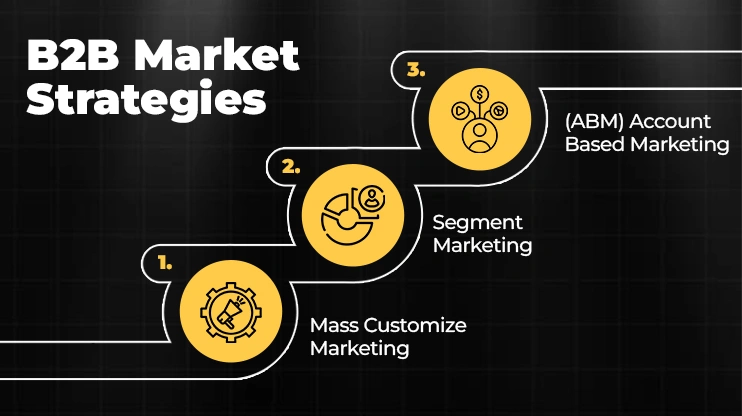
  • One-on-one / strategic ABM: A fully adapted approach to a small number of top accounts (“Market for a”).
  • One-to-FEW / Clusted ABM: You group a few accounts with similar needs or characteristics and create a campaign optimized for the small cluster.
  • Programmatic ABM / One-to-many: A more scalable approach using automation and data to customize access to a large number of accounts.

Often, companies run a portfolio of ABM marketing methods based on account value, complexity and resource accessibility.

4. Step to implement ABM marketing

Here is a practical road map for launching an ABM marketing program

Step 1: Define ideal account criteria

Determine criteria (income potential, industry, geography, fit) to shortlist target accounts.

Step 2: Research and profile accounts

Collect corporate, technographic, intention data and mapping of stakeholders.

Step 3: Adjust marketing and sales

Make sure both teams agree on goal accounts, messages, commitment damage and goals.

Step 4: Create personal content and travel

Design content (whitepapers, case studies, microsites) for each account.

Step 5: Start a multi -channel campaign

Use e -mail, direct mail, viewing ads, LinkedIn, events or webinars to target stakeholders in the account.

Step 6: Organization and care

Coordinate touch points, follow up based on behavior and maintain regular commitment.

Step 7: Dimensions and iterers

Sporm measurements at the account level (engagement, pipeline, closed income) and limit strategies over time

5. Challenges and best practice

ABM-Marketing-Challenges

Challenges

  • Resource intensity: ABM requires more time and effort per account.
  • Data Quality : Incomplete or inaccurate data can break personalization.
  • Incorrect adjustment of sales and marketing: If team does not really cooperate, ABM fails.
  • Scaling adaptation: One-on-one for multiple accounts can be unmanageable.

Best practice

  • Prioritize a small list first and gradually work up to a larger list.
  • Use templates and modular content to make customization easy.
  • Use intent and account signaling data to know when to engage.
  • Maintain control: Clear roles, feedback loops, regular adjustment meetings.
  • Start with accounts already in the pipeline or have strong conditions.

6. Tools and techniques for ABM marketing

To improve ABM marketing helps multiple platforms and tools:

  • ABM platforms & suites for identifying account’s, segmentation and orchestration.
  • CRM and marketing automation (Hubspot) integrated with ABM functions.
  • Intention/data provider to detect signals that target accounts are in the market.
  • Personalization engines/web Personalization tools to tailor website content to accounts.
  • AD measurement and IP targeting tools that allow ads to only appear to employees with targeted accounts (eg LinkedIn, view).

7. Measured success in ABM marketing

In ABM marketing, success at account level is more than individual potential customers. Important calculations include:

  • Number of linked target accounts
  • Commitment points per account (touch points, content consumption)
  • Pipelines generated from target accounts
  • Deal speed from these accounts
  • Closed revenue/return from ABM campaigns
  • Extend/Upsell Existing ABM accounts

Also, compare these calculations with main -based baseline campaigns to see lifting.

Conclusion

ABM marketing is a powerful strategy for B2B businesses that want to establish and grow high-value accounts. By processing each account as its own market, adjusting sales and marketing and providing a deeply personal experience, you can maximize ROI, shorten the sales cycles and promote long -term conditions. Start with a focused pilot, invest in the right data and tools, and continue to iters. Your next big account can only be within reach.

If you want, I can also create well -known image suggestions, or give internal link ideas (to other blogs) tailored to your site. Do you want me to prepare them too?

October 14, 2025 0 comment
0 FacebookTwitterPinterestEmail
ABM Marketing Trends 2025 infographic showcasing AI and personalization
Abm Marketing

Top ABM Marketing Trends 2025 for B2B Growth

by Saurav Dhawale July 22, 2025
written by Saurav Dhawale

Introduction

Account -based Marketing ABM Marketing Trends has entered a strategy due to B2B Buzzword. In 2025, ABM develops faster than ever, run by new techniques, data insights and buyer expectations. If your business is targeted to high value offers and long-term B2B conditions, it is important to understand the trend of ABM Marketing 2025.

This blog highlights the best trends that form the future of ABM and how B2B companies can adapt to permanent growth.

Hyper-Personalization with AI and Intent Data

Personalization has always been at the heart of ABM, but in 2025, it’s reaching new heights. With AI-powered tools and real-timE -intent data can now distribute the message that is not only targeted – but also relevant.

  • AI helps identify where the buyers are in the funnel.
  • Predictive analysis tailor -made outreach based on buyer behavior.
  • Privatization of real -time content performs high commitment.

ABM Marketing Trends 2025 highlights how AI does not replace human contacts – this increases communication for a long time and over time.

Programmatic ABM at Scale

Advanced CRM integration, companies in 2025, the ABM campaigns increase without losing personal touch.

Large approaches include:

  • Automatic e -mail sequence adapted at account level.
  • Scalable ad -targeting when using an account list.
  • Integrated outreach marketing and sales units.

This scalable approach is one of the strongest ABM marketing trends 2025, so that the intermediate market and company businesses can operate ABM.

Multi-Channel, Multi-Touch Campaigns

There are only the days of relying on e -mail or cold calls. The future of ABM Marketing Trends lies in orchestrated multi -channel campaigns that actually attach goals to platforms that they actually use.

Trending Platform:

  • LinkedIn for targeted B2B engagement.
  • Individual destination page and microsite.
  • Advertising withdraws in display networks.
  • Video Marketing for Seeking and Education.

Multi -channel appearance ensures that there is no possibility through cracks25.

Sales and Marketing Alignment Becomes Non-Negotiable

In 2025, companies winning with ABM are those where sales and marketing teams act as one. Tools like shared dashboards, Slack integration, and common KPI causes openness and responsibility.

Best practice:

  • Weekly stand-up between sales and marketing.
  • Integrated messages and security.
  • Co-owned Revenue Matrix and Performance Dashboard.

Strong adjustment is now a requirement, not bonuses. It is one of the ABM Marketing Trends that runs an average return from ABM operations in 2025.

Video and Interactive Content Take the Lead

ASS attention, shorten, static e -post and blog no longer bite. In 2025, ABM invests in high transformation formats such as:

  • Personal video intro from sales representative.
  • Interactive case study and ROI calculator.
  • Dynamic destination page with real -time chat.

This format breaks through noise and affects the possibilities – good to match the ABM marketing trends is focused on 2025 high cabinetsent.

ABM Metrics Move Beyond Vanity

Click frequency and impressions are out. Today’s ABM strategies focus on the matrix that actually means something to development:

Pipeline speed.

  • Commitment in accordance with a member of the procurement committee.
  • Account recording rate.
  • Revenues affected vs closed.

B2B markets now require the transaction transparency, which is one of the more computer-driven ABM Marketing Trends 2025.

Rise of Conversational ABM with Chatbots and AI Assistants

ABM Marketing Trends is now real time. ABM campaigns enter AI-driven chatbots in ABM campaigns to guide the opportunities through tourism booking of business booking and gather insight.

Chatbots are:

  • Active 24/7.
  • Integrated with CRM tools.
  • Adapted to talk in the brand of the brand.

It is a pleasant experience of what modern decision makers expect and why interactive equipment climbs on the ABM marketing trend 2025 list.

Final Thoughts: Future-Proofing Your ABM Strategy

The ABM Marketing Trends 2025 is about all intelligence, speed and privatization. Whether you start ABM or scaling, you will customize your efforts with these ABM marketing trends 2025, help you win more high value accounts and promote returns.

To remain competitive:

  • Invest in AI and automation.
  • Squeeze it Omnikanal’s engagement.
  • Adjust your teams and data around the buyer.
July 22, 2025 0 comment
0 FacebookTwitterPinterestEmail
Marketer analyzing intent data in ABM strategy
Abm Marketing

How to Leverage Intent Data in Account-Based Marketing (ABM) for Higher Conversions

by Saurav Dhawale July 9, 2025
written by Saurav Dhawale

Introduction

B2B is in the world, Intent Data in ABM is one of the largest gaming vessels for personalization. They talk to sales long before researching solutions with buyers, giving their digital body language through intention signals providing a different benefit to the oppressive.

This blog says how to use data in account -based marketing to create a more relevant, targeted and highly performed campaign.

What Is Intent Data ?

The Intent Data in ABM behavioral signals indicating the interest of a potential buyer in a product or service. This may include web searches, content downloads, social media involvement, advertising clicks and more. This behavior creates a digital footprint, when tracks and analysis reveal the buyer’s intentions.

There are two types of intent data:

  • First-sided Intention Data: Collected directly from their owned platforms such as websites, e-mails and webinars.
  • Third-party Intent Data in ABM: Collected from external sources such as Publisher website, advertising networks and B2B data suppliers.

Including this insight into account -based marketing strategies allows laser -centered targeting, better privatization and time search.

Why Intent Data Matters in ABM

Unlike traditional marketing Intent Data in ABM targets high value accounts instead of extensive target groups. Each interaction and touch point is adapted to specific accounts. Why B2B intention data here is a foundation stone in this model:

1. Account Prioritization

Not all goal accounts are ready to buy. Intention data helps with ranking accounts based on their current interest level. This means that you can prioritize seeking to those who show the strongest signal, save time and maximize the return.

2. Personalized Messaging

When you know that an account or product is actively researching, you can tailor your content and messages accordingly. This level of relevance increases the engagement and shortened sales cycles.

3. Sales & Marketing Alignment

The intention acts as a bridge between data marketing and sales teams. With shared insights, both departments can coordinate messages and seek out strategies more efficiently, increasing the chances of conversion..

4. Predictive Analytics

Modern Intent Data in ABM equipment uses AI to estimate which accounts are likely to change based on historical intention patterns. It provides abolition to consistently nurturing stories, before the participants also find that they are in the market.

How to Use Intent Data in Your ABM Campaigns

Implementing Intent Data in ABM isn’t just about collecting information—it’s about using it strategically.

Step 1: Integrate Intent Data in ABM Platforms

Use devices such as bombings, 6Sense, demond base or zoom info to track third -party buyer behavior. Integs these platforms with CRM and the marketing automation tool.

Step 2: Segment Based on Intent Signals

Intent Data in ABM on subjects (eg, cloud safety, CRM equipment) and their research activity..

Step 3: Customize Content & Ads

Serve individual ads, e -mail and destination pages depending on the buyer’s intentions. If a company researches “Enterprise Data Security”, you distribute the affected case study and WhitePapper to care for interest.

Step 4: Trigger Outreach with Sales

When the intention crosses a certain area, in time, the sale for the relevant application automatically notified the team. Sales representatives can refer to accurate subjects as a researcher to open the interaction with the opportunity value

Step 5: Analyze & Optimize

Traces leading to indication of pipeline progression and closed agreements with intention. Over time, it helps you refine the target model and adapt the performance to the campaign

Real-World Example

A B2B -Saas, directed at Enterprise IT team, used bombing data from Bombora to identify companies searching for “Cloud Migration Tools”. He optimized LinkedIn ads and e -mail sequences with the study of the case in question. Result? 2.5x ROI compared to a 38% increase in the engagement rate and their previous Intent Data in ABM campaigns.

In addition, the sales team used Intent Data in ABM to create hyper -relevant calls while seeking out, which improved the reaction rate and more qualified meetings. This strategic adaptation between marketing and sales reduced its average sales cycle to about 22%, which led to average development

Final Thoughts

n Today’s competitive scenario, Intent Data in ABM is no longer optional-this is a requirement. By utilizing real -time behavior signals, you may prefer accounts, customize interactions and interconnect marketing with sales for rapid growth.

Whether you just start with Intent Data in ABM or process a strategy at the corporate level, integration of B2B intention gives you the power to work with insight, not with perception.

July 9, 2025 0 comment
0 FacebookTwitterPinterestEmail
"ABM in 2025 Marketers planning omnichannel campaign using cross-platform data — ABM in 2025"
Abm Marketing

ABM in 2025: Building Truly Omnichannel Campaigns Across Platforms

by Saurav Dhawale June 18, 2025
written by Saurav Dhawale

Introduction

ABM in 2025 has moved far beyond the E -mail list and stable material. Modern account -based marketing thrives on personalization, real -time engagement and omni -channel delivery. B2B buyers today work in digitally saturated worlds, which deal with a mix of platforms – from LinkedIn and Slack to Webinar, Chatbot and Mobile App.

With the buyer’s expectations and attracts attention, it has become important to give the right message at the right time on the right channel. ABM in 2025 is no longer about targeting just accounts; It’s about making liquid, connected experiences that lead stakeholders in complex complex trips.

Why Omnichannel Matters in ABM Today

In the context of ABM in 2025, Omnichannel strategies allow the abolition:

  • Provide personal experience on different platforms
  • Maintain continuity in brand messages
  • Wherever they are in the purchase journey, you can reach stakeholders
  • Improve the engagement through dynamic material delivery

According to a recent demand from demand, companies that use Omnichanel ABM in 2025 approaches see 30% higher engagement rate and 25% better conversation rates than one-channel campaigns.

Key Elements of Omnichannel ABM Campaigns in 2025

1. Unified Customer Data Infrastructure

To run a successful Omnichannel campaign, you need a centralized data platform. Integration of CRM, intention data, website analysis and third -party sources enables real -time privatization into each channe

2. Channel Mapping for Target Accounts

Identify that your most important decision producers are the most active:

  • LinkedIn and Twitter for officers at C-level
  • E -post and mobile for middle -level leaders
  • Sluggies and webinars for technical evaluator

Create channel-specific commitment plans that live in your Master ABM campaign.

3. Content Personalization at Scale

In ABM in 2025, privatization of AI and intention signals are run. Tailor:

  • Destination page with dynamic material blocks
  • Retirement of ads with specific value props
  • Chatbot reactions based on account type

This approach ensures relevance to all platforms to which the buyer is linked.

4. Consistent Messaging Across Platforms

The Omnichannel ABM campaign will communicate the same story. Whether it is a viewing advertisement, a webinar, or a sales call – invites value to coordinate the proposal.

5. Real-Time Engagement Tracking

ABM in 2025 devices provide real -time dashboards that track the account and platform engagement. Use this data to adjust your campaign at speed:

  • Stop underperforming channel
  • Use on accounts with high process
  • Tiger Outreach from sales representative on time

Benefits of Omnichannel ABM in 2025

  • Better ROI: Cross -canal touch points increase conversion capacity.
  • Dark Buyer Insight: Understand how and where buyers are attached.
  • Strong sales adjustment: Integrated data enables timely follow -up of SDR and AES.
  • Scalability: Automation platforms now support omnic channel delivery on the scale

Real-World Example: How a SaaS Brand Scaled with Omnichannel ABM

A B2B SAAS company implements an Omnichannel ABM strategy for targeted venture customers:

  • Used LinkedIn and Email for C-Fool awareness
  • Slack integration rain for this
  • Custom content hub distributed for each account
  • AI-i-operated hunting with chatbots

Results: 40% increase in marketing qualified accounts and 33% less sales cycle.es.

Best Practices for Omnichannel ABM Success

  • Revise and consolidate your customer data regularly
  • Adjust marketing and sales teams on promotional goals
  • Use ABM platforms such as Terminus, Demand or 6Sense for Orchestation
  • A/B Test material in platforms for continuous customization

Conclusion: The Future Is Connected

ABM in 2025 is about creating a spontaneous and attractive experience in all buyers’ touch points. Proper strategy, with equipment and materials, Omnichannel ABM campaign can dramatically improve the conversion frequency and customer loyalty.

Start by integrating your system, adjust your teams and provide integrated personal experience at all phases of the buyer’s journey. The marks that bloom in 2025 will be those who consider each channel not a silo, but as a strategic component of a connected customer experience. Investing in real Omnichannel ABM will pay dividends in today’s competing B2B scenario..

June 18, 2025 0 comment
0 FacebookTwitterPinterestEmail
Abm Marketing

Capture, Correlate, And Manage Customer Data In Real Time To Create Unified Customer Experiences

by Saurav Dhawale May 29, 2023
written by Saurav Dhawale

In today’s fast-paced digital landscape, understanding and engaging with customers on a personal level is paramount for business success. The key to achieving this lies in how effectively a company can capture, correlate, and manage customer data in real time. This process not only enhances customer experiences but also drives growth and loyalty. Here’s a detailed guide on how to harness the power of real-time customer data to create unified customer experiences.

1. Capture Customer Data in Real Time

To create a unified customer experience, it’s essential to capture data from multiple touchpoints as it happens. Real-time data capture involves collecting information from various sources such as:

  • Website Interactions: Tracking user behavior on your website, including clicks, page views, and time spent on different pages.
  • Social Media Engagement: Monitoring likes, shares, comments, and mentions on social media platforms.
  • Mobile App Usage: Gathering data on how customers interact with your mobile app.
  • Email Campaigns: Analyzing open rates, click-through rates, and responses to email campaigns.
  • Point of Sale (POS) Systems: Recording in-store purchases and customer interactions.

Using tools like web analytics, CRM systems, and IoT devices, businesses can capture a wealth of data that provides insights into customer preferences and behaviors.

2. Correlate Customer Data for a 360-Degree View

Once data is captured, the next step is to correlate it to gain a comprehensive view of each customer. This involves:

  • Data Integration: Combining data from different sources into a centralized system.
  • Identity Resolution: Matching data points from various interactions to a single customer profile using identifiers like email addresses, phone numbers, or device IDs.
  • Behavioral Analysis: Understanding patterns in customer behavior to predict future actions and preferences.

Advanced analytics and machine learning algorithms can help in correlating disparate data points to create a unified customer profile. This 360-degree view enables businesses to understand customers’ needs, preferences, and pain points.

3. Manage Customer Data Effectively

Managing customer data is crucial for maintaining its accuracy, security, and usefulness. Effective data management involves:

  • Data Governance: Implementing policies and procedures to ensure data quality and compliance with regulations such as GDPR and CCPA.
  • Data Security: Protecting customer data from breaches and unauthorized access through encryption, access controls, and regular security audits.
  • Data Enrichment: Continuously updating and enhancing customer profiles with new data to keep them current and relevant.
  • Data Accessibility: Ensuring that relevant stakeholders have access to the data they need to make informed decisions.

With robust data management practices, businesses can maintain the integrity of their customer data and leverage it for meaningful insights.

4. Create Unified Customer Experiences

Armed with real-time, correlated, and well-managed data, businesses can create personalized and unified customer experiences across all touchpoints. This involves:

  • Personalized Marketing: Tailoring marketing messages and offers based on individual customer profiles and behaviors.
  • Seamless Omnichannel Experiences: Providing a consistent experience whether the customer is interacting online, in-store, or via mobile.
  • Proactive Customer Service: Anticipating customer needs and addressing issues before they become problems.
  • Enhanced Product Recommendations: Using data insights to suggest products and services that align with customers’ interests and needs.

By leveraging real-time customer data, businesses can not only meet but exceed customer expectations, leading to increased satisfaction, loyalty, and ultimately, business growth.

Conclusion

In the age of data-driven decision-making, capturing, correlating, and managing customer data in real time is essential for creating unified customer experiences. By implementing these strategies, businesses can gain deeper insights into their customers, personalize interactions, and deliver seamless experiences across all channels. Embrace the power of real-time data to transform your customer engagement and drive success in today’s competitive market.

May 29, 2023 0 comment
0 FacebookTwitterPinterestEmail

Latest Posts

  • 1

    What Is AIoT? How AI and IoT Are Creating Smarter Connected Systems

    August 28, 2026
  • 2

    Outsourcing Demand Generation for B2B Tech & SaaS Companies: What to Know Before You Choose a Partner

    August 28, 2026
  • 3

    What Is API Management? How Businesses Secure, Monitor, and Scale APIs

    July 24, 2026
  • 4

    AI in e-commerce: Revolution in Online Retail in 2025

    May 10, 2025
  • 5

    Supply Chain Risk Management in 2025: Top Strategies to Stay Resilient

    June 16, 2025

Address

INDIA

Office No. 612, Wing A, Orville Business Port, Viman Nagar, Pune, Maharashtra 411014

US

2166 W Broadway, 1056, Anaheim, California 92804, US

Phone : +91 9766115291

US Number : +1 657-582-3789

Email : info@arkentechpublishing.com

About Us

With the constant evolution of modern technologies and innovative marketing solutions businesses now are reaching new heights however it takes time and efforts to identify the right effective strategies to market Your business you’re our architect technology publishing display accurate marketing solutions which will fuel up your business growth.

Categories

  • Abm Marketing (7)
  • Analytics (8)
  • API (4)
  • Application Development (5)
  • Artificial Intelligence (15)
  • Audit And Compliance (1)
  • Automation (3)
  • B2B marketing (15)
  • Banking (2)
  • Big Data (5)
  • Cloud Computing (9)
  • Cloud Migration (4)
  • Content Marketing (4)
  • Data Management (6)
  • Data Security (3)
  • Digital Advertising (7)
  • Ebook (3)
  • Ecommerce (3)
  • Erp (6)
  • Finance (67)
  • Finance 2025 (7)
  • Hrtech (88)
  • Insurances (2)
  • IOT (2)
  • IT Infrastructure (4)
  • IT Management (8)
  • IT Security (6)
  • Marketing (55)
  • Marketing 2025 (10)
  • MSP (1)
  • Networking And Communication (3)
  • Security (16)
  • Stock Market (3)
  • Storage (1)
  • Supply Chain (4)
  • Technology (122)
  • Technology 2025 (10)
  • Web Development (4)
<

Edtior's Picks

download 50
Technology
Improving IT Efficiency: Optimizing Workload Placement for Hybrid Cloud
Retail digital platform strategy using APIs
IT Management
Retail Digital Platform Strategy Modernize Retail Customer Engagement With APIs
download - 2025-07-11T144744
Technology
Reporting on Risk in the Public Sector
No posts found

Latest Articles

What Is AIoT? How AI and IoT Are Creating Smarter Connected Systems
IOT
What Is AIoT? How AI and IoT Are Creating Smarter Connected Systems
Outsourcing Demand Generation for B2B Tech & SaaS Companies: What to Know Before You Choose a Partner
B2B marketing
Outsourcing Demand Generation for B2B Tech & SaaS Companies: What to Know Before You Choose a Partner
What Is Embedded AI? How Artificial Intelligence Works Inside Smart Devices
No posts found

Subscribe To Our NewsLetters

Stay updated with the latest news, insights, and exclusive updates delivered straight to your inbox. Subscribe to our newsletter and never miss important announcements, expert tips, and special offers. Be part of our growing community and get valuable content that inspires, informs, and helps you stay ahead. Sign up today!

Subscribe
arkentech-publishing-main-logo-footer

Arkentech Solutions is a marketing agency that caters to Enterprise and Technology companies across the globe to improve ROI on their marketing spend. 

Certified by TopCertifier
Instagram Linkedin

Useful Links

    • IT Security
    • Big Data
    • Technology
    • Finance
    • IT Management
    • HRTECH
    • Marketing

SIte Map

    • Home
    • About Us
    • Work With Us
    • Terms of Use
    • Privacy Policy
    • Feedback
    • Contact Us
Copyright © 2026 Arkentech Publishing