
Skip to content
SUBSCRIBE
  • Technology
    The Rise of Big Data in Fleet Management
    Technology
    The Rise of Big Data in Fleet Management
    January 16, 2026
    Saurav Dhawale
    No posts found
    How to meet the evolving C-store customer How to meet the evolving C-store customer
    Technology
    How to meet the evolving C-store customer
    download - 2025-07-11T150532
    Technology
    Review Hybrid Cloud Management Tools From Google, Azure, AWS, and more
    Machine-Learning-Explained-in-2025-A-Powerful-Beginner-to-Advanced-Guide
    Technology
    Machine Learning Explained in 2025: A Powerful Beginner-to-Advanced Guide
    No posts found
    View All
  • HRTech
    Tactical Buyers Guide: All-Flash SAN Storage for the Hybrid Cloud
    Hrtech
    Tactical Buyers Guide: All-Flash SAN Storage for the Hybrid Cloud
    January 21, 2026
    Saurav Dhawale
    No posts found
    The Slack handbook for sales teams
    Hrtech
    The Slack handbook for sales teams
    download
    Hrtech
    From Pump to Plug:Key differences between gas and EV operations for c-stores
    Jira Service Management Health Check
    Hrtech
    Jira Service Management Health Check
    No posts found
    View All
  • Finance
    download 85
    Finance
    Wie sich der ROI mit Slack verdreifachen lsst
    July 16, 2025
    Saurav Dhawale
    No posts found
    The Power of Next-Generation SD-WAN with App-Defined Fabric
    Finance
    The Power of Next-Generation SD-WAN with App-Defined Fabric
    Screenshot-2026-01-30-220357
    Finance
    The IT decision-makers guide to optimizing cloud workload placement
    The Power of Certainty: measuring endpoint risk in the public sector
    Finance
    The Power of Certainty: measuring endpoint risk in the public sector
    No posts found
    View All
  • Marketing
    Cracking Tomorrow’s CX Code
    Marketing
    Cracking Tomorrow’s CX Code
    January 28, 2026
    Saurav Dhawale
    No posts found
    download25
    Marketing
    The Total Economic Impact™ of VMware Carbon Black Cloud Cost savings and business benefits thanks to Carbon Black Cloud
    6 Tips For Better Digital Learning In The Workplace
    Marketing
    6 Tips For Better Digital Learning In The Workplace
    With ESET’s premium MDR service, you get an Enterprise-level SOC, off the shelf
    Marketing
    With ESET’s Premium MDR Service, You Get an Enterprise-Level SOC, Off the Shelf
    No posts found
    View All
  • Resources
    • Web Development
    • Technology 2025
    • Supply Chain
    • Storage
    • Security
    • Networking And Communication
    • MSP
    • Library
    • IT Security
    • IT Management
    • IT Infrastructure
    • IOT
    • Global Trade
    • Stock Market
    • Insurances
    • Banking
    • Finance 2025
    • ERP
    • Ecommerce
    • Ebook
    • Digital Advertising
    • Data Security
    • Data Management
    • Content Marketing
    • Cloud Migration
    • Cloud Computing
    • Big Data
    • B2B Marketing
    • Audit And Compliance
    • Artificial Intelligence
    • Application Development
    • API
    • Analytics
    • Abm Marketing
  • Contact
  • About
    • Privacy Policy
    • Terms of Use
    • Cookies Notice
  • work-with-us
    • Advertise With-Us
  • Technology
    download - 2025-07-11T145821
    Technology
    Strengthening Healthcare Security and Reducing Costs Through Modern IGA
    July 11, 2025
    Saurav Dhawale
    No posts found
    download35
    Technology
    Die Versprechen von Apple auf dem Prufstand.
    download11
    Technology
    Cracking Tomorrow's CX Code
    Machine-Learning-Explained-in-2025-A-Powerful-Beginner-to-Advanced-Guide
    Technology
    Machine Learning Explained in 2025: A Powerful Beginner-to-Advanced Guide
    No posts found
    View All
  • HRTech
    How to Understand the ROI of Investing in People
    Hrtech
    How to Understand the ROI of Investing in People
    January 23, 2026
    Saurav Dhawale
    No posts found
    Deploy a Scalable CTEM Program to Proactively Mitigate Business Threats
    Hrtech
    Deploy a Scalable CTEM Program to Proactively Mitigate Business Threats
    A CSO guide: Unlocking value with a diverse carbon dioxide removal portfolio
    Hrtech
    A CSO guide: Unlocking value with a diverse carbon dioxide removal portfolio
    The European Supply Chain Battlefield: Cybersecurity,National Defense, and the NIS2 Regulation
    Hrtech
    The European Supply Chain Battlefield: Cybersecurity,National Defense, and the NIS2 Regulation
    No posts found
    View All
  • Finance
    download5
    Finance
    Smart Academic Management – Simplify, Automate, and Enhance Learning
    July 25, 2025
    Saurav Dhawale
    No posts found
    The Browser is the New Frontline Defense for Endpoint Security
    Finance
    The Browser is the New Frontline Defense for Endpoint Security
    Screenshot-2026-01-30-220357
    Finance
    The IT decision-makers guide to optimizing cloud workload placement
    download 83
    Finance
    Why Zero Trust Cant be Bought and Must be Earned.
    No posts found
    View All
  • Marketing
    Strategize and Oversee Your Projects Seamlessly
    Marketing
    Strategize and Oversee Your Projects Seamlessly
    January 20, 2026
    Saurav Dhawale
    No posts found
    Unify Your Communications: Small business simplicity; big business features
    Marketing
    Unify Your Communications: Small Business Simplicity; Big Business Features
    download (9)
    Marketing
    6 Strategies for Helping Today's Teens Cope With Modern Stressors and Pressures
    download 46
    Marketing
    NetApp All-SAN Array - Data Availability and Integrity with the NetApp ASA
    No posts found
    View All
  • Resources
    • Web Development
    • Technology 2025
    • Supply Chain
    • Storage
    • Security
    • Networking And Communication
    • MSP
    • Library
    • IT Security
    • IT Management
    • IT Infrastructure
    • IOT
    • Global Trade
    • Stock Market
    • Insurances
    • Banking
    • Finance 2025
    • ERP
    • Ecommerce
    • Ebook
    • Digital Advertising
    • Data Security
    • Data Management
    • Content Marketing
    • Cloud Migration
    • Cloud Computing
    • Big Data
    • B2B Marketing
    • Audit And Compliance
    • Artificial Intelligence
    • Application Development
    • API
    • Analytics
    • Abm Marketing
  • Contact
  • About
    • Privacy Policy
    • Terms of Use
    • Cookies Notice
  • work-with-us
    • Advertise With-Us
Home » API
Category:

API

API

What Is API Management? How Businesses Secure, Monitor, and Scale APIs

by ailcia sierra July 24, 2026
written by ailcia sierra

Businesses today really need applications, cloud platforms, mobile solutions and connected services to work. Behind all these things Application Programming Interfaces or APIs are very important because they help different systems talk to each other.

Whether a customer is making an online payment, checking an order status, using a mobile application, or accessing a business service, APIs are working in the background to exchange information between applications. As businesses use digital solutions they make and manage more APIs.. Managing a lot of APIs by hand can be tough because of security, performance, monitoring and scalability issues.

That is where managing APIs comes in.

Managing APIs gives businesses the tools and strategies they need to make, secure, monitor, control and make their APIs better throughout their lifecycle. For companies APIs are not just technical things. They are business assets that connect customers, partners, applications and internal systems.

Having an API management plan helps businesses make their applications work better protect important data keep security standards high and make digital ecosystems that can grow. Lots of companies, in banking, healthcare, online shopping, telecommunications and software are using API management solutions to get everything connected and to change their businesses digitally.

What Is API Management? How Businesses Secure, Monitor, and Scale APIs

What is API Management?

API governance is the system of creating, publishing, securing, monitoring, testing, and maintaining APIs throughout their lifecycle. This includes the use of specific structures and technologies to help organizations manage how APIs are accessed and used by packages, developers, customers, and external peers .

Simply put, API management acts as a manipulation center for APIs. It allows organizations to manipulate API traffic, enforce security rules, monitor overall performance, and provide reliable reporting for specific APIs.

Without proper monitoring, APIs are difficult to maintain and can create security risks.

For example, even a company with hundreds of APIs can struggle with:

  • Monitoring API Usage
  • Manage Access Permissions
  • Keeping Tactile Records
  • Identify Overall Performance Problems
  • maintaining an unprecedented variety of APIs

API management solves those challenges by providing and managing centralized visibility.

Why API Management Is Important for Modern Businesses

APIs are really the base of digital businesses. Companies use APIs to connect the apps they use inside the company services from companies, cloud platforms and the things they make for their customers.

As more and more companies use APIs they start to have some new problems.

Poorly managed APIs can lead to:

  • Security vulnerabilities
  • Slow application performance
  • Data exposure
  • Poor developer experience
  • Difficult maintenance

A strong API management strategy ensures that APIs remain secure, reliable, and scalable.

Business ChallengeHow API Management Helps
Increasing number of APIsProvides centralized management
Security concernsApplies authentication and protection policies
Performance issuesMonitors API traffic and usage
Complex integrationsSimplifies API connectivity
Lack of visibilityProvides analytics and reporting

How API Management Works

API management works through multiple components that help organizations control the complete API lifecycle.

A typical API management platform includes:

  • API Gateway
  • Developer Portal
  • Security Management
  • Analytics and Monitoring
  • API Lifecycle Management

Each component plays an important role in ensuring APIs operate efficiently.

API Gateway

An API Gateway acts as the entry point between users, applications, and backend services. It manages incoming API requests and controls how those requests are processed.

The API gateway can handle:

  • Request routing
  • Authentication
  • Traffic management
  • Rate limiting
  • Security enforcement

For businesses, an API gateway improves security and performance by controlling access to backend systems.

API Security Management

Security is one of the most important parts of API management. APIs often handle sensitive business information, including customer data, payment details, and internal application information.

Without proper protection, attackers can exploit weak APIs to gain unauthorized access.

Effective API Security strategies include:

Security PracticePurpose
AuthenticationVerifies user identity
AuthorizationControls access permissions
EncryptionProtects data transmission
Rate LimitingPrevents abuse and attacks
API MonitoringDetects suspicious activities

Modern businesses use API management platforms to enforce security policies automatically and reduce security risks.

API Lifecycle Management Explained

API lifecycle management refers to managing an API from its creation to retirement.

Unlike traditional software, APIs require continuous updates, monitoring, and improvements because they are used by multiple applications and users.

The API lifecycle includes several stages:

API Lifecycle StageDescription
PlanningDefine API goals and requirements
DevelopmentBuild and test APIs
PublishingMake APIs available to users
MonitoringTrack performance and usage
UpdatingImprove features and security
RetirementRemove outdated APIs

Proper lifecycle management helps businesses maintain reliable APIs and avoid technical problems.

Benefits of API Management for Businesses

1. Improved API Security

One of the biggest benefits of API management is improved security.

As businesses expose more APIs, they increase their attack surface. API management solutions provide security controls that protect APIs from unauthorized access and cyber threats.

Security features such as authentication, encryption, access control, and monitoring help businesses protect valuable information.

2. Better API Performance Monitoring

Businesses need visibility into how APIs perform.

API monitoring helps organizations understand:

  • Response times
  • Error rates
  • API traffic
  • User activity
  • System performance

This information helps teams identify issues quickly and maintain reliable digital services.

Monitoring MetricImportance
Response TimeMeasures API speed
Error RateIdentifies problems
Traffic VolumeShows API usage
AvailabilityEnsures reliability

3. Faster Digital Innovation

API management allows businesses to build and launch new digital services faster.

Developers can reuse existing APIs instead of creating everything from scratch. This reduces development time and helps companies respond quickly to changing customer needs.

For example, a retail company can quickly create new mobile features by connecting existing APIs for payments, inventory, and customer accounts.

4. Better Developer Experience

APIs are often used by internal teams, partners, and external developers. A good API management strategy provides documentation, testing environments, and access controls that make APIs easier to use.

A better developer experience improves collaboration and encourages innovation.

Enterprise API Management Architecture

Enterprise API management architecture provides a structured approach for managing APIs across an organization.

Large companies often operate hundreds or thousands of APIs connecting different applications, databases, cloud platforms, and external services.

Without a centralized API management system, businesses may face challenges such as inconsistent security policies, limited visibility, and difficulty managing API performance.

An enterprise API management architecture usually includes multiple layers.

API Management LayerPurpose
API Consumer LayerHandles applications, users, and external partners
API Gateway LayerControls API traffic and security
Management LayerHandles monitoring, policies, and analytics
Backend Service LayerConnects APIs with business systems

This architecture allows businesses to create a secure and organized API ecosystem.

Enterprise API Management Architecture

API Security Best Practices Businesses Should Follow

Security is one of the biggest concerns when businesses expose APIs to customers, partners, and external applications. APIs often provide access to sensitive business information, making them attractive targets for cybercriminals.

A weak API security strategy can lead to data breaches, unauthorized access, and service disruptions. Following proper API Security Best Practices helps businesses protect their digital infrastructure.

Implement Strong Authentication and Authorization

Authentication verifies the identity of users or applications accessing an API, while authorization determines what resources they are allowed to access.

Businesses should avoid relying on simple authentication methods because compromised credentials can provide attackers with direct access to systems.

Modern API security commonly uses:

  • OAuth authentication
  • API keys
  • Token-based authentication
  • Multi-factor authentication
Security MethodPurpose
API KeysIdentifies applications accessing APIs
OAuth TokensProvides secure authorization
JWT TokensTransfers secure user information
Multi-Factor AuthenticationAdds additional protection

Strong authentication prevents unauthorized users from accessing sensitive API resources.

Use Encryption for API Data Protection

APIs frequently transfer information between different systems. Protecting this communication is essential for maintaining data security. Encryption ensures that sensitive information remains protected while moving between applications.

Businesses should use secure communication protocols and encryption methods to protect:

  • Customer information
  • Payment details
  • Business records
  • Application data

For enterprises handling sensitive information, encryption is a critical part of Enterprise API Management.

Apply API Rate Limiting

API rate limiting controls the number of requests a user or application can send within a specific time period. This protects APIs from excessive usage, automated attacks, and performance issues.

For example, if an attacker sends thousands of requests to an API within seconds, rate limiting can block or slow down those requests.

Benefits of rate limiting include:

  • Preventing API abuse
  • Improving system performance
  • Protecting backend services
  • Maintaining service availability
Rate Limiting BenefitBusiness Impact
Prevents excessive trafficReduces system overload
Controls API usageImproves reliability
Blocks suspicious behaviorEnhances security

API Monitoring and Performance Management

API monitoring is an essential part of API management because businesses need continuous visibility into API performance. Without monitoring, organizations may not know when APIs experience failures, slow responses, or unusual activity.

API Monitoring helps businesses track important performance indicators and identify problems before they impact customers.

Important API monitoring metrics include:

Monitoring MetricExplanation
Response TimeMeasures how quickly APIs respond
AvailabilityTracks whether APIs are accessible
Error RateIdentifies failed requests
Traffic VolumeShows API usage patterns
User ActivityTracks API interactions

Why API Analytics Matter for Businesses

API analytics provide valuable insights into how APIs are being used.

Businesses can analyze API performance, customer behavior, and application usage patterns to improve their digital services.

For example, an ecommerce company can analyze which APIs receive the highest traffic during sales campaigns and optimize resources accordingly.

API analytics help organizations:

  • Understand customer behavior
  • Identify performance problems
  • Improve API design
  • Optimize business processes
API Analytics DataBusiness Value
API Usage ReportsUnderstand demand
Performance DataImprove reliability
Consumer InsightsImprove customer experience
Error TrackingReduce technical issues

Role of API Gateway in API Management

An API Gateway plays a central role in managing API communication. It acts as a bridge between API consumers and backend systems by controlling requests and enforcing security policies.

Instead of every application directly communicating with backend services, requests pass through the API gateway. This creates better control and visibility.

An API gateway provides:

  • Request routing
  • Authentication
  • Traffic management
  • Load balancing
  • Security enforcement
  • API analytics
API Gateway FunctionImportance
Traffic ManagementMaintains performance during high usage
AuthenticationControls access
RoutingConnects requests with services
MonitoringProvides API visibility

How API Management Helps Businesses Scale APIs

As businesses grow, their API requirements also increase. A company that starts with a few APIs may eventually manage hundreds of APIs across multiple departments and applications.

Without proper management, scaling APIs can become complex.

API management platforms help businesses scale by providing:

  • Centralized API control
  • Automated security policies
  • Performance monitoring
  • Developer management
  • API documentation

For example, a global ecommerce company may use APIs for payments, inventory, shipping, customer accounts, and mobile applications.

API management ensures these APIs continue working efficiently as usage increases.

API Documentation and Developer Experience

Good API documentation is really important for people to use APIs successfully.

Developers need to know how the APIs work and what features are available and how to authenticate and what the usage guidelines are.

The API management platforms usually have something called developer portals where people can do a things.

  • Access API documentation
  • Test APIs
  • View usage information
  • Request API access

A strong developer experience improves collaboration between internal teams and external partners.

API Version Management

APIs often need updates to support new business requirements. However, changing an existing API without proper planning can break applications that depend on it.

API version management helps businesses introduce improvements while maintaining compatibility.

For example, when launching a new API version, businesses can continue supporting older versions until users migrate.

API Version StrategyBenefit
Version ControlPrevents application failures
Backward CompatibilitySupports existing users
Controlled MigrationReduces disruption

API Governance for Enterprise Businesses

API governance ensures that APIs follow consistent standards across an organization.

Without governance, different teams may create APIs using different security practices, documentation methods, and development approaches.

API governance helps establish:

  • Security standards
  • Development guidelines
  • Documentation requirements
  • Compliance rules

For large enterprises, governance is important for maintaining a reliable API ecosystem.

Common API Management Challenges

Although API management provides many benefits, businesses may face challenges while implementing it.

Understanding these challenges helps organizations create better strategies.

ChallengeImpact
API Security RisksIncreases chances of data exposure
Lack of MonitoringMakes issues harder to detect
Poor DocumentationCreates developer difficulties
API SprawlMakes management complex
Integration IssuesSlows digital development

API Sprawl: A Growing Business Challenge

API sprawl occurs when organizations create too many APIs without proper management. As different teams build APIs for different applications, businesses may lose visibility and control.

This creates challenges such as:

  • Duplicate APIs
  • Security gaps
  • Difficult maintenance
  • Increased operational costs

API management platforms help businesses organize APIs and maintain better control.

Best API Management Tools and Platforms

Businesses use API management platforms to simplify the complete API lifecycle, including API creation, publishing, security, monitoring, and optimization.

The right API management solution depends on business requirements, technical infrastructure, scalability needs, and integration requirements.

Some platforms focus on enterprise API governance, while others provide developer-friendly tools for building and managing APIs.

API Management PlatformMain Capability
Enterprise API PlatformsLarge-scale API governance and management
Cloud API Management ServicesCloud-based API security and monitoring
Open Source API GatewaysFlexible API control and customization
Integration PlatformsConnecting multiple applications and services

A good API management platform should provide security features, analytics, documentation tools, scalability options, and integration capabilities.

How to Choose the Right API Management Solution

Selecting an API management solution requires businesses to evaluate their current and future requirements.

A company managing a small number of internal APIs may need a simpler solution, while a global enterprise may require advanced governance and security capabilities.

Important factors include:

Selection FactorWhy It Matters
Security FeaturesProtects APIs from cyber threats
ScalabilitySupports increasing API usage
AnalyticsProvides performance insights
Integration SupportConnects existing systems
Developer ToolsImproves API adoption
Automation CapabilitiesReduces manual management

The best solution should support business growth while maintaining security and performance.

How to Implement an Effective API Management Strategy

Successful API management requires a well-planned approach. Businesses should not only focus on selecting technology but also create processes for managing APIs effectively.

A strong implementation strategy includes understanding business goals, defining API standards, implementing security controls, and continuously improving performance.

Step 1: Identify Business API Requirements

Before implementing API management, businesses should understand why they need APIs and what problems they want to solve.

Organizations should analyze:

  • Existing APIs
  • Business applications
  • Customer requirements
  • Integration needs
  • Security requirements

This helps create an API strategy aligned with business objectives.

How to Implement an Effective API Management Strategy

Step 2: Create API Governance Standards

API governance ensures that all APIs follow consistent rules and development practices.

Organizations should define standards related to:

  • API design
  • Security policies
  • Documentation
  • Version management
  • Performance monitoring

Governance reduces complexity and improves API quality.

Step 3: Implement Security Controls

Security should be considered from the beginning of API development.

Businesses should implement:

  • Authentication mechanisms
  • Authorization policies
  • Encryption standards
  • Access controls
  • Threat monitoring

A security-first approach reduces risks and protects sensitive business information.

Step 4: Monitor API Performance

Continuous monitoring helps businesses understand how APIs perform in real-world conditions.

Organizations should track:

  • API response time
  • Traffic patterns
  • Error rates
  • User activity
  • System availability

Performance insights allow teams to identify problems and optimize API operations.

Step 5: Continuously Improve APIs

API management is not a one-time activity.

Businesses should regularly analyze API performance, collect feedback, update security policies, and improve functionality. Continuous improvement helps APIs remain reliable as business requirements change.

API Management Best Practices

  • Strengthen API Security: Implement strong authentication, access controls, and continuous security monitoring.
  • Maintain Clear API Documentation: Provide detailed documentation for authentication, endpoints, requests, responses, and error handling.
  • Monitor API Performance: Use API analytics to track usage, performance, errors, and optimization opportunities.

Manage API Versions Properly

Regular updates are necessary to improve APIs, but poor version management can create compatibility problems. Businesses should maintain proper version control to ensure existing applications continue functioning smoothly.

Automate API Management Processes

Automation reduces manual effort and improves consistency.

Businesses can automate:

  • API deployment
  • Security checks
  • Monitoring alerts
  • Documentation updates
  • Performance testing

Automation improves efficiency and reduces operational complexity.

API Management Benefits Across Different Industries

  • Banking & Financial Services: Enables secure, compliant, and reliable connections between banking systems and financial services.
  • Ecommerce: Improves payment processing, inventory management, order tracking, and customer experiences.
  • Healthcare: Secures patient data exchange while supporting compliance and interoperability.
  • Software & SaaS: Simplifies integrations, improves API performance, and supports scalable application growth.

Future Trends in API Management

The future of API management will be shaped by increasing digital connectivity, cloud adoption, and the need for secure application integration.

Businesses will continue investing in advanced API strategies to support innovation and improve customer experiences.

Future TrendBusiness Impact
Cloud-Based API ManagementProvides flexible and scalable solutions
API Security AutomationImproves protection against threats
API Analytics GrowthEnables better decision-making
API Governance AutomationSimplifies enterprise management
Microservices AdoptionIncreases API usage

API Management and Cloud-Native Applications

Cloud-native applications rely heavily on APIs because they use distributed services and microservices architectures.

As organizations move workloads to the cloud, API management becomes essential for maintaining communication between different services.

Cloud-based API management allows businesses to:

  • Manage distributed APIs
  • Improve application reliability
  • Monitor cloud services
  • Scale digital platforms efficiently

This makes API management a critical component of modern cloud strategies.

Why API Management Is Essential for Digital Transformation

Digital transformation requires businesses to connect systems, automate processes, and create seamless digital experiences.

APIs make these connections possible, but without proper management, organizations cannot fully benefit from their API investments.

API management helps businesses:

  • Build secure digital ecosystems
  • Improve application connectivity
  • Accelerate innovation
  • Reduce operational complexity
  • Deliver better customer experiences

For modern enterprises, APIs are not just technical tools. They are strategic assets that support business growth.

Conclusion:

Managing APIs has emerged as a critical requirement for organizations that rely on virtual applications, cloud infrastructures, and related offerings.

As organizations build more APIs, efficient technology is needed to stabilize, monitor, and scale these virtual connections. A strong API Management approach helps businesses protect sensitive information, improve API performance, manage complex integrations, and create reliable digital experiences.

API protection and tracking Lifecycle management and governance Every part of API management contributes to building a stronger technical foundation. Businesses that invest in powerful API management technologies can increase operational efficiency, boost innovation, and survive competitively in an increasingly connected virtual world .

As technology evolves, APIs remain a key component of modern enterprise infrastructure, making API management a critical capability for businesses of all sizes .

Frequently Asked questions

1. What is API Management?

API Management is the process of creating, securing, monitoring, publishing, and managing APIs throughout their complete lifecycle. It helps businesses control API access, improve performance, protect sensitive data, and ensure reliable communication between different applications and systems.

API management platforms provide tools such as API gateways, security controls, analytics, monitoring, and developer portals to manage APIs efficiently.

2. Why is API Management important for businesses?

API Management is important because modern businesses rely on APIs to connect applications, cloud services, mobile platforms, and external partners.

Without proper API management, businesses may face security risks, performance issues, and difficulties managing multiple APIs.

A strong API management strategy helps organizations:

  • Improve API security
  • Monitor API performance
  • Manage API traffic
  • Scale digital applications
  • Improve developer experience

3. How does API Management improve API security?

API Management improves API security by providing authentication, authorization, encryption, access controls, and monitoring capabilities.

Businesses can protect APIs from unauthorized access, data breaches, and cyber threats by implementing security policies through API management platforms.

Important API security practices include:

  • Using secure authentication methods
  • Encrypting API communication
  • Monitoring suspicious activities
  • Managing user permissions

4. What is an API Gateway in API Management?

An API Gateway is a central component of API Management that acts as a connection point between API users and backend services.

It manages API requests and provides important functions such as:

  • API Gateway Function Purpose
  • Authentication Verifies user identity
  • Request Routing Directs requests to correct services
  • Rate Limiting Controls API usage
  • Monitoring Tracks API performance
  • Security Policies Protects API access

API gateways improve API reliability, security, and performance.

5. What is API Lifecycle Management?

API Lifecycle Management refers to managing an API from its initial planning and development stage to its retirement.

The main stages include:

  • API design and development
  • Testing and deployment
  • Publishing and usage management
  • Performance monitoring
  • Updating and version control
  • Retirement of outdated APIs

Effective lifecycle management ensures APIs remain secure, reliable, and useful throughout their existence.


July 24, 2026 0 comment
0 FacebookTwitterPinterestEmail
API
API

How API Integration Is Transforming Modern Business Operations

by ailcia sierra July 7, 2026
written by ailcia sierra

In today’s digital age, businesses require fast and automated operations, coupled with flawless communication. Organizations no longer have only one software system to facilitate their activities. On the contrary, they make use of various systems for managing their relationships with customers, financial activities, marketing campaigns, e-commerce initiatives, analytical data, communications, and cloud computing.

API Integration is the technology that is changing how businesses operate these days. Application Programming Interface stand for application programming interfaces and help different systems of applications interact with each other in a seamless manner in real-time. With the help of APIs, data is exchanged in an automated way from one software system to another.

In the previous era, businesses had difficulties with disconnection between the systems used, duplicity in data entries, delays in communication, and other issues. In order to complete a particular task, employees would have to switch between various systems. Application Programming Interface integration helps overcome such challenges and brings about a whole new digital world with integrated systems working efficiently together.

What Is API Integration?

API integration is an approach that uses Application Programming Interface to integrate various software applications in order to share data and communicate with each other seamlessly.

The role of Application Programming Interface is to serve as a connection tool for different software applications enabling businesses to increase efficiency without having to manually perform tasks.

Characteristics

  • Data exchange
  • Workflow automation
  • System integration
  • Fast platform communication
What Is API Integration?

Forms of API Integration

  • Internal: They are used by businesses internally to integrate their own systems and departments.
  • External: They enable businesses to connect to third-party solutions and applications.
  • Partner: They help companies exchange data securely with their partners.

How API Integration Helps Businesses

API integration helps businesses by getting rid of workflows that do not work well together. It also makes it easier for different platforms to talk to each other.

When we use APIs information gets updated automatically in all systems. This means we do not have to enter data into many systems. This also helps to reduce delays and mistakes made by people.

Key Features

  • Workflow automation
  • Faster data synchronization with Application Programming Interface
  • efficiency in daily operations
  • Reduced manual tasks, through Application Programming Interface integration

Traditional Systems vs API-Integrated Systems

AspectTraditional SystemsAPI-Integrated Systems
Data SharingManualAutomated
Workflow SpeedSlowFast
Operational EfficiencyLimitedHigh
Error RateHigherReduced

Importance of API Integration for Digital Transformation

Since digital transformation requires interconnected solutions and communication in real time, API integration allows businesses to upgrade their processes through the integration of cloud platforms, enterprise solutions, mobile applications, and client systems.

Organizations can be innovative through the use of APIs since they make it easy to incorporate new technologies into their existing frameworks.

Key Features

  • Accelerated digital transformation
  • Interconnection between cloud platforms
  • Scalable technology environments
  • Increased business agility

Kinds of API Technologies

  • REST : popular due to their simplicity, flexibility, and scalability.
  • SOAP: offer reliable structure and high-security measures.
  • GraphQL: offer flexible queries and improved efficiency in the extraction of information from the database.

API Integration in Ecommerce

For ecommerce organizations, API integration is essential as it facilitates the connection of ecommerce stores to payment gateways, shipping companies, inventory, and customer management systems.

Such integrations result in better experiences for consumers and efficient business operations.

Key Features

  • Real-time inventory updates
  • Automatic payment processing
  • Efficient order management
  • Enhanced customer experience
What Is API Integration?

Ecommerce API Integration Examples

Integration TypeBusiness Benefit
Payment Gateway APIsFaster transactions
Shipping APIsReal-time tracking
CRM APIsBetter customer management
Marketing APIsPersonalized campaigns

How API Integration Makes Customer Experience Better

Customers today want easy digital experiences. When businesses use API integration they can give customers services that’re just for them updates right away and interactions that are smoother.

By linking systems businesses can get better at talking to customers and cut down on wait times at every point customers touch.

Key Features

  • interactions
  • Faster response times
  • Notifications in time
  • Better service quality

API Integration and Business Automation

Automation is getting to be a must-have for businesses that want to get more efficient and cut down on costs. API integration helps make automation happen by letting systems do tasks by themselves no people needed.

Businesses can make things, like invoicing signing up customers reports and marketing campaigns happen all on their own.

Key Features

  • Automating processes
  • Less work for people to do
  • Tasks get done faster
  • People get more done

Automated Process Types

  • Marketing Automation: APIs link marketing software solutions for managing campaigns and analyzing performance metrics.
  • Financial Automation: APIs streamline payment processing and accounting operations.
  • Customer Service Automation: Chatbot applications and customer service platforms leverage APIs for instant messaging purposes.

Advantages of API Implementation in Business

There are several benefits to integrating APIs into your business processes.

Businesses can accelerate their innovation process while simplifying their operations.

Key Characteristics

  • Greater scalability
  • More connectivity
  • Higher efficiency
  • Greater innovation potential

Benefits of API Integration

BenefitBusiness Impact
AutomationReduced operational costs
ConnectivityImproved workflows
Real-Time DataFaster decision-making
ScalabilityBusiness growth support

API Security in Modern Applications

API security is becoming critical as businesses adopt connected digital platforms.

Key Features

  • Secure authentication
  • Threat prevention
  • Data protection

How AI APIs Are Transforming Digital Platforms

AI APIs help businesses integrate intelligent features into applications and services.

Key Features

  • AI automation
  • Intelligent analytics
  • Smart customer interactions

API Automation and Workflow Optimization

API-driven automation improves productivity and operational efficiency.

Key Features

  • Workflow automation
  • Faster operations
  • Reduced manual work
What Is API Integration?

Cloud APIs and Business Scalability

Cloud APIs help businesses build scalable and flexible digital infrastructures.

Key Features

  • Cloud connectivity
  • Flexible systems
  • Real-time access

API-Driven Ecommerce Ecosystems

Modern ecommerce platforms depend heavily on API connectivity.

Key Features

  • Payment integration
  • Inventory synchronization
  • Customer personalization

Difficulties Associated with API Integration

While there are numerous advantages to using API integration, companies might encounter difficulties during its implementation and management process.

They need to address security, compatibility, and governance issues while connecting different systems.

Main Characteristics

  • Security issues
  • Compatibility problems
  • Complexity in integration
  • Management of APIs

Classification of API Integration Difficulties

  • Security Difficulties: Companies need to guard their APIs against cyber attacks and breaches.
  • Technical Difficulties: It can be hard to integrate legacy systems with current APIs.
  • Scalability Difficulties: Dealing with vast amounts of APIs calls for solid infrastructure.

API Security and Privacy

With the increasing significance of APIs in the digital landscape, API security has emerged as a critical concern for companies.

They have to secure sensitive customer information and comply with privacy laws.

Main Characteristics

  • Systems for authentication
  • Data encryption
  • Access control
  • Monitoring threats

Future of API Integration

The future of API integration is directly linked to cloud computing, artificial intelligence, IoT, and digital transformation technology.

APIs will be more crucial than ever for businesses to develop intelligent and connected ecosystems.

Key Features

  • AI-driven integrations
  • Automation
  • Cloud computing
  • Digital ecosystems

Conclusion

API integration is really changing the way businesses work nowadays. It is making everything connected and automated. It is making things smarter. Businesses do not have to use systems that are not connected and they do not have to do things by hand. Application Programming Interface integration lets different software platforms talk to each other away which makes things more efficient and it helps businesses grow and it makes customers happy.

API integration is helping businesses in all kinds of areas like when people buy things and when companies do marketing and finance and customer service. Application Programming Interface integration is making it possible for businesses to make their operations simpler and to change with the times faster. Companies that use APIs to build their systems can come up with ideas faster they can save money and they can do better overall.

As new technologies like intelligence and cloud computing and automation get better Application Programming Interface integration will become even more important for businesses that want to stay ahead. Businesses that make a plan for using APIs now will be, in a better position to grow and come up with new ideas in the long run. Application Programming Interface integration is something that businesses need to think about if they want to stay competitive and API integration’s going to keep changing the way businesses work.

Frequently Asked Questions:

1. What is API integration?

API integration is when you connect software systems and applications so they can talk to each other and share data automatically.

2. Why is API integration important for businesses?

API integration helps businesses get things done faster. It makes work easier by automating tasks cutting down on work and making customers happier.

3. What industries use API integration?

Many industries use API integration. These include:

  • Ecommerce
  • Finance
  • Healthcare
  • Logistics
  • Marketing

4. What are the benefits of API integration?

The benefits of API integration are:

  • It helps tasks
  • It allows for real-time data sharing
  • It makes businesses more scalable
  • It speeds up business operations

5. What is the future of API integration?

In the future we can expect to see use of AI-powered APIs. Native integrations will become more common. Intelligent automation and connected digital ecosystems will also play a role, in API integration. API integration will continue to evolve.

July 7, 2026 0 comment
0 FacebookTwitterPinterestEmail
Powerful-API-Use-Cases-That-Are-Transforming-Modern-Software-Development-In-2026
API

Powerful API Use Cases That Are Transforming Modern Software Development In 2026

by Saurav Dhawale January 6, 2026
written by Saurav Dhawale

What Is an API?

An API (Application Programming Interface) is a fixed of guidelines that lets in distinctive software program packages to communicate with every other. Instead of constructing the whole thing from scratch, builders use an Application Programming Interface to access capabilities, services, or information from any other system.

In easy term, an Application Programming Interface work like a bridge among two programs. It permit faster improvement, better integration, and seamless data exchange.

How an Application Programming Interface Works ?

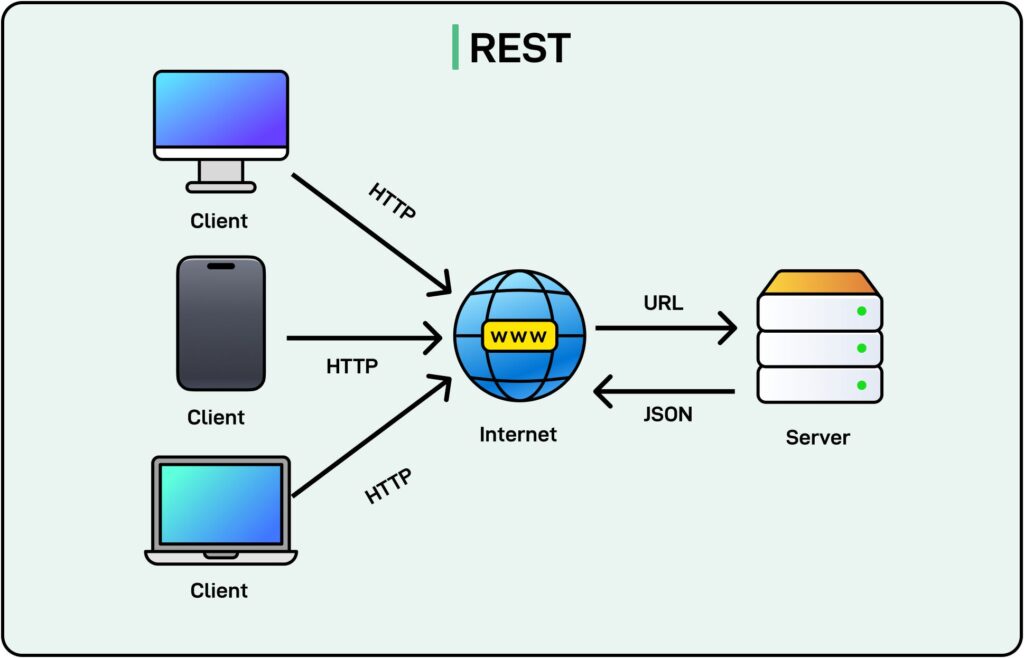
An Application Programming Interface works via a established request-reaction cycle:

  • A client sends an Application Programming Interface request
  • The Application Programming Interface processes the request
  • The server returns a response
  • The client receives data in JSON or XML format

This method makes packages scalable and flexible.

Why Application Programming Interfaces Are Important in 2026

In 2026, Application Programming Interface are essential due to the fact:

  • Cloud computing depends on Application Programming Interfaces
  • AI and ML platforms rely on Application Programming Interfaces
  • Mobile and web apps need real-time data
  • Small services architecture requires Application Programming Interfaces

Modern business use Application Programming Interface to stay competitive and innovative.

Types of Application Programming Interfaces

Open API

Accessible to outside developers
Example: Google Maps

Private Application Programming Interface

Used internally within corporations

Partner Application Programming Interface

Shared with specific enterprise companions

Composite Application Programming Interface

Combines multiple Application Programming Interface calls into one

Popular Application Programming Interface Protocols

  • REST API (Most common)
  • SOAP API
  • GraphQL API
  • gRPC

REST API dominates cutting-edge improvement because of simplicity and scalability.

Real-World Application Programming Interface Use Cases

Payment Systems

PayPal, Stripe, Razorpay use Application Programming Interface

Social Media Integration

Login thru Facebook or Google

Weather Applications

Live statistics through weather Application Programming Interfaces

AI & Machine Learning

OpenAI and ML Application Programming Interfaces power automation

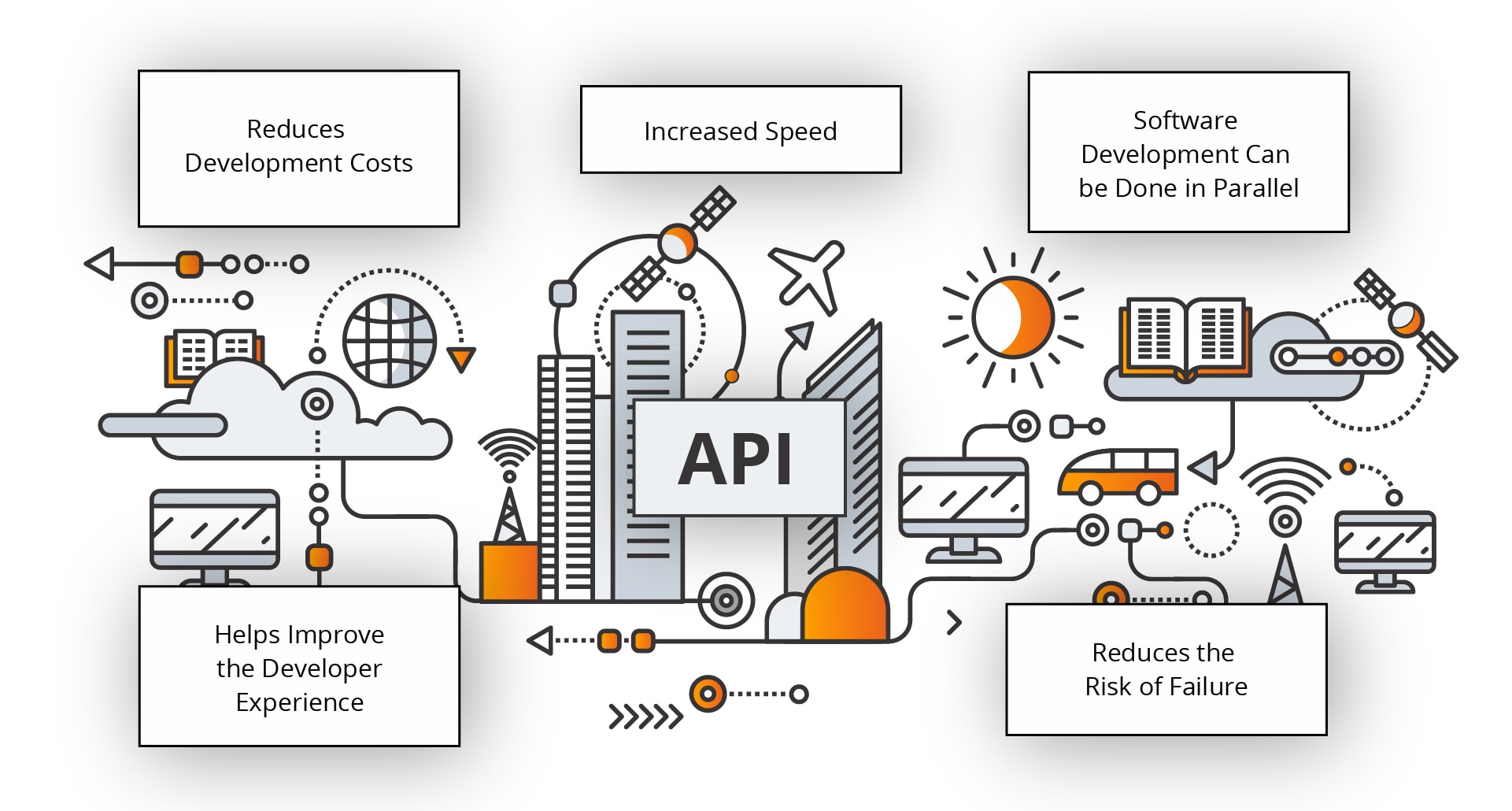
Benefits of Using an Application Programming Interface

  • Faster development
  • Improved scalability
  • Cost efficiency
  • Secure records access
  • Platform independence

Application Programming Interfaces lessen improvement time and enhance performance.

API benefits diagram for software development

Application Programming Interface Security Best Practices

  • Use Application Programming Interfaces keys and OAuth 2.0
  • Enable rate limiting
  • Encrypt data with HTTPS
  • Validate inputs
  • Monitor Application Programming Interface traffic

Security is critical whilst exposing an Application Programming Interface publicly.

FAQs About Application Programming Interface

What is an Application Programming Interface used for?

An Application Programming Interface allows programs to proportion information and capabilities securely.

Is Application Programming Interface handiest for developers?

No, companies additionally use Application Programming Interface for automation and integrations.

Are Application Programming Interface steady?

Yes, when proper authentication and encryption are used.

The future of Application Programming Interface technology

The future of Application Programming Interface development includes:

  • AI-powered Application Programming Interfaces
  • Serverless Application Programming Interfaces
  • Event-driven Application Programming Interfaces
  • Zero-trust Application Programming Interface security

Application Programming Interfaces will continue to drive digital transformation.

Application Programming Interface Tools for Developers

Popular gear include:

  • Postman
  • Swagger
  • RapidAPI
  • Apigee

These gear simplify Application Programming Interface testing and management.

API Documentation Best Practices

Good API documentation consists of:

  • Clear endpoints
  • Sample requests
  • Error handling
  • Authentication steps

Well-documented APIs boom adoption.

API vs Web Services

FeatureAPIWeb Service
ProtocolFlexibleHTTP only
Data FormatJSON, XMLXML
UsageModern appsLegacy systems

Common Application Programming Interface Challenges

  • Handling versioning issues when Application Programming Interfaces are updated
  • Managing rate limits to avoid overloading servers
  • Ensuring backward compatibility for older applications
  • Debugging errors when Application Programming Interfaces fail to respond correctly

Application Programming Interface Performance Tips

  • Optimize endpoints for faster responses
  • Cache frequently requested data
  • Monitor usage analytics to prevent downtime
  • Load test APIs before public release

App Programming Interface in Different Industries

  • E-commerce : Integrating payment gateways, shipping, and inventory management
  • Healthcare: Secure data exchange between hospitals, labs, and apps
  • Banking: Open banking Application Programming Interfaces for financial apps and transactions
  • IoT: Smart devices communicating via Application Programming Interfaces for home automation

Final Thought

An API is the spine of modern software program development. From mobile apps to cloud platform, Application Programming Interface enable innovation, scalability, and performance. If you want your virtual merchandise to develop quicker, adopting a sturdy Application Programming Interface approach is crucial in 2026 and beyond.

January 6, 2026 0 comment
0 FacebookTwitterPinterestEmail
How to build a secure API with best practices
API

How to Build a Secure API: A Step-by-Step Guide

by Saurav Dhawale May 19, 2025
written by Saurav Dhawale

Introduction

APIs are the backbone of modern web and mobile applications. Whether you work in fintech, e-commerce, or IoT, safe APIs are necessary to ensure security and privacy for sensitive data. In this blog, we will explore how to build a secure API using action-rich strategies that help ensure your APIs are protected from common threats and vulnerabilities.

As API develops and is rapidly connected to platforms and services, their exposure to potential cyber threats increases. Developers and companies should use an active mindset for API security – not only for compliance, but also to maintain their reputation and customer confidence. Let’s dive deep into the basic principles of how to build a secure API


Why API security means something

API can be a weak entrance point for online attacks. According to Forester, APIs are now the most common web applications. Failure to secure APIs can lead to results:

  • Breach of data
  • Unauthorized access
  • Loss of user confidence
  • Violation of compliance (eg GDPR, HIPAA)

Construction of SAFE API is not just a technical requirement – this is a compulsory activity.


Best Practices to Build a Secure API

1. Use https everywhere

Always use https. This ensures that all the data exchanged between the API and the client is encrypted to prevent the attacks on MITM.

Tip: Redirect all http traffic on https and install valid SSL/TLS certificate.

2. Use certification and authority

Secure your API closures with strong certification and authority mechanisms:

  • Implement token-based access control using standards like OAuth 2.0 or JWT to ensure secure and scalable authentication.
  • Do not rely solely on API keys, as they offer limited security and can be easily compromised.
  • Adopt role-based access control (RBAC) to assign permissions based on user roles, improving authorization and access management.

3. Copy all the inputs

Entrance confirmation is important. Copy each request from the customer to escape:

  • SQL injection
  • Cross-Site Scripting (XSS)
  • Command injection

Use formification libraries such as joi or AJV to define and use the input structure.4. Rate Limiting and Throttling

4.Protect your API from abuse and denial-of-service (DoS) attacks by limiting:

  • Number of requests per IP per minute
  • Burst traffic

Tools like Nginx, Cloudflare, and Amazon API Gateway can help enforce rate limits.

5. Use API Gateway and Web App Firewall (WAFS)

API Gateways acts as an entrance point and offers several security layers, including:

  • Authentication
  • Rate Limited
  • Logging
  • Far Detection

To filter malicious traffic, use AWS WAF, Cloudflare WAF or WAF as Imperva.

6. Regular screen and revision –api

Logging and monitoring are required. Use platforms such as:

  • Data train
  • splon
  • New residue

These devices help you detect abnormal activity, analyze logs and respond to quick events.


Regular API to avoid security errors

  • To highlight sensitive data in reactions, such as password or individual user information
  • Hardcode -Collection in source code or configuration files
  • Lack of version, remains available for old and weak closing points
  • Inadequate log and audit paths, making it difficult to detect attacks
  • No outlet policy for symbols, whose symbols are stolen, so increase the risk
  • Poor error handling, which may highlight the API structure and the internal argument
  • Apart from data from errors, cutting or exposure to encrypt data in the rest or transit

Avoiding these common misunderstandings can improve your API flexibility dramatically and reduce the surface of attack.


Conclusion

Understanding how to build a secure API is critical for any developer or business that relies on digital interactions. From enforcing HTTPS to adopting robust authentication methods, these best practices provide a foundation for building resilient, future-proof APIs.

Security should never be treated as an afterthought—it must be embedded into every stage of API development. By staying informed on evolving threats and continuously testing your endpoints, you can maintain the trust of your users and ensure your system’s integrity. The more secure your APIs are, the more confidently your business can scale in the interconnected digital ecosystem of 2025 and beyond.

May 19, 2025 0 comment
0 FacebookTwitterPinterestEmail

Latest Posts

  • 1

    What Is AIoT? How AI and IoT Are Creating Smarter Connected Systems

    August 28, 2026
  • 2

    Outsourcing Demand Generation for B2B Tech & SaaS Companies: What to Know Before You Choose a Partner

    August 28, 2026
  • 3

    What Is API Management? How Businesses Secure, Monitor, and Scale APIs

    July 24, 2026
  • 4

    Cold Storage 101: Everything You Need to Know About Modern Data Storage Solutions

    June 19, 2025
  • 5

    Finance Policies for Indian Business in 2025: Key Updates & Insights

    May 6, 2025

Address

INDIA

Office No. 612, Wing A, Orville Business Port, Viman Nagar, Pune, Maharashtra 411014

US

2166 W Broadway, 1056, Anaheim, California 92804, US

Phone : +91 9766115291

US Number : +1 657-582-3789

Email : info@arkentechpublishing.com

About Us

With the constant evolution of modern technologies and innovative marketing solutions businesses now are reaching new heights however it takes time and efforts to identify the right effective strategies to market Your business you’re our architect technology publishing display accurate marketing solutions which will fuel up your business growth.

Categories

  • Abm Marketing (7)
  • Analytics (8)
  • API (4)
  • Application Development (5)
  • Artificial Intelligence (15)
  • Audit And Compliance (1)
  • Automation (3)
  • B2B marketing (15)
  • Banking (2)
  • Big Data (5)
  • Cloud Computing (9)
  • Cloud Migration (4)
  • Content Marketing (4)
  • Data Management (6)
  • Data Security (3)
  • Digital Advertising (7)
  • Ebook (3)
  • Ecommerce (3)
  • Erp (6)
  • Finance (67)
  • Finance 2025 (7)
  • Hrtech (88)
  • Insurances (2)
  • IOT (2)
  • IT Infrastructure (4)
  • IT Management (8)
  • IT Security (6)
  • Marketing (55)
  • Marketing 2025 (10)
  • MSP (1)
  • Networking And Communication (3)
  • Security (16)
  • Stock Market (3)
  • Storage (1)
  • Supply Chain (4)
  • Technology (122)
  • Technology 2025 (10)
  • Web Development (4)
<

Edtior's Picks

6 Tips For Better Digital Learning In The Workplace
Marketing
6 Tips For Better Digital Learning In The Workplace
lucid-origin_Image_Prompt_Deep_Reddish_Agentic_Marketing_Tools_Theme_A_highly_creative_deep_r-0
Marketing
10 Best Agentic Marketing Tools to Automate Smarter Campaigns
Electrical contractors: Mitigate labor shortages with AI
Finance
Electrical contractors: Mitigate labor shortages with AI
No posts found

Latest Articles

What Is AIoT? How AI and IoT Are Creating Smarter Connected Systems
IOT
What Is AIoT? How AI and IoT Are Creating Smarter Connected Systems
Outsourcing Demand Generation for B2B Tech & SaaS Companies: What to Know Before You Choose a Partner
B2B marketing
Outsourcing Demand Generation for B2B Tech & SaaS Companies: What to Know Before You Choose a Partner
What Is Embedded AI? How Artificial Intelligence Works Inside Smart Devices
No posts found

Subscribe To Our NewsLetters

Stay updated with the latest news, insights, and exclusive updates delivered straight to your inbox. Subscribe to our newsletter and never miss important announcements, expert tips, and special offers. Be part of our growing community and get valuable content that inspires, informs, and helps you stay ahead. Sign up today!

Subscribe
arkentech-publishing-main-logo-footer

Arkentech Solutions is a marketing agency that caters to Enterprise and Technology companies across the globe to improve ROI on their marketing spend. 

Certified by TopCertifier
Instagram Linkedin

Useful Links

    • IT Security
    • Big Data
    • Technology
    • Finance
    • IT Management
    • HRTECH
    • Marketing

SIte Map

    • Home
    • About Us
    • Work With Us
    • Terms of Use
    • Privacy Policy
    • Feedback
    • Contact Us
Copyright © 2026 Arkentech Publishing