Skip to content
SUBSCRIBE
  • Technology
    download - 2025-07-15T171413
    Technology
    The CIO report: Leading your business through cyber risk
    July 15, 2025
    Jimmy Simmons
    No posts found
    IDC InfoBrief: Market Insights: Application Detection and Response
    Technology
    IDC InfoBrief: Market Insights: Application Detection and Response
    Embracing A Zero Trust Security Model in Government
    Technology
    Embracing A Zero Trust Security Model in Government
    Reimagine Retail and Consumer Goods Innovation with Generative AI
    Technology
    Reimagine Retail and Consumer Goods Innovation with Generative AI
    No posts found
    View All
  • HRTech
    6 Strategies for Helping Today’s Teens Cope With Modern Stressors and Pressures
    Hrtech
    6 Strategies for Helping Today’s Teens Cope With Modern Stressors and Pressures
    January 22, 2026
    Jimmy Simmons
    No posts found
    Werknemers kiezen hoe ze werken
    Hrtech
    Werknemers kiezen hoe ze werken
    Best practices for fostering payment accessibility
    Hrtech
    Best practices for fostering payment accessibility
    Deploy a Scalable CTEM Program to Proactively Mitigate Business Threats
    Hrtech
    Deploy a Scalable CTEM Program to Proactively Mitigate Business Threats
    No posts found
    View All
  • Finance
    2023 Executive Survey
    Finance
    2023 Executive Survey: The power of mobilizing the boundless workforce
    January 22, 2026
    Jimmy Simmons
    No posts found
    Tres maneras de ampliar los servicios tecnológicos y seguir reduciendo costos
    Finance
    Tres maneras de ampliar los servicios tecnológicos y seguir reduciendo costos
    download-2 (1)
    Finance
    Complex Tax Calculations With a Single Source of Truth: Increase Agility With Longview Tax and Reduce Risk
    Unlock Enhanced Property Tax Compliance Strategies with Aberdeen’s Latest Insights!
    Finance
    Unlock Enhanced Property Tax Compliance Strategies with Aberdeen’s Latest Insights!
    No posts found
    View All
  • Marketing
    lucid-origin_Image_Prompt_Deep_Reddish_Agentic_Marketing_Tools_Theme_A_highly_creative_deep_r-0
    Marketing
    10 Best Agentic Marketing Tools to Automate Smarter Campaigns
    August 6, 2026
    ailcia sierra
    No posts found
    Companies Can Reach Digital Maturity with Industrial DataOps
    Marketing
    Companies Can Reach Digital Maturity with Industrial DataOps
    Tools Designed for Security Could Be Your Biggest Security Threat
    Marketing
    Tools Designed for Security Could Be Your Biggest Security Threat
    Transform Your Company With High-Velocity Service Management
    Marketing
    Transform Your Company With High-Velocity Service Management
    No posts found
    View All
  • Resources
    • Web Development
    • Technology 2025
    • Supply Chain
    • Storage
    • Security
    • Networking And Communication
    • MSP
    • Library
    • IT Security
    • IT Management
    • IT Infrastructure
    • IOT
    • Global Trade
    • Stock Market
    • Insurances
    • Banking
    • Finance 2025
    • ERP
    • Ecommerce
    • Ebook
    • Digital Advertising
    • Data Security
    • Data Management
    • Content Marketing
    • Cloud Migration
    • Cloud Computing
    • Big Data
    • B2B Marketing
    • Audit And Compliance
    • Artificial Intelligence
    • Application Development
    • API
    • Analytics
    • Abm Marketing
  • Contact
  • About
    • Privacy Policy
    • Terms of Use
    • Cookies Notice
  • work-with-us
    • Advertise With-Us
  • Technology
    Embracing A Zero Trust Security Model in Government
    Technology
    Embracing A Zero Trust Security Model in Government
    January 28, 2026
    Jimmy Simmons
    No posts found
    Migrate to a modern virtualization platform
    Technology
    Migrate to a modern virtualization platform
    download - 2025-07-11T141914
    Technology
    Realizing true business value from machine learning
    IDC InfoBrief: Market Insights: Application Detection and Response
    Technology
    IDC InfoBrief: Market Insights: Application Detection and Response
    No posts found
    View All
  • HRTech
    A Survey Of 900 Tech Leaders Reveals Hybrid Cloud Is The Most Effective, Long-Term Strategy
    Hrtech
    A Survey Of 900 Tech Leaders Reveals Hybrid Cloud Is The Most Effective, Long-Term Strategy
    January 22, 2026
    Jimmy Simmons
    No posts found
    Modern virtualization New paths forward for financial services
    Hrtech
    Modern virtualization: New paths forward for financial services
    Why Tax and IT Need to Work Together When Migrating to SAP S/4HANA
    Hrtech
    Why Tax and IT Need to Work Together When Migrating to SAP S/4HANA
    Cyberproof Multicloud Environments
    Hrtech
    Cyberproof Multicloud Environments
    No posts found
    View All
  • Finance
    Empower your IT Strategy with Choice
    Finance
    Empower your IT Strategy with Choice
    January 30, 2026
    Jimmy Simmons
    No posts found
    photo (7)
    Finance
    Parents and Student Portal – Stay Connected to Your Educational Journey
    State of Observability for Financial Services and Insurance
    Finance
    State of Observability in Financial Services
    IT Leaders Need IT Services To Achieve Business Outcomes
    Finance
    IT Leaders Need IT Services to Achieve Business Outcomes
    No posts found
    View All
  • Marketing
    download (1)
    Marketing
    Key Insights into QSRs' Affordability and Profitability Balancing Act -- And How To Successfully Bridge Gaps
    June 26, 2025
    Jimmy Simmons
    No posts found
    Secure Transformation: Replacing Remote Access
    Marketing
    Secure Transformation: Replacing Remote Access VPN with Prisma Access
    How MedTech sales operations leaders are driving growth
    Marketing
    How MedTech sales operations leaders are driving growth
    lucid-origin_a_surreal_and_vibrant_cinematic_photo_of_Creative_Unique_Image_Prompt_No_Text_16-0
    Marketing
    Beyond SEO: Why GEO and Machine-Trustable Authority Are the New Survival Threshold
    No posts found
    View All
  • Resources
    • Web Development
    • Technology 2025
    • Supply Chain
    • Storage
    • Security
    • Networking And Communication
    • MSP
    • Library
    • IT Security
    • IT Management
    • IT Infrastructure
    • IOT
    • Global Trade
    • Stock Market
    • Insurances
    • Banking
    • Finance 2025
    • ERP
    • Ecommerce
    • Ebook
    • Digital Advertising
    • Data Security
    • Data Management
    • Content Marketing
    • Cloud Migration
    • Cloud Computing
    • Big Data
    • B2B Marketing
    • Audit And Compliance
    • Artificial Intelligence
    • Application Development
    • API
    • Analytics
    • Abm Marketing
  • Contact
  • About
    • Privacy Policy
    • Terms of Use
    • Cookies Notice
  • work-with-us
    • Advertise With-Us
Home » Supply Chain
Category:

Supply Chain

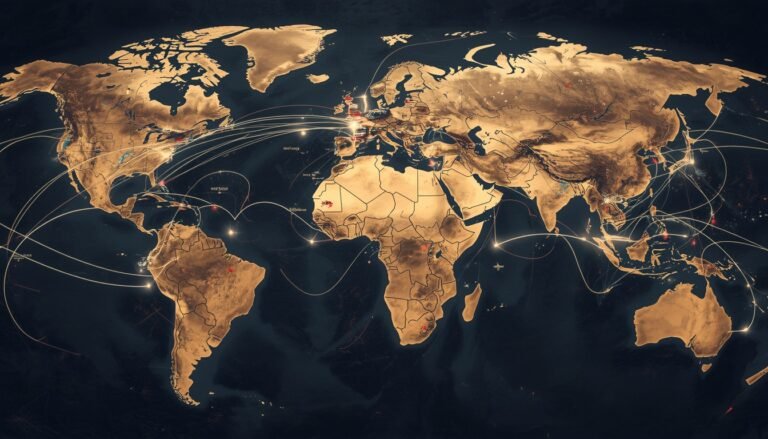
The New Era of Global Trade: AI, Tariffs and Supply Chains
Supply Chain

The New Era of Global Trade: AI, Tariffs and Supply Chains

by ailcia sierra September 9, 2026
written by ailcia sierra

Global trade is moving into a different phase. For years companies built international supply chains around one simple goal: make products where costs were lowest move them quickly across borders and sell them in the biggest markets. Cost efficiency, scale and just‑in‑time logistics became the rules of international business.

That model is being challenged.

Tariffs, tensions, new rules, technology rivalry and supply‑chain disruptions are forcing firms to rethink where they make goods, where they get materials and how they work with overseas suppliers. At the time artificial intelligence is creating a fresh demand for chips, servers, networking gear, data centers, energy infrastructure and advanced manufacturing.

The result is a new global trade environment in which AI, tariffs and supply chains are increasingly connected.

Recent exchange lists show how significant this change is. The World Trade Organization reported that the international product alternative performed strongly in the first region in 2026, volatile AI-enabled goods sharply increased The WTO said the price of AI-enabled goods rose more than forty% per year for 12 months within the first quarter of the year, which helped the disturbance

McKinsey’s 2026 analysis likewise confirmed that AI-related changes in products have become the primary driver of the global alternative boom, with semiconductors and data center devices accounting for less than a third of global change growth by 2025 .

At the time tariffs push companies to diversify suppliers and rethink established trade routes. UN Trade and Development has highlighted rising tariffs, geopolitical tensions and the reconfiguration of value chains as major forces shaping international commerce in 2026.

This means the future of global trade will not simply be about moving more products across borders. It will increasingly be about where products are made, how supply chains are connected, how technology influences demand and how businesses manage geopolitical and regulatory risk.

Why Global Trade Is Entering a New Era

Global trade has never been static. Manufacturing centers have moved, new markets have emerged and companies have repeatedly changed their sourcing strategies. What makes the current period different is the speed at which several forces are changing simultaneously.

AI is increasing demand for specific technologies and infrastructure. Tariffs are altering the cost of buying across borders. Political tensions are pushing firms to cut reliance on supply chains. Environmental and legal rules are adding compliance duties.

These developments are not occurring independently.

A tariff can raise the price of one supplier pushing a firm to look for another source. That new supplier might be in another country, which creates a need, for logistics setup. At the time AI tools can help the firm examine suppliers, forecast demand and spot possible disruptions.

The modern supply chain is therefore becoming more digital, diversified and risk-focused.

Traditional Global Trade ModelEmerging Global Trade Model
Lowest-cost sourcingBalanced cost and resilience
Highly concentrated suppliersMultiple supplier networks
Just-in-time inventoryStrategic inventory buffers
Manual trade managementAI-assisted decision-making
Stable trade routesFlexible trade corridors
Cost optimizationRisk-adjusted optimization
Limited supply chain visibilityReal-time visibility
Reactive disruption managementPredictive risk management

UNCTAD estimates that nearly two-thirds of global trade takes place within value chains, making changes to these networks particularly important for manufacturers, exporters and importers.

The emerging model does not mean globalization is disappearing. Instead, globalization is becoming more complex.

Companies are still trading internationally, but they are increasingly asking a different question: How can we remain globally connected without becoming overly dependent on a single market, supplier or route?
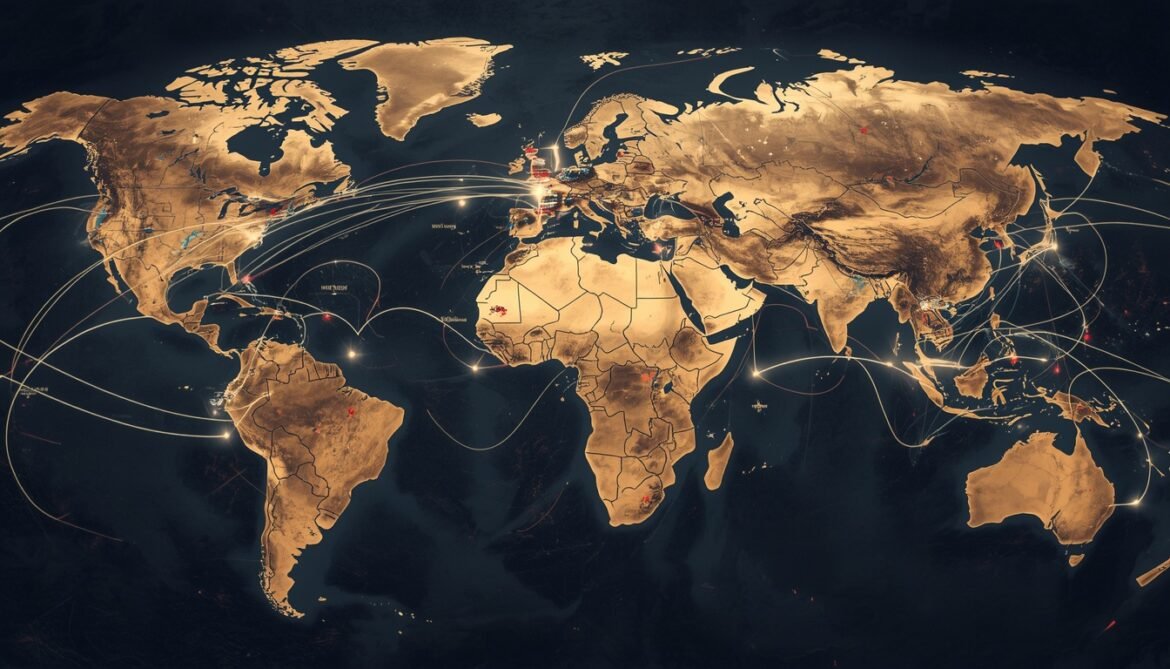
How AI Is Changing Global Trade

Artificial intelligence is becoming one of the most important technological forces affecting global commerce.

The most obvious impact can be seen in the physical products required to build AI infrastructure. Advanced processors, memory, servers, networking equipment and data-center components are moving through international supply chains at an increasing rate.

But AI’s influence goes beyond hardware.

Businesses are also using AI to analyze trade data, forecast demand, monitor suppliers, identify logistics risks and automate administrative processes.

A company managing thousands of international shipments, for example, may need to evaluate supplier reliability, transportation costs, customs requirements, currency movements and changing tariffs. Traditionally, these decisions required large teams and significant amounts of manual analysis.

AI can process these variables much faster.

AreaTraditional ApproachAI-Enabled Approach
Demand forecastingHistorical spreadsheetsPredictive models
Supplier analysisManual researchAutomated risk scoring
Shipment trackingPeriodic updatesReal-time monitoring
Tariff analysisManual classificationAI-assisted analysis
Inventory planningFixed assumptionsDynamic forecasting
Risk managementReactivePredictive
Trade documentationManual processingIntelligent automation
Route planningStatic optimizationDynamic optimization

This does not mean AI will completely replace trade professionals. Instead, it changes how they make decisions.

A procurement manager can spend less time collecting information and more time deciding which supplier strategy makes sense. A logistics team can identify potential delays earlier. A finance team can model how tariffs could affect margins before committing to a transaction.

AI is therefore becoming part of the decision infrastructure behind global trade.

AI-Related Goods Are Becoming a Major Trade Driver

One of the most important developments in global trade is the rapid growth of AI-related hardware.

The construction of AI infrastructure requires enormous quantities of advanced technology. Data centers require processors, servers, networking equipment, memory, cooling systems, power systems and construction materials.

This creates a ripple effect across international trade.

McKinsey’s 2026 research found that AI-related trade grew close to 40% in 2025, significantly faster than overall global trade. The company estimated that AI-related goods accounted for around one-third of global trade growth.

UNCTAD has also reported that AI-related products were a major source of merchandise trade growth, while broader trade momentum remained comparatively modest.

This creates an unusual situation.

AI is not only a software revolution. It is also becoming a global manufacturing and trade phenomenon.

The AI economy depends on international networks involving semiconductor manufacturing, advanced packaging, data-center equipment, cloud infrastructure, electricity generation and logistics.

AI Infrastructure ComponentTrade Impact
SemiconductorsIncreased cross-border demand
GPUs and acceleratorsHigher technology trade
ServersGrowth in manufacturing and exports
Networking equipmentExpansion of data-center supply chains
Cooling systemsNew industrial demand
Power equipmentIncreased infrastructure investment
Data centersRegional construction and equipment demand
Critical mineralsGreater strategic importance

This creates opportunities for countries that can become important suppliers of AI infrastructure.

It also creates new vulnerabilities.

If semiconductor manufacturing is concentrated in a limited number of locations, geopolitical disruptions can have global consequences. If tariffs are imposed on critical components, the cost of AI infrastructure can increase.

AI and global trade are therefore becoming increasingly interconnected.

How Tariffs Are Reshaping Global Supply Chains

Tariffs have always been part of trade policy. I see how the importance of tariffs has grown a lot lately.

A tariff changes the economics of importing a product. If a company imports a component for $100 and faces an additional tariff, the effective cost can increase substantially.

Businesses then have several choices. They can absorb the cost, increase prices, reduce margins, change suppliers or move part of their production.

The choice depends on the product on what customers want on how easy it’s to find a supplier and on how well the company can change its supply chain.

UNCTAD has warned that rising tariffs add uncertainty and can disturb sourcing and investment decisions. The analysis also says that diversifying suppliers and moving production are ways to respond to shifts, in geopolitics and trade policy.

Tariff PressurePossible Business Response
Higher import costsFind alternative suppliers
Reduced marginsAdjust pricing
Supplier concentrationDiversify sourcing
Market access restrictionsBuild regional production
Uncertain tariff policyIncrease scenario planning
Higher logistics costsOptimize routes
Regulatory complexityInvest in compliance technology

The important point is that tariffs do not simply affect customs costs.

They can influence the entire structure of a company’s supply chain.

A manufacturer may decide that paying a higher unit cost from a second supplier is preferable to depending entirely on one country. A retailer may change sourcing markets. A technology company may build additional manufacturing capacity closer to its customers.

This is why tariffs are becoming a supply chain issue rather than simply a trade policy issue.

The Shift From Efficiency to Resilience

For years, businesses prioritized efficiency.

The goal was to reduce inventory, lower transportation costs and source products from the most cost-effective locations. That approach created highly optimized supply chains, but optimization sometimes came at the expense of resilience.

A disruption at one supplier could affect hundreds of downstream businesses.

The COVID-19 pandemic demonstrated this vulnerability, but subsequent geopolitical tensions, shipping disruptions and tariff changes have reinforced the lesson.

Today, businesses increasingly want supply chains that can absorb shocks. This does not mean abandoning efficiency. It means finding a balance between efficiency and resilience.

A company might accept a slightly higher procurement cost in exchange for having two or three qualified suppliers instead of one. It might maintain additional inventory for strategically important components. It might establish production capacity in multiple regions.

The new objective is therefore:

Optimize for cost, but manage for risk.

McKinsey’s supply chain research has shown how tariffs have become a major concern for supply chain leaders, with companies adjusting priorities in response to changing trade conditions.

Supply Chain Diversification Is Becoming a Priority

Supply chain diversification is one of the clearest characteristics of the new global trade environment.

Instead of relying on one country or supplier, companies are increasingly building networks.

For example, a business might source components from China, assemble products in Vietnam, maintain distribution centers in Europe and North America, and sell to customers across several markets.

This creates additional complexity, but it also reduces dependence on a single location.

The concept is sometimes described as a China+1 strategy, although modern supply chain diversification is broader than simply moving production from China to another country.

Companies are considering manufacturing and sourcing locations based on cost, skills, infrastructure, trade agreements, political stability and proximity, to customers.

Supply Chain StrategyMain Objective
China+1Reduce geographic concentration
NearshoringMove production closer to customers
Friend-shoringPrioritize strategically aligned markets
RegionalizationBuild regional supply networks
Multi-sourcingReduce supplier dependency
Vertical integrationIncrease control over critical inputs

UNCTAD reports that geopolitical tensions, industrial policy and technology are driving supplier diversification and production relocation closer to end markets.

This could lead to a world where global supply chains remain international but become less centralized.
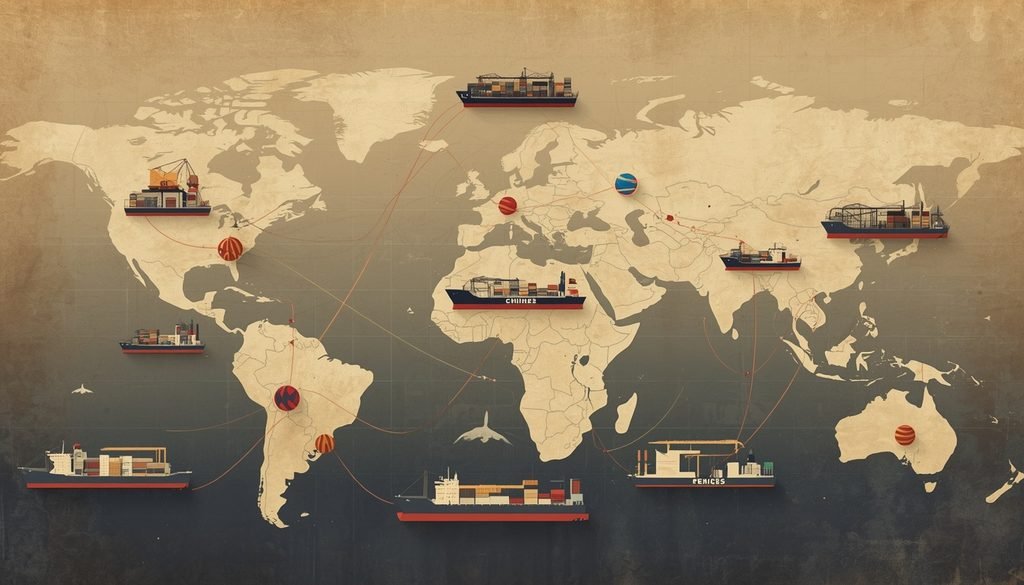
Tariffs,

China, ASEAN, India and the Changing Trade Map

The geography of global trade is changing.

China remains one of the world’s most important manufacturing and trading economies, but companies are increasingly diversifying production and sourcing.

ASEAN economies are becoming important beneficiaries of this shift.

McKinsey’s 2026 analysis showed that Southeast Asia strengthened its role in the global manufacturing sector, while India bottomed out in select areas. In addition, it was observed that U.S. procurement shifted to alternative suppliers as U.S.-China trade changed.

This does not mean China is disappearing from global supply chains.

Instead, China’s role is evolving.

China continues to supply large quantities of components, industrial machinery and manufacturing inputs, while other countries are increasing their roles in assembly and final production.

India is also becoming increasingly important in areas such as electronics manufacturing and technology-related production.

ASEAN countries, meanwhile, are benefiting from supply chain diversification and their proximity to major Asian manufacturing networks.

The result is a more distributed manufacturing landscape.

The Role of Technology in Modern Supply Chains

Technology is becoming essential to managing this increasingly complex environment.

A modern international supply chain can involve thousands of suppliers, multiple transportation modes, customs processes, currencies, regulations and customer markets.

Without digital systems, managing this complexity becomes difficult.

Cloud platforms provide centralized access to supply chain information. AI can analyze large datasets. Internet-connected sensors can provide shipment information. Digital trade platforms can simplify documentation.

Together, these technologies can create a more transparent supply chain.

TechnologySupply Chain Application
Artificial intelligenceForecasting and risk management
Machine learningDemand prediction
Cloud computingData sharing
IoTShipment monitoring
BlockchainTransaction and document verification
Digital twinsScenario modeling
Predictive analyticsDisruption forecasting
AutomationDocumentation and workflow management

The value of these technologies becomes particularly clear during disruption.

If a shipping route becomes unavailable, a digitally connected supply chain can evaluate alternative routes and suppliers faster than a system dependent on manual processes.

How AI Helps Businesses Manage Trade Risks

AI can play a particularly important role in risk management.

A global company might have to keep track of different factors. These include how well suppliers perform, prices of goods, shipping conditions, political changes, tariffs, currency shifts and how much customers want products.

People can look at this data. Understand it.. Going through all of it by hand takes too much time and effort. AI systems can watch over amounts of data all the time. They can pick up on things that seem out of the ordinary.

For instance an AI tool used in supply chain management might notice that a supplier is delivering goods later than before. At the time it could spot rising transport fees from that area.

Of waiting for a big problem to happen the company can act early. It can look into suppliers and make changes before things get worse. AI can also support scenario planning.

A company could ask:

What happens to our margins if a 15% tariff is introduced on a major component?

Another scenario could evaluate what happens if a supplier becomes unavailable. Another could compare the financial impact of moving production to another country.

The value is not simply automation. It is faster decision-making.

Global Trade and the Rise of Digital Infrastructure

Physical trade depends increasingly on digital infrastructure.

A container may travel across several countries, but the information associated with that shipment can move across dozens of systems. Invoices, purchase orders, customs documents, tracking information, compliance records and payment instructions all require digital connectivity.

This is creating demand for technologies that connect trade participants.

Banks, logistics companies, manufacturers, marketplaces and technology providers are increasingly building digital platforms around international commerce.This also creates opportunities for financial technology.

Trade finance, cross-border payments, foreign exchange and supply chain finance can all benefit from better data and automation.

The traditional trade process can involve multiple intermediaries and manual documentation.

Digital systems can make these processes faster and more transparent.

The Growing Importance of Trade Data

Data is becoming one of the most valuable resources in modern global trade. Companies need accurate information about suppliers, customers, markets, tariffs, transportation and regulations.

The challenge is that trade data is often fragmented. A procurement team may have supplier data in one system, logistics data in another and financial information somewhere else.

AI becomes more useful when these datasets can be connected. A company with integrated trade data can create a clearer picture of its international operations.

Data TypeBusiness Value
Supplier dataVendor risk analysis
Customs dataCompliance management
Shipment dataLogistics optimization
Pricing dataMargin management
Tariff dataCost forecasting
Customer dataDemand forecasting
Geopolitical dataRisk assessment
Currency dataFinancial planning

This is one reason digital transformation is becoming closely connected to trade resilience.

Tariffs, Inflation and Business Costs

Tariffs can affect more than the businesses that initially pay them. When import costs increase, companies may absorb the additional expense, raise product prices, change suppliers, redesign products, or accept lower profit margins. These effects can eventually move through the supply chain and influence retailers and consumers.

This makes tariff analysis especially important for businesses with international supply chains. Companies need to understand not only the tariff rate but also its potential impact on their overall cost structure, pricing, suppliers, and profitability.

The Impact on Small and Mid-Sized Businesses

Small and mid-sized businesses often face greater challenges because they may depend on a limited number of suppliers, countries, or logistics providers. They may also have fewer resources for customs compliance, tariff analysis, and geopolitical risk management.

Technology can help address this challenge. Affordable cloud platforms and AI-powered tools can support smaller businesses by helping them monitor shipment costs, track regulatory changes, compare suppliers, and identify potential supply chain risks.

The growing availability of these technologies could make advanced trade and supply chain capabilities more accessible, helping smaller businesses respond more effectively to changes in global commerce.

How Financial Services Are Supporting the New Trade Environment

The changing structure of global trade also creates opportunities for banks and fintech companies.

International commerce requires money to move between businesses, countries and currencies. Trade finance helps companies manage the gap between buying goods and receiving payment. Supply chain finance can provide liquidity to suppliers. Cross-border payment technology can reduce friction in international transactions.

As supply chains become more distributed, these financial services become increasingly important. Businesses may need financing for multiple suppliers, additional inventory or new manufacturing facilities.

They may also need better foreign-exchange management as they transact across more markets.

Financial ServiceRole in Global Trade
Trade financeSupports international transactions
Supply chain financeProvides supplier liquidity
Cross-border paymentsEnables international settlement
Foreign exchangeManages currency exposure
Working capital financeSupports inventory and operations
InsuranceProtects against selected trade risks
Digital bankingSimplifies international financial management

This is where the future of global trade intersects with fintech.

As trade becomes more digital, financial services are increasingly being embedded directly into commercial workflows.
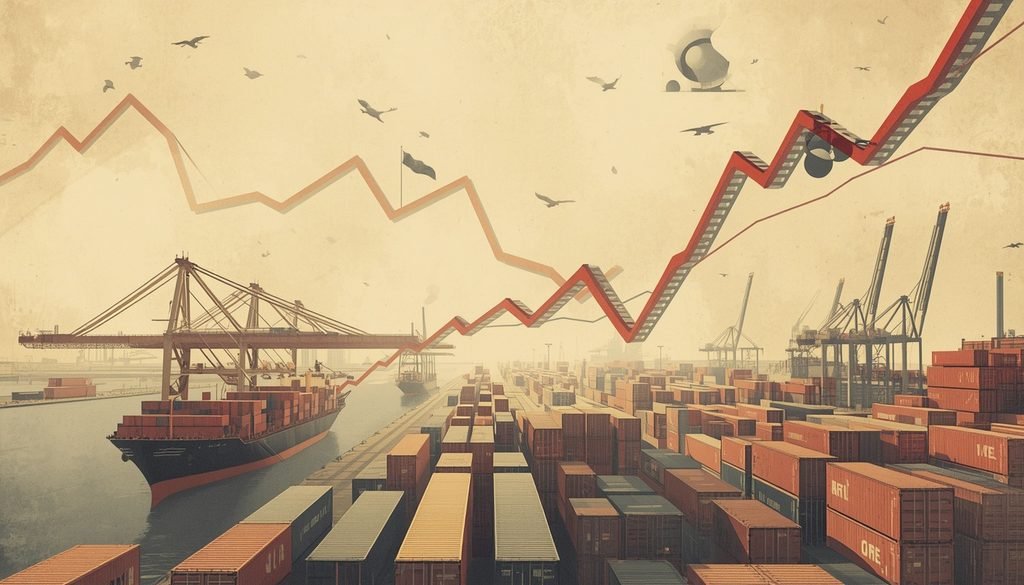
Tariffs, Inflation and Business Costs

What Businesses Should Do Next

Businesses cannot control global tariffs, geopolitical conflicts, or international regulations, but they can control how prepared they are.

The first step is to understand supply chain concentration. Companies should identify critical suppliers and assess how easily they could be replaced if disruption occurs.

The second step is scenario planning. Instead of relying on a single forecast, businesses should prepare for different potential outcomes.

The third step is improving supply chain visibility. Accurate and timely data can help companies identify risks before they create major disruption.

The fourth step is selective diversification. Not every supplier needs to be replaced. Businesses should focus diversification efforts on suppliers, components, markets, and relationships where disruption could have the greatest financial impact.

Finally, businesses should use technology and data to improve decision-making, monitor risks, and respond more effectively to changing global conditions.

Business PriorityStrategic Action
Supplier riskBuild multi-source networks
Tariff exposureRun cost scenarios
Logistics riskDevelop alternative routes
Data visibilityConnect supply chain systems
AI adoptionAutomate forecasting and analysis
Financial riskStrengthen cash-flow planning
ComplianceDigitize trade documentation
Market riskDiversify customer markets

The goal is not to build a completely disruption-proof supply chain. That is unrealistic.

The goal is to build a supply chain that can adapt quickly when conditions change.

Global Trade Trends to Watch

Several developments are likely to shape the next stage of global trade.

1. AI-Driven Trade Growth

AI infrastructure will continue to influence demand for semiconductors, servers, networking equipment and other technologies. The WTO reported that strong AI-related trade helped support global merchandise trade in early 2026.

2. Supply Chain Rationalization

Businesses are likely to continue developing regional production and sourcing networks.

3. Tariff Volatility

Companies will increasingly need to plan for changing trade policies rather than assuming that tariff conditions will remain stable.

4. Supplier Diversification

Businesses will continue moving away from excessive dependence on individual suppliers or countries.

5. Digital Trade

Electronic documentation, digital payments and cloud-based trade platforms will become more important.

6. AI-Powered Supply Chain Management

AI will increasingly support forecasting, procurement, inventory management and risk monitoring.

7. Trade Finance Innovation

Banks and fintech companies will have opportunities to build more flexible financial products around increasingly complex trade networks.

8. Geopolitical Risk Management

Geopolitical analysis will become more closely integrated into procurement and supply chain decisions.

The Future of Global Trade

The future of global trade will probably not be defined by the end of globalization. Instead, it is likely to be shaped by a more flexible and resilient form of globalization.

Companies will continue buying and selling across borders, but supply chains may become more diversified. Businesses could rely on more suppliers, multiple manufacturing locations, and stronger regional distribution networks.

AI is expected to accelerate this transformation by helping companies analyze trade data, forecast demand, monitor supply chains, and identify potential risks. At the same time, the physical infrastructure required to build AI systems will become an increasingly important part of international trade.

Tariffs will continue influencing sourcing decisions, while geopolitical uncertainty will encourage businesses to balance efficiency with resilience.

The global supply chains of the future may therefore look very different from the highly centralized networks of previous decades. They are likely to become more digital, data-driven, diversified, and adaptable to change.

Conclusion:

The new era of global distribution is created through 3 effective forces: AI, pricing and chain transformation delivers.

The AI ​​era is creating a new demand for infrastructure and better productivity. Tariffs are changing the economics of sourcing worldwide. Geopolitical uncertainty is prompting businesses to diversify suppliers and reconsider where products are made.

These forces are developing a more complex global buying and selling environment, yet they are also increasing opportunities.

Companies that can integrate time with flexible distribution chain strategies may be in a better position to respond to disruption. Businesses that rely entirely on historical sourcing models, moreover, may discover that it is increasingly difficult to compete when price lists, politics, and geopolitical conditions trade at a rapid pace.

The biggest lesson is that the worldwide exchanges no longer really rely on the cheapest way to move goods from one to another.

It is ready to build a community that can adapt, anticipate, budget and respond. AI can make sense. Digital structures can provide visibility. Financial age can provide liquidity. and different distribution chains offer flexibility.

Together, these efficiencies define subsequent liquidity in international trade.

Worldwide exchanges are honestly not going to have the success of companies with floor fees. This will increasingly come down to companies that can catch the business early, make faster choices and build delivery chains with enough bends to evolve against an uncertain global.

Frequently Asked Questions

1. What is changing in global trade?

Global trade is being reshaped by AI, tariffs, geopolitical tensions, supply chain diversification, digital technology and changing regulations. Companies are increasingly balancing cost efficiency with resilience and risk management.

2. How is AI affecting global trade?

AI is affecting global trade in two major ways. First, demand for AI-related products such as semiconductors, servers and networking equipment is increasing international trade. Second, businesses are using AI for forecasting, supplier management, logistics optimization and risk analysis.

3. How are tariffs affecting supply chains?

Tariffs can increase import costs and encourage businesses to find alternative suppliers, move production, redesign products or change sourcing strategies. This can result in longer-term changes to global supply chain structures.

4. Why are companies diversifying their suppliers?

Companies are diversifying suppliers to reduce dependence on a single country, supplier or trade route. Diversification can improve resilience when tariffs, geopolitical disruptions or logistics problems affect a particular market.

5. Is globalization ending?

Globalization is not necessarily ending. Instead, global commerce is becoming more diversified and strategically managed. Businesses are still trading internationally but are increasingly considering geopolitical risk, resilience and regional production.

6. Which countries are benefiting from supply chain diversification?

Several emerging manufacturing hubs are gaining attention, particularly economies in ASEAN and India. McKinsey’s 2026 research highlights the expanding role of Southeast Asia and India’s gains in selected sectors.
September 9, 2026 0 comment
0 FacebookTwitterPinterestEmail
How to Build an Efficient Supply Chain System Using AI and Automation
Supply Chain

How to Build an Efficient Supply Chain System Using AI and Automation

by ailcia sierra April 23, 2026
written by ailcia sierra

In Present Day business environments, operations are becoming increasingly complicated. The goal of any company is to produce goods efficiently, lower expenses, and keep high standards of customer satisfaction. Nevertheless, traditional approaches to management are not able to meet new requirements. Thus, the application of intelligent solutions and automation processes significantly contribute to the evolution of the supply chain.

Intelligent systems stimulate companies to change their tactics because they can process vast amounts of information, anticipate customer demand, and facilitate better decisions. Moreover, automation processes decrease manual labor and ensure improved efficiency. Consequently, the evolution of the supply chain through the application of innovative technologies becomes apparent.

A management strategy is not just about transferring goods from point A to point B. It is crucial to carefully consider all the aspects of the process, such as planning, procurement, manufacturing, and delivery. Modern technological solutions allow for improving every step.

Understanding the System

An operational system in modern times encompasses all the actions taken in procurement, manufacturing, warehousing, and distribution. All these actions must be coordinated so that tasks will be performed effectively. The result of this alignment will be improved productivity and results.

The operational structure ensures efficient coordination and visibility so that the organization can manage its performance better and be able to react to any changes that occur. This ability helps achieve better results and meets customers’ requirements.

Today, there are digital technologies that can improve this process even further through insights, automation, and data-driven decision-making.

Core Components

  • Procurement and Sourcing
  • Manufacturing Processes
  • Inventory Management
  • Transportation
  • Distribution

Traditional vs Smart Systems

FeatureTraditional ApproachSmart Approach
Decision MakingManualData-driven
SpeedSlowerFaster
AccuracyModerateHigh
FlexibilityLimitedHigh
Understanding the System

The Role of Intelligent Technologies

Smart technologies have really changed how companies do business. They help companies look at a lot of data and find patterns. This means companies can make decisions and get more work done.

One of the things about smart technologies is that they can predict what will happen. Companies can see what people will want and plan for it. This reduces the chance of things going wrong. Makes business run more smoothly.

Main Advantages

  • decision-making
  • Real-time information
  • Forecasting abilities
  • operating costs
  • Higher efficiency

Smart technologies are very useful for companies. They help companies make decisions and work well. Intelligent technologies like these are very important, for business. The role of technologies is to make business easier and better. Intelligent technologies do this by helping companies use data to make decisions.

Optimization Techniques for the Supply Chain

The supply chain optimization techniques aim at enhancing efficiency and minimizing costs. The techniques comprise analysis and finding areas of improvement. Companies employ technology to increase efficiency.

The optimization techniques include improved inventory management and efficient delivery process. They also entail minimizing wastage and maximizing resource utilization. The effects of these techniques are increased efficiency.

Adoption of AI and automation ensures efficient optimization. The techniques make organizations capable of responding to changes and maintaining efficiency.

Techniques for Optimization

  • Process automation
  • Data-driven decision making
  • Inventory optimization
  • Route optimization
  • Supplier management

Supply Chain Optimization Methods

MethodPurposeBenefit
AutomationReduce manual workEfficiency
AnalyticsData insightsBetter decisions
Inventory ControlManage stockCost reduction
Logistics PlanningImprove deliveryFaster service

AI in Demand Forecasting

It is important to forecast demand in the supply chain process since it enables organizations to plan and make decisions. This will allow the organization to anticipate demand for its products.

AI in demand forecasting can enhance accuracy since it uses data from the past together with other variables like seasonality and consumer behavior to predict demand effectively.

Benefits of Demand Forecasting

  • Inventory planning
  • Minimizing wastage
  • Customer satisfaction
  • Efficiency
  • Costs saving

Automation in Supply Chain

Automation is one of the essential elements of increasing the effectiveness of the supply chain. With its help, manual procedures can be minimized, and operations will become faster. In other words, productivity will increase.

Automation is utilized in warehouse management and order processing. Such an approach guarantees greater precision and fewer mistakes. As a result, performance will be enhanced.

The synergy between automation and artificial intelligence enables creating an extremely effective system that will handle all the complex tasks easily.

Advantages of Automation

  • Increased speed
  • Accuracy
  • Cost reduction
  • Efficiency
  • Scalability

Significance of Real-Time Data

Real-time data is really important for supply chains that we have today. We can get information away, from real-time data and this helps us make good decisions.

Companies can use real-time data to keep track of deliveries and manage the things they have in stock. This makes things work better and reduces the chances of something going wrong.

Factors

  • We need to make decisions right away with real-time data
  • We can see everything that is happening with real-time data
  • Real-time data helps us work more efficiently
  • Real-time data reduces the risks that companies face
Logistics in Supply Chain Management

Logistics in Supply Chain Management

Logistics forms an important component of supply chain management systems. It refers to transport and delivery of products. Effective logistics guarantees timely delivery of the products.

The use of AI optimizes transport routes, thus reducing costs and improving efficiency. This also boosts customer satisfaction.

Important aspects

  • Effective transportation
  • Reducing costs
  • Timely delivery
  • Improved planning

Logistics Optimization

AspectBenefit
Route PlanningFaster delivery
Cost ControlLower expenses
TrackingBetter visibility

Risk Management in Supply Chain

Managing risks is crucial for building a supply chain.

Today businesses face uncertainties like delays and supplier problems. These risks can stop operations. Make customers unhappy if not handled well. Companies must find risks early. Have plans ready.

Key Points

  • Identify risks on
  • Have plans, in place
  • Regularly check operations
  • Use data to make decisions
  • Make supply chains more flexible

Inventory Management

Effective inventory management is responsible for maintaining optimal stock levels. This prevents any shortage and surplus problems. This enhances efficiency.

AI technology assists in keeping real-time records of inventory. This facilitates better planning and management. Additionally, costs are reduced.

Important Points

  • Stock management
  • Cost savings
  • Planning
  • Efficiency

The Digital Transformation of the Supply Chain

There have been numerous transformations in the way business entities manage their supply chain operations. These transformations involve the use of technology to facilitate smoothness and efficiency in the activities carried out within such a business entity. The company is shifting from the activity-based approach and adopting the digital platform, which allows them to be in control and provide an overview of the activities taking place.

This transformation has become vital for organizations that wish to remain competitive within their industries.

Points to Consider

  • Utilize digital tools in managing operations
  • Receive real-time updates regarding operations
  • Make sound decisions by making use of the necessary information
  • Efficient operation
  • Improved coordination within the supply chain

Future of AI in Supply Chain

The future of AI in supply chain management is really looking good. New things are coming out all the time. These new things will make supply chain management work better.

AI in supply chain management will help people make choices and will automate a lot of tasks. This is going to change the way supply chain management works. Companies need to change with the times to stay ahead of the game.

Key Points

  • Advanced analytics for AI in supply chain management
  • Increased automation in AI in supply chain management
  • Better forecasting with the help of AI in supply chain management
  • Improved efficiency in AI, in supply chain management

Future Trends

TrendImpact
AI GrowthSmarter systems
AutomationEfficiency
Data AnalyticsBetter insights

Supply Chain Problems and Solutions

There are a lot of issues that supply chains have to deal with these days. Supply chains have to deal with delays, rising costs and changes in demand. It is really important to find ways to solve these supply chain problems.

New technology gives us ways to solve these supply chain problems. Artificial intelligence helps us predict problems and plan for the future. Automation reduces mistakes. Helps us get more work done.

Companies need to be ready to think. That means they have to keep an eye on things and make improvements all the time.

Supply Chain Problems and Solutions

Problems Faced

  • Uncertainty of demand for products
  • operational expenses
  • Disruptions in the supply chain process
  • Visibility issues in the supply chain
  • Inefficiency, in the supply chain

Challenges and Solutions

ChallengeImpactSolution
Demand FluctuationStock issuesAI forecasting
High CostsReduced profitOptimization
DelaysCustomer dissatisfactionAutomation

Conclusion

In the world we live in today businesses need more than the basics to stay ahead. They need systems that’re smart and can change and get better over time. If businesses only use the ways of doing things it can slow them down.. If they use new and modern ways it can make things run more smoothly and be more efficient.

Using Artificial Intelligence and automation can make a difference. It means people do not have to do much work by hand and it helps get things right. It also helps teams make decisions faster. This saves businesses time and money. It also makes customers happier. When everything works together the results are more consistent and reliable.

At the end of the day it is not about using technology. It is about using Artificial Intelligence and automation in the right way. Businesses that always try to get better and are open, to change will always be one step ahead. With the way of thinking and the right tools building a system that works well and can grow with the business becomes much easier. Businesses that use Artificial Intelligence and automation will find it easier to build a system that’s efficient and scalable.

FAQS

1. Define the concept of the supply chain system.

The supply chain system refers to the whole process of product movement from the supplier to the consumer. The processes include sourcing, manufacturing, warehousing, and distribution.

2. Explain how AI can be useful in managing the supply chain.

AI can be useful because it will analyze available information, make predictions about customer demand, and improve decision-making for companies that implement AI in their supply chain management system.

3. What part does automation take in the supply chain systems?

Automation takes care of tasks that require a lot of time for employees. These tasks include order entry and updating stock.

4. How can businesses make their supply chain work better?

Businesses can make their supply chain work better by using tools that look at the numbers making processes simpler reducing the time things get delayed and using technology like Artificial Intelligence and automation.

5. What are the good things about using Artificial Intelligence in supply chain operations?

The good things, about using Artificial Intelligence in supply chain operations are that it helps businesses predict what will happen better it makes things more accurate it saves businesses money it helps them make decisions faster. It makes the whole supply chain work better.

6. What are some common problems that businesses have with their supply chain?

Some common problems that businesses have with their supply chain are that people want things at different times things get delayed it costs a lot of money businesses do not know what is going on and the processes are not very good.

April 23, 2026 0 comment
0 FacebookTwitterPinterestEmail
The Rise of LLM Supply Chain Attacks in AI Search Ecosystems
Artificial IntelligenceSupply ChainTechnology

The Rise of LLM Supply Chain Attacks in AI Search Ecosystems

by Jimmy Simmons March 28, 2026
written by Jimmy Simmons

Search is being transformed quickly by artificial intelligence. Rather than generalized search engines that rely on keywords, search engines currently use AI systems that rely on large language models to provide direct answers, summaries, and recommendations to users. LLMs are being used in productivity tools, enterprise processes, and search platforms such as OpenAI, Google, and Microsoft.

Nonetheless, this change brings about a different form of risk, namely LLM supply chain attacks. These attacks target the inputs and dependencies on which AI models depend, as opposed to traditional cyberattacks which focus on systems.

Since AI systems are driven by data and external sources, it is possible to manipulate these sources and silently affect system outputs.

Gartner states that by 2026, organizations that attempt to deploy generative AI without sound governance will encounter more risk associated with data poisoning, model abuse, and vulnerabilities in supply chains.

This blog shows the mechanics of LLM supply chain attacks, the reasons they are increasing, real-life cases, and ways of defending businesses within AI ecosystems.

What Are LLM Supply Chain Attacks?

LLM supply chain attacks are attacks conducted by attackers who tamper with any of the elements related to the process of building, training, or even utilizing an AI model.

These components include:

  • Training datasets
  • Fine-tuning data
  • Embedding models
  • APIs and plugins
  • Retrieval systems (RAG pipelines)
  • Third-party integrations

Instead of attacking the AI model directly, attackers manipulate the ecosystem around it.

Why AI Search Ecosystems Are Highly Vulnerable

AI search engines are highly dependent on various external relationships. This creates a larger attack surface compared to conventional search engines.

Key Vulnerability Factors

1. Dependence on External Data

LLMs use vast datasets from the internet, which may contain malicious or biased content.

2. Retrieval-Augmented Generation (RAG)

Contemporary AI search engines retrieve real-time information from external sources. If such sources are compromised, outputs become unreliable.

3. Plugin and API Ecosystems

AI tools integrate with third-party services, increasing exposure to vulnerabilities.

4. Lack of Transparency

LLMs operate as black boxes, making it difficult to trace where compromised outputs originate.

According to OWASP, LLM-specific risks such as prompt injection and data poisoning are among the top emerging AI security threats.

Types of LLM Supply Chain Attacks

1. Data Poisoning Attacks

Attackers inject malicious or misleading data into training datasets.

Impact:

  • Biased outputs
  • Misinformation
  • Manipulated recommendations

Example: If financial datasets are poisoned, AI could generate incorrect investment advice.

2. Prompt Injection Attacks

Attackers craft hidden instructions within input data to manipulate AI responses.

Impact:

  • Unauthorized data access
  • Output manipulation
  • Security bypass

This is one of the most discussed threats in generative AI security.

3. Malicious Plugin Exploits

AI systems often rely on plugins to access tools and services.

Impact:

  • Data exfiltration
  • Unauthorized actions
  • System compromise

4. Model Dependency Attacks

Organizations often use pre-trained models from external providers.

Impact:

  • Backdoors in models
  • Hidden vulnerabilities
  • Compromised outputs

5. Retrieval System Manipulation (RAG Attacks)

Attackers manipulate external content sources used by AI.

Impact:

  • False answers
  • SEO manipulation
  • Brand misinformation

Real-World Signals and Evidence

While LLM supply chain attacks are still emerging, several real-world indicators highlight the risk:

  • Stanford University research has shown how LLM outputs can be manipulated through adversarial inputs.
  • MIT studies highlight vulnerabilities in AI systems related to data integrity and model trust.
  • IBM reports that AI security is becoming a top enterprise concern due to increased adoption of generative AI tools.

Additionally, the OWASP Top 10 for LLM Applications identifies risks such as:

  • Prompt injection
  • Data leakage
  • Supply chain vulnerabilities
  • Insecure plugins

How LLM Supply Chain Attacks Work (Step-by-Step)

  1. Identify Target System
    Attackers analyze AI systems and their dependencies.
  2. Exploit Weak Link
    They target datasets, APIs, or plugins.
  3. Inject Malicious Content
    This could be hidden instructions, biased data, or manipulated information.
  4. Trigger AI Response
    When users query the system, the AI unknowingly processes compromised inputs.
  5. Deliver Manipulated Output
    Users receive incorrect or malicious responses.

Comparison Table: Traditional vs LLM Supply Chain Attacks

FactorTraditional Cyber AttacksLLM Supply Chain Attacks
TargetSystems and networksData, models, and dependencies
Entry PointDirect system accessIndirect via data or APIs
DetectionEasier (logs, alerts)Harder (hidden in outputs)
ImpactSystem disruptionSilent misinformation and manipulation
ScaleLimited to systemsScales across users globally

Impact on AI Search Ecosystems

1. Misinformation at Scale

AI-generated answers can spread incorrect information rapidly.

2. Loss of Trust

Users rely on AI for decisions. Compromised outputs reduce credibility.

3. Financial Risks

Incorrect AI-driven financial or business decisions can lead to losses.

4. Brand Manipulation

Attackers can influence how brands are represented in AI search.

5. Data Privacy Violations

Sensitive data can be exposed through manipulated prompts or plugins.

Data Table: AI Adoption vs Security Risk

MetricInsight
Global AI MarketExpected to exceed $1 trillion by 2030 (McKinsey estimates)
Enterprise AI AdoptionOver 50% of organizations use AI in at least one function
AI Security ConcernA majority of enterprises cite AI risk as a top challenge
Generative AI GrowthOne of the fastest-growing technology segments globally

Why This Threat Is Growing Rapidly

1. Rapid AI Adoption

Companies are adopting AI more quickly than they can secure it.

2. Complex Ecosystems

AI systems use multiple layers, which increases exposure to risks.

3. Lack of Standardization

AI security frameworks are still in the development stage.

4. High Incentive for Attackers

Manipulating AI outputs can influence markets, decisions, and user behavior.

How to Protect Against LLM Supply Chain Attacks

1. Secure Data Pipelines

Ensure that training and retrieval data is validated and monitored.

2. Implement Input Validation

Sanitize and filter user inputs to prevent prompt injection.

3. Audit Third-Party Integrations

Check APIs, plugins, and external tools regularly.

4. Monitor AI Outputs

Use anomaly detection to identify suspicious responses.

5. Use Trusted Models

Implement approved models with adequate security measures.

6. Adopt AI Security Frameworks

Adhere to recommendations from organizations such as OWASP and NIST.

Practical Strategies for Businesses

  • Build first-party data ecosystems instead of relying solely on external data
  • Implement human-in-the-loop validation for critical decisions
  • Manage risks through AI governance policies
  • Test AI systems on a regular basis

Final Thoughts

LLM supply chain attacks represent a shift in how cybersecurity threats operate. Attackers no longer attack systems directly but instead manipulate the inputs that define AI outputs.

With AI becoming central to search, decision-making, and business processes, it is vital to secure the entire AI ecosystem, not just the model.

By recognizing and addressing these threats early, organizations can not only protect themselves but also build long-term trust in AI-driven systems.

March 28, 2026 0 comment
0 FacebookTwitterPinterestEmail
“Game-changing B2B supply chain strategies and technology solutions for 2025”
Supply Chain

Game-Changing B2B Supply Chain Strategies in 2025

by Jimmy Simmons August 25, 2025
written by Jimmy Simmons

INTRODUCTION

In today’s competing business environment, a skilled B2B supply chain is an important discrimination. Companies that use innovative strategies can increase efficiency, reduce costs and respond rapidly to market changes. When the global market is quickly unstable, companies face outstanding challenges such as demanding ups and ramps, disruption of the service and increasing operating costs. The use of advanced equipment and further thinking strategies allows organizations to estimate risks, increase cooperation and maintain a spontaneous flow of goods and information at all stages of the supply chain. Here are the gambling B2B supply chain strategies in 2025 that can change your operations :

Embrace Advanced Technology

Modern B2B benefits from AI, IoT and cloud platforms to streamline the supply chain. Predictive analysis may require ups and downs, while AI agents can optimize routing and inventory management. By integrating technology, companies can reduce delays, stop stock and increase operating efficiency

  • Integrates AI, IoT and cloud platforms to streamline operations.
  • Use the future analysis to predict demand and manage inventory.
  • To reduce delay and improve efficiency, automate routing and logistics.

Strengthen Supplier Relationships

Strong supplier participation is important for a flexible B2B supply chain.

  • Maintain transparent communication with suppliers.
  • Collaborate on forecasts and production programs.
  • Monitor the provider’s performance to ensure reliability and quality.

Collaboration on regular communication, performance tracking and forecasts ensures that suppliers match your business goals. Companies that invest in the supplier’s trust often have fast response time, better prices and better product quality.

Prioritize Real-Time Visibility

Lack of visibility in B2B supply chains is a common problem. Real -time tracking systems help monitor shipments, storage level and supplier’s performance. With quick access to data, businesses can make informed decisions, reduce disruptions and respond quickly to unexpected challenges

  • Use real -time tracking on shipment and inventory.
  • Use dashboards and analysis to monitor the supplier’s performance.
  • Answer the disturbance quickly and avoid the bottleneck.

Implement Predictive Analytics

Predictive Analytics is a game switch for B2B Supply Chain Management.

  • Analyze historical data and market trends to estimate demand.
  • Adapt the purchase and production capacity based on insight.
  • Reduce waste, low costs and weather in front of participants.

By analyzing historical data and market trends, business needs can estimate spikes, manage capacity and adapt to purchases. The use of companiespredictive insights reduce wastage, lower costs, and stay ahead of competitors.

Focus on Sustainability

Stability is no longer optional. Forward -determining companies, environmentally friendly practice integrates into their B2B supply chain, such as green logistics, energy -efficient goodowns and moral sources. This not only improves brand brand, but it also attracts customers who attract responsible business practices.

Diversify Your Supply Base

Diversify Your Supply Base

By bringing diversity in their offer base, companies can access new markets, interact at better prices, and different suppliers can promote innovation through specialization, and finally strengthen the overall competition and flexibility of an unexpected global economy

  • Avoid relying on the same supplier or area.
  • To reduce sources from many suppliers and geography.
  • Maintain operational continuity during disorders such as natural disasters or geopolitical events.

Leverage Data-Driven Decision Making

The data is the backbone of modern B2B supply chain strategies. Using dashboards, CPIs and analysis tools, the business can track performance, identify obstacles and apply continuous improvement. Data-operated insight envisages companies making smart decisions and achieving average results.

  • Analyze historical data and market trends to estimate demand.
  • Adapt the purchase and production capacity based on insight.
  • Reduce waste, low costs and weather in front of participants.

Final Thoughts

In 2025, a strong B2B supply chain is no longer just a support function – this is a strategic advantage. Companies that embrace technology, stability, diversification and data -driven insights are better to flourish in a rapidly competitive market. By implementing these 7 strategies, companies can not only promote efficiency, but can also strengthen flexibility, increase profitability and create long -term development opportunities.

August 25, 2025 0 comment
0 FacebookTwitterPinterestEmail
Supply Chain

The Future of Supply Chain Management: Key Trends to Watch

by Jimmy Simmons May 16, 2025
written by Jimmy Simmons

Introduction

The Future of Supply Chain Management is being rewritten by way of generation, marketplace dynamics, and consumer conduct. From AI-driven logistics to green operations, today’s deliver chains are evolving swiftly. Businesses that fail to conform danger falling behind.

This weblog uncovers the top deliver chain trends to observe in 2025 and past — assisting you live beforehand of the curve.

1.  Rise of AI and Automation in Logistics

Artificial Intelligence (AI) and automation are revolutionizing how supply chains function. From predictive call for forecasting to robotic warehouse structures, corporations are leveraging clever technologies for:

  • Faster selection-making
  • Reduced human errors
  • Optimized inventory management

Amazon and FedEx, as an example, use automatic robotics and AI-driven path optimization to decorate delivery efficiency.

According to a examine by way of McKinsey, agencies adopting AI in deliver chains can reduce forecasting mistakes via as much as 50%. 

2.  Blockchain for Transparent Supply Chain Management

Trust and traceability are crucial in today’s worldwide networks. Blockchain generation is playing a pivotal function in:

  • Providing end-to-give up visibility
  • Preventing fraud and counterfeits
  • Ensuring compliance with regulatory requirements

Companies like Walmart use blockchain to track meals merchandise from farm to shelf in real-time, making sure protection and duty.

In addition to food protection, blockchain is transforming pharmaceutical, fashion, and electronics supply chains by using validating authenticity and enhancing keep in mind performance. It allows stakeholders to get right of entry to tamper-proof facts right away, decreasing disputes and delays. As transparency becomes a competitive benefit, blockchain will be crucial to the destiny of deliver chain management.

3.  Sustainability and Green Supply Chain Management

Sustainability is not just a buzzword — it’s a strategic priority. The destiny of deliver chain management is centered on eco-friendly practices:

  • Electric and hybrid delivery fleets
  • Reduced packaging waste
  • Carbon footprint monitoring

Brands which include IKEA and Unilever are making an investment in inexperienced logistics to align with global ESG dreams and patron expectancies. 

4.  Digital Twins and Real-Time Analytics

A Digital Twin is a virtual reproduction of a physical supply chain. These structures allow actual-time tracking, state of affairs making plans, and performance optimization.

Benefits consist of:

  • Enhanced visibility into bottlenecks
  • Predictive preservation of property
  • Better collaboration across supply companions

Gartner reports that by way of 2027, over 50% of worldwide deliver chains will invest in virtual twins for proactive operations.

As supply chains end up more complicated, virtual twins offer a effective device for decreasing delays, enhancing agility, and simulating the impact of decisions earlier than they’re made. They assist groups adapt to change swiftly by way of supplying correct, real-time statistics, making the destiny of supply chain management extra intelligent and records-pushed than ever before.

5.  Resilience and Risk Management

The COVID-19 pandemic exposed major vulnerabilities in international logistics. To continue to exist future disruptions, companies are that specialize in:

  • Diversified sourcing strategies
  • Geopolitical chance evaluatio
  • Resilient inventory buffers

The digital deliver chain ought to be agile enough to conform to rapid modifications with out sacrificing performance.

Organizations are actually constructing flexible networks with multi-tier dealer visibility and backup partners in key regions. Investment in predictive chance analytics and crisis simulation tools is also growing. This proactive attitude is vital for minimizing downtime, making sure continuity, and shaping the future of deliver chain control round adaptability, no longer just efficiency.

Conclusion

The Future of Supply Chain Management lies in being smarter, greener, and greater resilient. By embracing technologies like AI, blockchain, and digital twins, corporations can advantage a competitive side while meeting sustainability goals.

Key takeaways:

  • Automation and AI are crucial for operational performance.
  • Blockchain offers transparency and trust.
  • Green logistics is the future of sustainable trade

Moreover, supply chains have to evolve into dynamic ecosystems that prioritize actual-time responsiveness, client-centricity, and threat adaptability. Companies that proactively invest in innovation nowadays will lead the market the following day. Staying informed and agile is no longer non-compulsory—it’s the brand new benchmark for fulfillment inside the worldwide financial system

May 16, 2025 0 comment
0 FacebookTwitterPinterestEmail

Latest Posts

  • 1

    The Rise of AI PCs: Transforming Industries in 2025

    April 3, 2025
  • 2

    The Rise of Serverless Computing: Revolutionizing Cloud Development

    May 23, 2025
  • 3

    How To Build An Effective Threat Hunting Program

    May 15, 2023
  • 4

    What Is AIoT? How AI and IoT Are Creating Smarter Connected Systems

    August 28, 2026
  • 5

    The Gap Between HR Strategy and HR Technology Execution: Why It Exists and How to Fix It

    April 16, 2026

Address

INDIA

Office No. 612, Wing A, Orville Business Port, Viman Nagar, Pune, Maharashtra 411014

US

2166 W Broadway, 1056, Anaheim, California 92804, US

Phone : +91 9766115291

US Number : +1 657-582-3789

Email : info@arkentechpublishing.com

About Us

With the constant evolution of modern technologies and innovative marketing solutions businesses now are reaching new heights however it takes time and efforts to identify the right effective strategies to market Your business you’re our architect technology publishing display accurate marketing solutions which will fuel up your business growth.

Categories

  • Abm Marketing (7)
  • Analytics (8)
  • API (4)
  • Application Development (5)
  • Artificial Intelligence (15)
  • Audit And Compliance (1)
  • Automation (3)
  • B2B marketing (15)
  • Banking (2)
  • Big Data (5)
  • Cloud Computing (9)
  • Cloud Migration (4)
  • Content Marketing (4)
  • Data Management (7)
  • Data Security (3)
  • Digital Advertising (7)
  • Ebook (3)
  • Ecommerce (3)
  • Erp (6)
  • Finance (67)
  • Finance 2025 (7)
  • Hrtech (88)
  • Insurances (2)
  • IOT (2)
  • IT Infrastructure (4)
  • IT Management (8)
  • IT Security (6)
  • Marketing (55)
  • Marketing 2025 (10)
  • MSP (1)
  • Networking And Communication (4)
  • Security (16)
  • Stock Market (3)
  • Storage (1)
  • Supply Chain (5)
  • Technology (122)
  • Technology 2025 (10)
  • Web Development (4)
<

Edtior's Picks

Pandemic-related cybersecurity threats 2020
IT Security
Top Cybersecurity Trends 2021: Pandemic Related Content Used For Attack Propagation
image-82
Analytics
Explore The Data Flywheel
6 Strategies for Helping Today’s Teens Cope With Modern Stressors and Pressures
Hrtech
6 Strategies for Helping Today’s Teens Cope With Modern Stressors and Pressures
No posts found

Latest Articles

The New Era of Global Trade: AI, Tariffs and Supply Chains
Supply Chain
The New Era of Global Trade: AI, Tariffs and Supply Chains
What Is AI Storage? How AI Workloads Are Changing Modern Storage
Networking Beyond LinkedIn: Why Real Conversations Still Win
Networking And Communication
Networking Beyond LinkedIn: Why Real Conversations Still Win
No posts found

Subscribe To Our NewsLetters

Stay updated with the latest news, insights, and exclusive updates delivered straight to your inbox. Subscribe to our newsletter and never miss important announcements, expert tips, and special offers. Be part of our growing community and get valuable content that inspires, informs, and helps you stay ahead. Sign up today!

Subscribe
arkentech-publishing-main-logo-footer

Arkentech Solutions is a marketing agency that caters to Enterprise and Technology companies across the globe to improve ROI on their marketing spend. 

Certified by TopCertifier
Instagram Linkedin

Useful Links

    • IT Security
    • Big Data
    • Technology
    • Finance
    • IT Management
    • HRTECH
    • Marketing

SIte Map

    • Home
    • About Us
    • Work With Us
    • Terms of Use
    • Privacy Policy
    • Feedback
    • Contact Us
Copyright © 2026 Arkentech Publishing