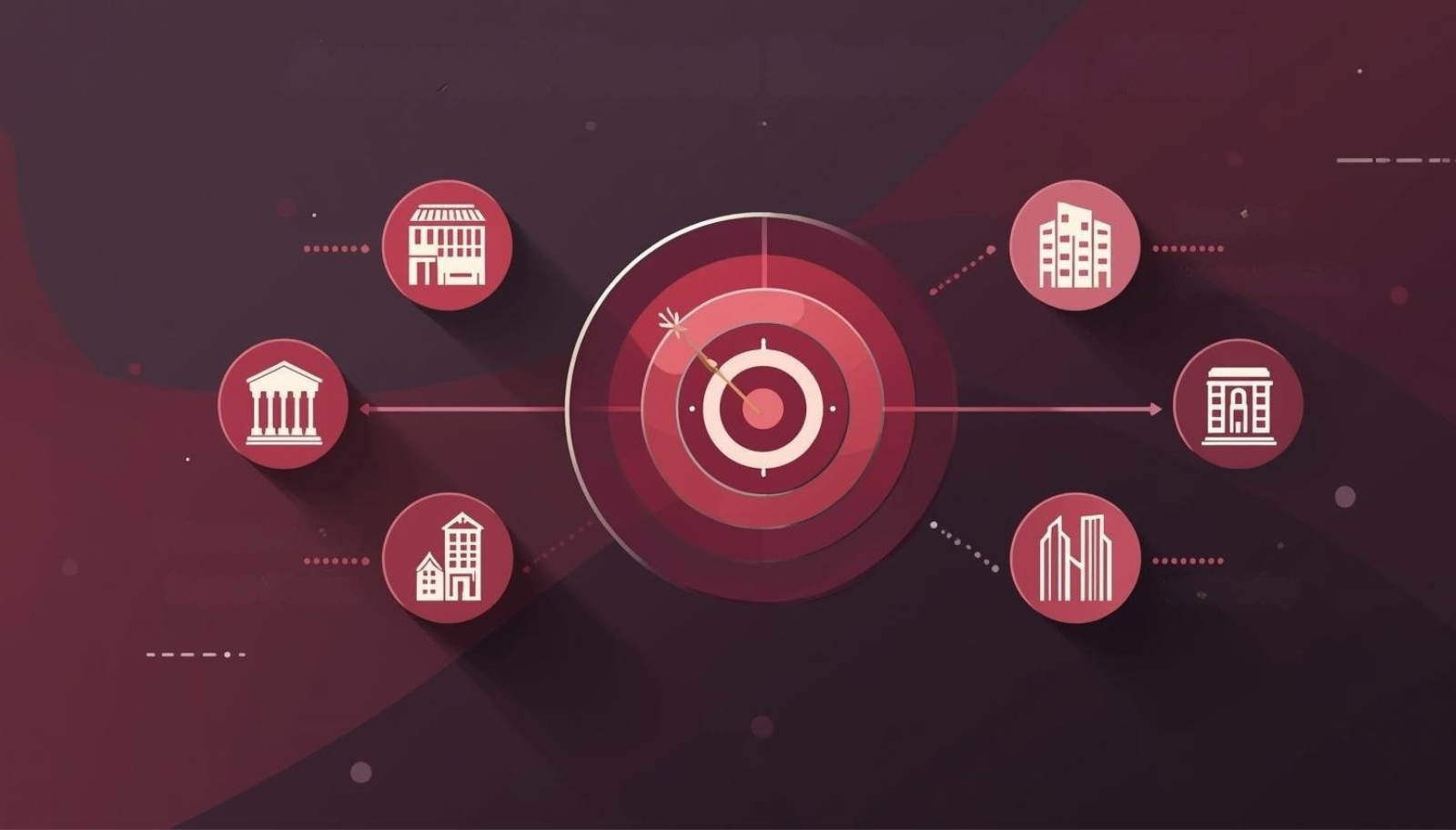
Winning premium clients is not about trying to catch as many as you can and hoping some of them work out. These days businesses are getting smarter. Using precision-driven approaches to get what they want. One way they are doing this is by using account-based marketing strategy to attract and convert high-value opportunities. This means of trying to reach a lot of people they focus on specific companies that are likely to bring in a lot of money.
In todays world the people who make decisions expect to be treated like they are special. They want to feel like the message’s just for them and that someone is actually paying attention to what they need. Sending out the message to everyone just does not work anymore. This is where account-based marketing for businesses or ABM strategy for high-value clients and personalized marketing campaigns come in.
A good ABM plan gets the marketing and sales teams working together makes sure they are getting a return on their investment and helps build strong relationships, with the clients they really want. Whether you are just starting out or you are a company using a structured ABM framework can really improve the chances of turning leads into customers and making those customers stick around for a long time.
What is Account-Based Marketing?
Account-based marketing is a focused B2B strategy where marketing and sales teams collaborate to target specific high-value accounts rather than a broad audience. Each account is treated as its own market, and campaigns are tailored accordingly.
Key Elements of Account-Based Marketing
- They pick companies to focus on instead of trying to reach a lot of people at the same time
- They make messages that’re just for each company so it feels like they are talking just to them
- The marketing team and the sales team work closely together
- They use information and data to make decisions
- They try to build relationships, with these companies that will last for a time so they can keep working with Account-Based Marketing and make it better.
Why ABM Matters:
| Benefit | Description |
|---|---|
| Higher ROI | Focused efforts reduce wasted resources |
| Better alignment | Sales and marketing work toward shared goals |
| Improved personalization | Messaging resonates with decision-makers |
| Faster sales cycles | Targeted outreach accelerates decisions |

Importance of Targeting High-Value Clients:
High Value Client Targeting is crucial. High Value Clients are people who will contribute to the development of the business. In particular, the High Value Clients not only generate high revenues but also improve the image of the brand and stabilize it at least in the short-term perspective.
When you concentrate on High Value Clients, you will spend your resources and efforts on those customers who have a higher probability of saying yes and being loyal customers in the long run. Thus, you will have an opportunity to establish strong relationships with High Value Customers.
Here is a list of advantages of focusing on High Value Clients:
- Revenue from every High Value Client
- Stabilization of your High Value Clients
- Improvement of your brand’s image
- Higher likelihood of recommendations from High Value Clients
- Building strategic alliances with other companies
Laying the Groundwork for Account Based Marketing Success
Before you begin creating your marketing campaigns, you will need to conduct some groundwork. It entails determining your objectives, identifying the proper firms, and aligning your marketing and sales groups.
Having an effective strategy enables you to guarantee that all procedures run efficiently while also giving you the ability to gauge their performance. If you don’t establish a strategy, your campaign may fail even if your ideas are fantastic.
The following are some of the essential activities you must complete:
- Identify who your ideal client is
- Select the enterprises you want to approach
- Align your sales and marketing departments
- Establish goals and KPIs
- Choose the correct ABM solutions and platforms
Identifying High-Value Accounts
The first step in Account Based Marketing is to pick the accounts. This is really important because not all potential customers are the same. If you focus on the accounts you will waste time and money.
Using information to make decisions helps you find the accounts that’re a good fit for your business and are likely to buy from you.
Here are the things to consider when selecting accounts:
- The account should be in an industry that’s relevant to High-Value Accounts
- The company should be the size for High-Value Accounts
- High-Value Accounts should have a lot of revenue potential
- You should be able to get in touch with the people who make decisions at High-Value Accounts
- High-Value Accounts should be sending out signals that they’re interested, in buying something
ABM and Personalization
Personalization is the heart of account-based marketing. Premium accounts will only accept personalized interactions that solve their specific problems and achieve their goals.
A one-size-fits-all message will not work in account-based marketing. Instead, companies need to develop personalized messages and marketing campaigns for each account.
- Personalization Methods
- Personalized e-mail campaigns
- Personalized landing pages
- Personalized content
- Personalized advertising
- One-to-one communication
Multi-Channel Engagement Strategy
To keep high-value clients interested we need to use channels. Using one channel is not enough it limits how many people we can reach and how much impact we can have.
When we use different channels together our business can make sure the experience, for our important clients is consistent and interesting.
Key Channels
- Email marketing
- LinkedIn outreach
- Content marketing
- Paid advertising
- Events
Channel Effectiveness
| Channel | Purpose | Impact |
|---|---|---|
| Direct communication | High | |
| Professional networking | High | |
| Content | Education | Medium |
| Ads | Awareness | Medium |
| Events | Relationship building | High |
Aligning Sales and Marketing Teams
Sales and marketing teams need to work for Account-Based Marketing to succeed. They must share the goals and insights.
When sales and marketing teams work together they talk better. Their campaigns work better. This helps them target the people and get more conversions.
Best Practices
- goals and metrics
- Regular meetings
- Unified messaging
- planning
- Continuous feedback, from sales and marketing teams
Performance Metrics for ABM
It is important to measure your performance in order to figure out what should be done and what shouldn’t.
ABM necessitates different metrics from other types of marketing. Correct metrics measurement will help you optimize campaigns.
Important Metrics
- Engagement rate
- Conversion rate
- Deal size
- Sales cycle length
- Customer lifetime value
Metrics Table
| Metric | Importance | Goal |
|---|---|---|
| Engagement | High | Increase interaction |
| Conversion | High | Improve sales |
| Deal Size | Medium | Maximize revenue |
| Retention | High | Build loyalty |
Role of Data and Analytics in Account-Based Marketing
Data is really important for making account-based marketing work. If you do not have the data you cannot find the right people to market to or make good campaigns. Using analytics helps you understand what your customers like and how they behave so you can make decisions. When you use data you can make your marketing more targeted make it more personal and make your campaigns work better. In a world where data’s everything, companies that do not use analytics will have a hard time keeping up with others.
Key Points
- Use data that shows what people want to find the accounts
- Look at how people engage with your campaigns to make them better
- Watch what your customers do on all the channels
- Use special analytics that can predict what people will do to target them better
- Always make sure your data is up to date and clean
Data and analytics are crucial, for account-based marketing and companies should always use data to get results. By using data and analytics companies can make their account-based marketing work well.

Content Strategy for High-Value Clients
Content is an effective tool to persuade decision-makers and instill trust in high-value clients. A proper content strategy guarantees relevance, engagement, and usefulness of all content pieces. The content of high value should provide insights tailored specifically for a high-value client. With quality content pieces, companies can be considered as leaders in their industries.
Important Elements
- Provide account-specific content
- Apply case studies to create credibility
- Prepare whitepapers with in-depth information
- Provide industry trends and reports
- Highlight the value of the stor
Technology & Tools for Account-Based Marketing
Technology is critical to making any account-based marketing campaign more efficient. Through the use of powerful tools like CRMs, marketing automation software, and various other applications, businesses will find that their marketing becomes more streamlined, more targeted, and more successful overall. With the right technology tools in place, teams will be able to manage their relationships and interactions with customers easily, track all communications and interactions, and gain important insights into the needs and behaviors of clients. Moreover, there are personalization platforms available to deliver personalized content to key accounts, allowing companies to make sure their messaging has the greatest impact possible.
ABM Technology Stack Overview:
| Tool Category | Purpose | Key Benefit |
|---|---|---|
| CRM Systems | Manage customer relationships and account data | Centralized data for better decision-making |
| Marketing Automation | Automate campaigns and workflows | Improved efficiency and scalability |
| Analytics Tools | Track performance and engagement metrics | Data-driven optimization |
| Personalization Platforms | Deliver tailored content and messaging | Higher engagement and conversion rates |
| Integration Tools | Connect multiple platforms and systems | Seamless workflow and data consistency |
Challenges in the Implementation of ABM
Despite the many advantages that come with ABM, there are challenges as well. Companies might experience problems when it comes to data management, alignment of teams, and personalization. There is a need for strategies to help overcome the challenges faced by businesses.
- Insufficient data quality
- Insufficient team alignment
- Insufficient resources
- Insufficient measurement of ROI
- Insufficient personalization
Future Trends in Account-Based Marketing
The future of Account-Based Marketing is going to be shaped by technology and what customers want. As we get better at making things personal companies have to keep up with what’s new and what is changing. Artificial Intelligence and automation are changing how we plan and carry out our campaigns. If we want our plan to work we need to know what is happening now.
Key Points
- Artificial Intelligence is helping us make things more personal
- We are using automation more and more
- We are using numbers to guess what will happen next
- Our campaigns are getting more focused, on people
- We are making decisions based on what the data tells us about Account-Based Marketing
Conclusion:
At its core account-based marketing is about using your time, energy and resources in a way. Of trying to get a lot of leads this approach helps businesses make strong connections with the right clients. Those who will help the business grow in the long run. By using a plan making things personal and using the right tools companies can create experiences that really matter to the people who make buying decisions.
What makes account-based marketing so powerful is that it helps teams work together and makes it clear what happens at every step of the customers journey. When marketing and sales teams have the goals they can do better work together build stronger relationships and get better results. Over time this approach helps build trust makes people think highly of the brand and makes it more likely that the business will make big important deals with account-based marketing.
As markets keep changing businesses that focus on a personal strategy will stand out from the competition. Account-based marketing is not a solution but a long-term investment in quality, precision and connection, with account-based marketing. When done thoughtfully it becomes a way to attract engage and keep the clients that matter most with account-based marketing.
FAQS:
1. Define account-based marketing (ABM)?
Account-based marketing is an approach that targets specific high-value accounts rather than a wide audience of customers. It includes personal campaigns aimed at decision-makers from specific accounts and building relationships with them.
2. Why is ABM effective for acquiring high-value clients?
It is highly effective because the main goal of account-based marketing is not about reaching out to a huge number of people, but rather providing high-quality services. Therefore, when focusing on particular accounts, companies can ensure high return on investment.
3. How does one find high-value accounts in ABM
To find high-value accounts in ABM, it is crucial to consider their relevance, company sizes, revenue generation opportunities, buying intent, and other factors. The analysis is supported by data and analytics.
4. What are the key components of a successful ABM strategy?
To make ABM effective, it is vital to select appropriate accounts, provide personalized messages, ensure good collaboration between sales and marketing departments, use multiple channels, and analyze results regularly.
5. Which channels work best for ABM campaigns?
The following channels can be used for ABM campaigns: LinkedIn, email, content marketing, paid media, events/webinars.