
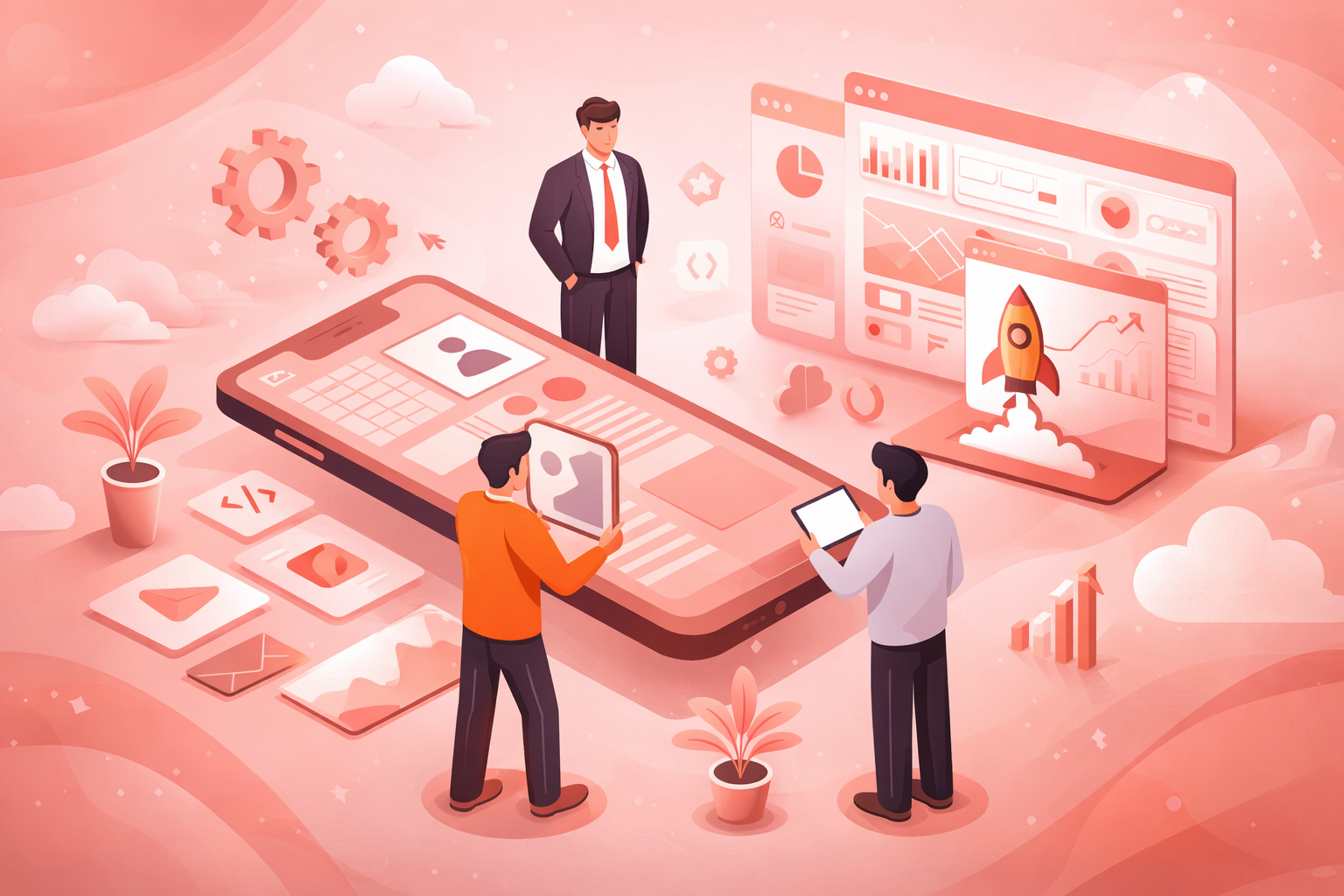
Introduction to Application Development
Application Development is the procedure of creating software applications tailored for corporations or person customers. Whether it’s a mobile app, web platform, or agency solution, programs streamline strategies, beautify client engagement, and power revenue increase.
In 2026, businesses that spend money on utility development advantage a aggressive facet thru automation, personalization, and innovation. The awareness is on growing programs that are efficient, secure, and person-pleasant.
Types of Application Development
Application improvement is available in several forms, every serving unique business needs:
Mobile Application Development
Create apps for smartphones to enhance accessibility and customer engagement.
Examples : banking apps, health apps, e-trade apps.
Web Application Development
Browser-based totally apps that work on any tool without set up. Examples: SaaS platforms, on line reserving structures.
Desktop Application Development
Software hooked up on computer systems for performance-intensive responsibilities. Examples: image design tools, accounting software.
Enterprise Application Development
Customized solutions for huge businesses to manipulate workflows, resources, and analytics. Examples: ERP systems, CRM software.
Key Benefits of Application Development
Investing in software improvement gives numerous blessings:
Improve Efficiency
Applications automate repetitive dutie, lowering error and saving time. For example, a sales monitoring app can automatically update stock and generate reports.
Enhanced Customer Experience
Mobile and internet apps allow clients to engage along with your logo without problems. Personalized notifications and smooth navigation boom engagement.
Cost Savings
Automation reduce manual labor and operational cost. A well-developed app can consolidate a couple of feature in one platform.
Better Data Management
Applications accumulate and examine facts to provide actionable insights. Businesses could make informed choices based totally on actual-time analytics.
Scalability
Custom packages grow together with your business. Features may be updated, and new modules may be introduced as required.
Step-by-Step Application Development Process
Developing an application calls for a structured approach:

Requirement Analysis
- Understanding business desires and person desires to outline the app’s capability.
Design and Prototyping
- Creating twine frames and mockups to visualize the person interface and experience.
Development
- Writing code using programming languages and frameworks suitable for the utility kind.
Testing
- Conducting useful, performance, and protection testing to make sure the app works smoothly.
Deployment
- Releasing the application to users via app stores, web browsers, or organizational servers.
Maintenance or Updates
- Regular updates and worm fixes to make sure endured overall performance and relevance.
Tools and Technologies
Modern utility improvement is predicated on effective equipment and frameworks:
- Programming Languages
- Frameworks
- Database Systems
- Collaboration Tools
- Version Control

Mobile vs Web Application Development
Mobile and Web apps have unique advantages:
Mobile Applications:
- Accessible offline
- Push notifications for engagement
- Optimized for performance on devices
Web Applications:
- Cross-platform compatibility
- No installation needed
- Easy to update or maintain
Business must choose the type based on their target audience, budget, and goal.
Security and compliance in applications
Application protection is essential to protect touchy records:
- Data encryption: Protects information throughout transmission and storage.
- Authentication and Authorization: This ensures that best legitimate customers can get entry to the app.
- Compliance requirements: Compliance with GDPR, HIPAA, ISO 27001 ensures regulatory compliance.
Neglecting security can lead to data breaches, loss of trust, and legal consequences.
Case studies: Successful application improvement
- Uber revolutionized the transportation industry with a cell software that seamlessly connects drivers with passengers.
- Slack replaces communication inside the place of job with real-time messaging, integration or collaboration equipment.
- Zoom Enabled remote collaboration via an smooth-to-use video conferencing app.
These examples display how application improvement can alternate business models and create new opportunities.
Future Trends in Application Development
- AI and gadget gaining knowledge of integration: Smart apps which might be waiting for individual conduct and automatic strategies.
- Cross-platform development: Tools like Flutter and React Native lessen the time and fee of improvement.
- Low-code, no-code systems: Allow organizations to build apps with out good sized coding information.
- IoT integration: Apps linked to clever devices for real-time tracking and manage.
- Advanced UX/UI format: Focus on accessibility, personalization and seamless customer enjoy.
Conclusion
Application development is no longer non-compulsory; it is a enterprise necessity. From streamlining operations to enhancing consumer engagement, a properly-advanced application can transform your enterprise and provide you with a advantage in 2026.
Investing in terrific, stable, and scalable programs guarantees your commercial enterprise stays in advance of the curve. Start making plans your software improvement approach nowadays to include innovation and increase.
