
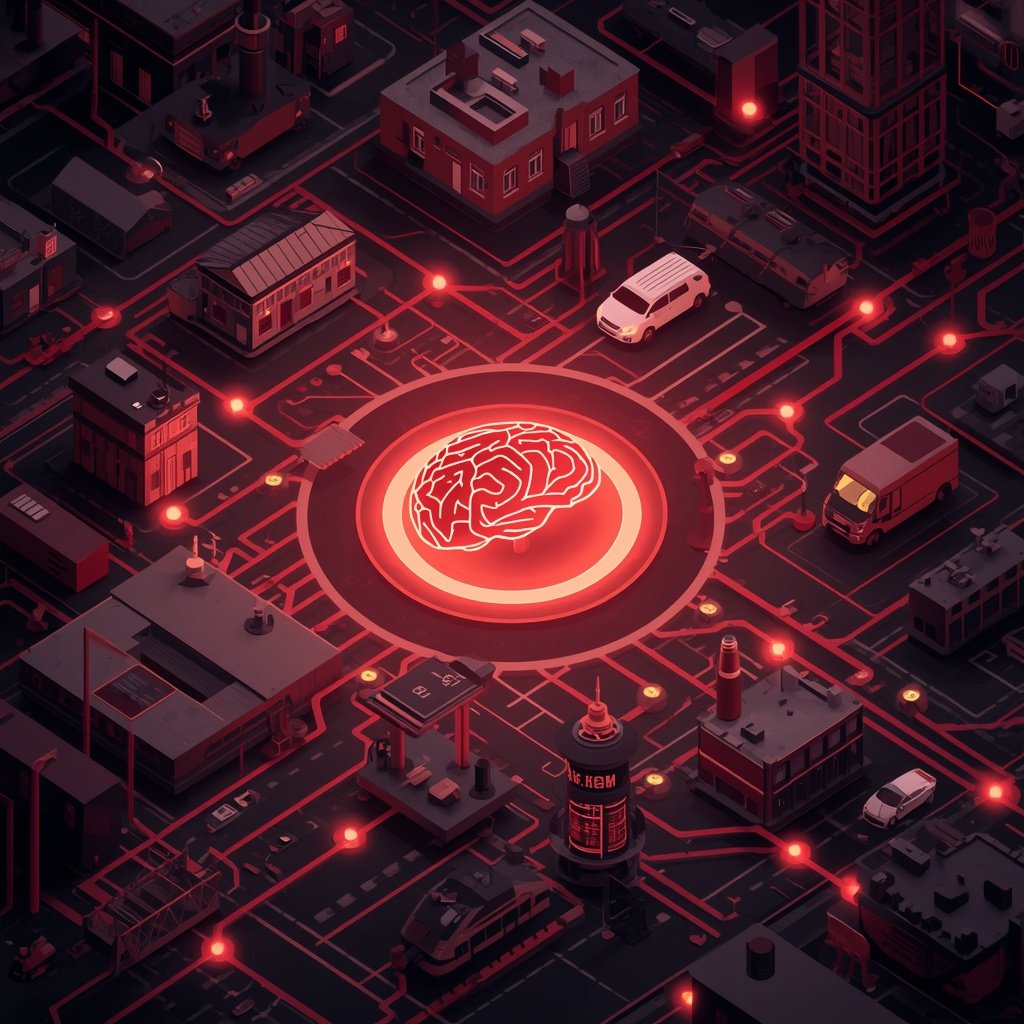
The Internet of Things has already changed the way devices collect and share information. From watches and connected cars to factory sensors and intelligent security systems billions of devices can now communicate through connected networks.
However collecting data is one part of the process.
A connected device may generate thousands or even millions of data points. Data alone does not automatically create intelligence. Businesses still need to understand what the information means and decide what action should be taken.
This is where AIoT becomes important.
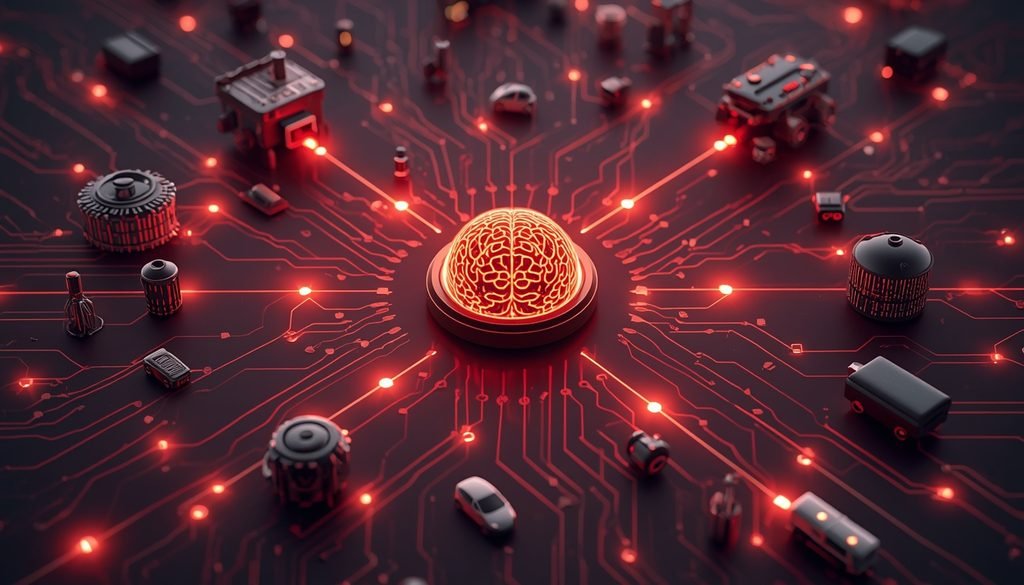
AIoT combines Artificial Intelligence and the Internet of Things to create connected systems. IoT devices collect information from the world while AI helps analyze that information identify patterns make predictions and support intelligent decisions.
Of simply connecting devices AIoT makes connected devices more capable of understanding and responding to what is happening around them.
For example a traditional IoT sensor may report that a machine is vibrating. An AIoT system can go further by analyzing vibration patterns identifying behavior and predicting a possible equipment failure before the machine stops working.
This combination of connectivity and intelligence is creating opportunities across manufacturing, healthcare, transportation, retail, agriculture, smart cities and many other industries.
As connected devices generate larger volumes of information businesses are increasingly looking for ways to turn that information into useful actions. AIoT provides a framework, for doing that.
This article explains what AIoT is, how AI and IoT work together how AIoT systems operate, their benefits, challenges and the industries being transformed by AI- connected systems.
What Is AIoT?
AIoT stands for Artificial Intelligence of Things.
It means putting Artificial Intelligence with Internet of Things devices and systems. IoT gives connection. Collects data while AI gives thinking power and analysis. Together they let connected systems do more than just collect and send information.
An AIoT system can potentially:
- Collect data from connected devices
- Analyze information automatically
- Identify patterns
- Detect unusual activity
- Make predictions
- Support decisions
- Trigger automated actions
The main goal of AIoT is to transform connected devices into more intelligent systems.

A Simple AIoT Example
Imagine a smart security camera.
A standard connected camera may record video and send footage to a cloud platform. An AIoT-enabled camera can analyze the video and identify relevant events.
For example, it may distinguish between:
- A person
- A vehicle
- An animal
- Normal movement
- Suspicious activity
The system can then decide whether an alert is necessary. This is the difference between a device that simply collects data and a system that can understand and respond to data.
Key Points About AIoT
- AIoT combines Artificial Intelligence and IoT.
- IoT devices collect and share data.
- AI analyzes the data and identifies useful patterns.
- AIoT systems can make predictions and automate responses.
- AIoT supports smarter connected devices and systems.
How AI and IoT Work Together
AI and IoT perform different but complementary functions. IoT devices act as the connection between digital systems and the physical world.
They use sensors, cameras, microphones, meters, and other connected technologies to collect information. AI then helps convert this information into insights.
The basic AIoT process can be understood in five stages.
1. Data Collection
IoT devices collect information from the environment.
The data may include:
- Temperature
- Motion
- Location
- Images
- Video
- Audio
- Pressure
- Humidity
- Equipment vibration
- Energy consumption
2. Data Transmission
The collected information is transmitted through a network.
Depending on the system architecture, data may be sent to:
- Cloud platforms
- Edge devices
- Local servers
- Embedded AI systems
3. AI Analysis
Artificial Intelligence analyzes the available information.
AI models can identify relationships and patterns that would be difficult to detect manually.
For example, an AI system may analyze thousands of sensor readings and detect an unusual pattern associated with equipment failure.
4. Decision-Making
Based on the analysis, the AIoT system can generate a recommendation or decision.
For example:
Equipment performance is normal.
Or:
The system has detected a potential maintenance issue.
5. Automated Action
The system can then trigger an action.
This may include:
- Sending an alert
- Adjusting equipment settings
- Scheduling maintenance
- Activating a safety system
- Updating another connected system
The result is a connected environment that can continuously collect information and respond intelligently.
How does AIoT work?
A simple AIoT (Artificial Intelligence of Things) tool follows an easy workflow:
IoT Devices → Data Collection → AI Analytics → Decisions → Action
For example, sensors connected to a manufacturing machine can continuously receive information that includes temperature, vibration, power consumption, and operating speed, and then AI models analyze these records to identify unusual patterns or potential equipment failures.
If the system detects a potential problem, it can mechanically alert the recovery cluster and indicate which items need to be checked.
This continuous approach allows groups to move from reactive innovation to predictive operations, allowing them to detect capacity issues earlier and make faster, met-pushed choices
AIoT Architecture
AIoT systems can include several layers.
| AIoT Layer | Main Function |
|---|---|
| Device Layer | Collects information through sensors and devices |
| Connectivity Layer | Transfers information across networks |
| Edge Layer | Processes data closer to the source |
| AI Layer | Analyzes data and generates predictions |
| Cloud Layer | Provides storage, training, and centralized management |
| Application Layer | Delivers insights and actions to users |
Not every AIoT system uses exactly the same architecture.
Some systems rely heavily on cloud computing, while others process information closer to the device using Edge AI or Embedded AI.
AIoT vs IoT: What Is the Difference?
IoT and AIoT are related, but they are not the same.
Traditional IoT focuses mainly on connecting devices and collecting data. AIoT adds Artificial Intelligence to improve how that information is analyzed and used.
| IoT | AIoT |
| Connects devices | Connects and intelligently analyzes |
| Collects data | Collects and interprets data |
| Often follows predefined rules | Can identify learned patterns |
| Sends information | Generates insights |
| Supports monitoring | Supports prediction and automation |
| Limited intelligence | Greater decision-making capability |
A traditional IoT system may tell a business that a machine is operating at a high temperature.
An AIoT system may analyze historical and current data to predict whether the temperature pattern is likely to result in equipment failure.
That additional intelligence is the key difference.
AIoT vs Embedded AI
AIoT and Embedded AI also work closely together.
Embedded AI places Artificial Intelligence capabilities directly inside a device. AIoT focuses on the broader combination of AI and connected IoT systems.
For example, an intelligent camera may use Embedded AI to analyze video locally.
When that camera connects with other devices, networks, and AI platforms, it can become part of a larger AIoT system.
| Embedded AI | AIoT |
| AI inside a device | AI combined with connected IoT systems |
| Focuses on local intelligence | Focuses on connected intelligence |
| Can operate independently | Often works across multiple devices |
| Supports local inference | Supports broader data-driven decisions |
Embedded AI can therefore become an important part of an AIoT architecture.
Key Technologies Behind AIoT
AIoT depends on several technologies working together.
1. Artificial Intelligence
AI provides the intelligence required to analyze information and support decisions.
Applications can include:
- Machine learning
- Computer vision
- Natural language processing
- Predictive analytics
- Anomaly detection
2. IoT Sensors
Sensors connect AI systems with physical environments.
They allow systems to collect real-time information.
3. Edge Computing
Edge computing processes information closer to where it is generated.
This can reduce latency and support faster responses.
4. Cloud Computing
Cloud platforms support:
- Data storage
- Model training
- Analytics
- Device management
- System scalability
5. Embedded AI
Embedded AI allows intelligence to operate directly inside devices.
6. 5G and Advanced Connectivity
Fast and reliable connectivity can support communication between devices and systems.
Together, these technologies are creating more intelligent and responsive connected environments.
Benefits of AIoT
AIoT can deliver significant business benefits when applied to the right use cases. By combining tools connected to AI-powered assessments, companies can respond faster, anticipate capacity issues, automate selection, and enhance operations.
1. Quick Decision Making
AIOT systems can typically analyze statistics, reducing the need for mentoring assessments. This allows for faster responses, especially in time-sensitive environments.
2. Predictive Insights
AI can examine older real-time records to perceive styles and help anticipate:
- Equipment failure
- Demand change
- Security concerns
- Desire for maintenance
3. Smarter Automation
AIoT allows systems to respond to changing situations in a way that actually preferably follows conventional policies, making automation more adaptive and intelligent.
4. Improved Operational Efficiency
Continuous tracking can help reduce manual effort, increase useful resource utilization, and help companies stay aware of operational inefficiencies.
5. Reduced Downtime
Predictive maintenance can identify capacity and equipment problems early, allowing groups to confront problems before they result in acute cost failures .
6. Better Customer Experience
AIoT can enable more responsive and personalized services. For example, smart commerce systems can scan inventory and customer activity to increase availability and suppliers.
7. ImprovedSecurity
The connected devices can continuously test environments and fail under unusual conditions. This can help with the safe operation of construction, transportation, healthcare, and public infrastructure.
Benefits of AIoT at a Glance
| Benefit | How AIoT Helps |
| Faster decisions | Real-time data analysis |
| Better automation | Intelligent responses |
| Predictive insights | Pattern recognition |
| Reduced downtime | Predictive maintenance |
| Lower manual effort | Automated monitoring |
| Improved safety | Continuous detection |
| Better customer experience | More responsive services |
| Efficient operations | Data-driven optimization |
Real-World Applications of AIoT
AIoT is being applied across many industries.
AIoT in Manufacturing
Manufacturers use connected sensors to monitor equipment.
AI analyzes the information to identify unusual behavior.
Common applications include:
- Predictive maintenance
- Quality control
- Industrial automation
- Equipment monitoring
- Worker safety
A connected sensor can detect abnormal vibration patterns and alert the maintenance team before a major failure occurs.
AIoT in Healthcare
Healthcare systems increasingly use connected devices and intelligent analysis.
Applications can include:
- Wearable health monitoring
- Remote patient monitoring
- Smart medical devices
- Hospital equipment monitoring
AI can help analyze information generated by connected devices and identify patterns that may require attention.
AIoT in Smart Homes
Smart home devices can become more useful when AI is added to connected systems.
Examples include:
- Smart thermostats
- Security cameras
- Connected appliances
- Voice-controlled systems
- Energy management devices
Instead of following only fixed rules, AI can help devices adapt based on patterns and changing conditions.
AIoT in Retail
Retail organizations can use AIoT for:
- Smart inventory management
- Connected cameras
- Automated checkout
- Supply chain monitoring
- Customer behavior analysis
AIoT can help retailers understand what is happening in real time and respond more efficiently.
AIoT in Agriculture
Agricultural environments generate significant amounts of information.
AIoT can combine sensor data with AI analysis.
Applications include:
- Soil monitoring
- Smart irrigation
- Crop monitoring
- Equipment management
- Livestock monitoring
For example, an AIoT system can analyze soil and weather conditions to support more efficient irrigation decisions.
AIoT in Transportation
Connected vehicles and infrastructure generate large volumes of information.
AIoT can support:
- Fleet monitoring
- Route optimization
- Vehicle maintenance
- Driver assistance
- Traffic analysis
The ability to process and analyze data quickly is particularly important in transportation systems.
AIoT in Smart Cities
Cities can use connected and intelligent systems to manage infrastructure.
Applications include:
- Smart traffic systems
- Intelligent lighting
- Environmental monitoring
- Smart parking
- Public safety
AI can help turn large volumes of sensor data into useful decisions.
AIoT Applications by Industry
| Industry | AIoT Application |
| Manufacturing | Predictive maintenance |
| Healthcare | Remote patient monitoring |
| Retail | Smart inventory systems |
| Agriculture | Precision farming |
| Transportation | Fleet intelligence |
| Smart Cities | Traffic optimization |
| Energy | Smart energy management |
| Logistics | Asset tracking |
| Smart Homes | Intelligent automation |
The Role of Edge AI in AIoT
AIoT systems do not always need to send all information to the cloud.
In many cases, data can be processed closer to where it is generated.
This is known as Edge AI.
For example, a smart camera may process video locally and send only important events to a cloud platform.
This can provide several advantages:
- Lower latency
- Reduced bandwidth requirements
- Faster responses
- Better local operation
- Reduced data transmission
Edge AI and AIoT are therefore becoming increasingly connected.
An AIoT architecture may include intelligent devices, edge processing, and cloud platforms working together.
AIoT and Intelligent Connected Systems
AIoT goes beyond making a male or female device smarter. The real value is connecting more than one device, structure and process in order to share data and images together.
For example, in a connected manufacturing facility we monitor machines, AI analyzes operational information, robots respond to commands, maintenance teams receive pointers, and cloud infrastructure stores historical information These components paint together to create an extra responsive operating environment.
So AIoT doesn’t aim to make a device smarter. It’s about building intelligent connected structures where data can be transmitted between devices, AI can discover profitable insights, and companies can make faster and more accurate choices.
Challenges of AIoT
Despite its benefits, AIoT also creates several challenges.
- Data Security: Connected devices can increase the number of potential entry points into a network. Businesses need strong device and network security.
- Privacy: AIoT systems may collect sensitive information. Organizations need clear data governance practices.
- Integration Complexity: Different devices and platforms may use different standards and technologies. Integrating them can be difficult.
- Data Quality: AI depends on reliable data. Poor-quality sensor data can affect the accuracy of AI models.
- Scalability: Managing a small number of devices is different from managing thousands or millions of connected devices.
- AI Model Management: Models may need to be updated and monitored after deployment. This creates additional operational responsibilities.
AIoT Challenges and Possible Solutions
| Challenge | Possible Approach |
| Security risks | Strong device and network security |
| Privacy concerns | Clear data governance |
| Integration problems | Interoperable architecture |
| Poor data quality | Data validation |
| Scaling issues | Cloud and edge management |
| Model updates | AI lifecycle management |
| Latency | Edge processing |
How Businesses Can Start Using AIoT
Businesses do not need to transform every system at once.
A practical approach starts with a specific problem.
Step 1: Identify a Business Problem
Look for areas where connected data could improve decisions.
For example:
- Frequent equipment failures
- High maintenance costs
- Slow manual monitoring
- Inventory inefficiencies
Step 2: Identify Available Data
Determine what information the business already collects.
This may include:
- Sensor data
- Equipment data
- Customer data
- Location data
Step 3: Select the AI Use Case
Choose a clear use case.
Examples include:
- Predictive maintenance
- Anomaly detection
- Demand forecasting
- Smart monitoring
Step 4: Test With a Pilot Project
Start with a smaller implementation. Measure the results before expanding.
Step 5: Build Security and Governance
Security should not be added only after deployment. It should be considered from the beginning.
Step 6: Scale Carefully
Once the system demonstrates value, businesses can expand the implementation.
The Future of AIoT
The destiny of AIoT will be designed through technologies along with Edge AI, embedded AI, robotics, self-sustaining structures, smart infrastructure, digital twins, and advanced connectivity. As the AI fashion comes extra green and hardware becomes unprecedentedly capable, more intelligences may transfer to linked smart devices.
This can allow the system to process information more quickly, respond to changing situations, and operate with additional freedom. Rather than relying entirely on centralized cloud processing, future AIoT architectures will likely use a set of device level, segment, and cloud computing .
Key Trends
- Edge AI: Processes data closer to where it is generated.
- Embedded AI: Brings intelligence directly into connected devices.
- Robotics: Enables machines to respond to real-world conditions.
- Autonomous Systems: Supports more independent decision-making.
- Smart Infrastructure: Enables intelligent monitoring and control.
- Digital Twins: Creates digital representations of physical systems.
- Advanced Connectivity: Helps devices communicate faster and more reliably.
The result could be an additional allocated AI environment, where intelligence is not focused on one domain, but operates across connected smartphones, edge infrastructure and cloud infrastructure.
Conclusion:
AIoT changes the meaning of time respectively. Traditional IoT has enabled smart devices to access data and communicate with other structures. AIoT takes the next step by incorporating intelligence into the connected environment.
This allows structures to go beyond easy observation. The machines can analyze records, capture styles, be aware of anomalies, make predictions and help with computerized voting.
AIoT costs are particularly pronounced in environments where businesses need faster and more informed responses. Manufacturers can anticipate equipment problems. Healthcare organizations can test linked smart devices more intelligently. Salespeople can increase inventory control. Cities can use connected systems to understand visitor and infrastructure concerns.
But AIoT doesn’t just probably incorporate AI into every linked device. Successful implementation requires clean business goals, reliable information, appropriate manufacturing, strong security, and effective gadget control.
As artificial intelligence, IoT, Edge AI, and Embedded AI continue to evolve, connected systems will become extra intelligent and responsive. In the future of the generation, there will be virtually no more linked devices. This will include smarter connected systems capable of specializing in data and capturing significant momentum.
There is opportunity for organizations to move from simply collecting data to using connected intelligence to enhance operations, automation, buyer research, and decision-making .
Frequently Asked Questions
1. What is AIoT?
AIoT stands for Artificial Intelligence of Things. It combines Artificial Intelligence with Internet of Things devices to create smarter connected systems that can collect, analyze, and act on data.
How does AIoT work?
AIoT works by collecting data from IoT devices and sensors, analyzing the information using AI, generating insights or predictions, and triggering actions based on the results.
2. What is the difference between AIoT and IoT?
IoT focuses mainly on connecting devices and collecting data. AIoT adds Artificial Intelligence so connected systems can analyze data, identify patterns, make predictions, and support intelligent decisions.
3. What are examples of AIoT?
Examples include smart cameras, predictive maintenance systems, wearable health devices, intelligent traffic systems, smart agriculture platforms, and connected industrial equipment.
4. What are the benefits of AIoT?
AIoT can support faster decision-making, predictive insights, better automation, improved efficiency, reduced downtime, enhanced safety, and smarter customer experiences.
5. Is AIoT the same as Edge AI?
No. AIoT focuses on combining AI with connected IoT systems. Edge AI refers to processing AI workloads closer to where data is generated. Edge AI can be an important part of an AIoT architecture.
6. What is the difference between AIoT and Embedded AI?
Embedded AI refers to AI capabilities integrated directly into a device. AIoT refers more broadly to AI combined with connected IoT devices and systems. Embedded AI can be part of an AIoT system.